Vietnam among fastest growing emerging Asian markets in next five years: S&P Global

Over the medium-term outlook for the next five years, a number of key drivers are expected to continue to make Vietnam one of the fastest growing emerging markets in the Asian region, said an article published by the S&P Global Market Intelligence on October 5.

Vietnam among fastest growing emerging Asian markets in next five years: S&P Global ảnh 1
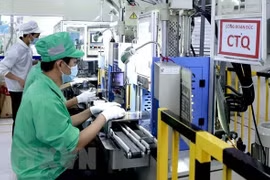
Over the medium-term economic outlook, a large number of positive growth drivers are creating favourable tailwinds and will continue to underpin the rapid growth of Vietnam's economy. (Illustrative photo: VNA)

Hanoi (VNA) - Over the medium-term outlook for the next five years, a number of key drivers are expected to continue to make Vietnam one of the fastest growing emerging markets in the Asian region, said an article published by the S&P Global Market Intelligence on October 5.

Accordingly, it noted that Vietnam will continue to benefit from its relatively lower manufacturing wage costs. The country has a relatively large, well-educated labour force compared to many other regional competitors in Southeast Asia, making it an attractive hub for manufacturing production by multinationals.

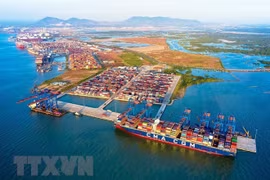
In addition, rapid growth in capital expenditure is expected, reflecting continued strong foreign direct investment by foreign multinationals as well as domestic infrastructure spending. Strong investment is expected in infrastructure sector over the next decade.

The article assessed that many multinationals have been diversifying their manufacturing supply chains during the past decade to reduce vulnerability to supply disruptions and geopolitical events. Vietnam has been one of the preferred destinations for Republic of Korea and Japanese firms choosing to shift their production to the ASEAN region.

In conclusion, the author wrote over the medium-term economic outlook, a large number of positive growth drivers are creating favourable tailwinds and will continue to underpin the rapid growth of Vietnam's economy. This is expected to drive strong growth in the country’s total GDP as well as per capita GDP. The economic outlook from 2024 to 2026 is for rapid economic expansion.

With strong economic expansion projected over the next decade, Vietnam's total GDP is forecast to increase from 410 billion USD in 2022 to 500 billion USD by 2025, rising to 750 billion USD by 2030. This translates to very rapid growth in Vietnam's per capita GDP, from 4,150 USD per year in 2022 to 5,000 USD per year by 2025 and 7,300 USD by 2030, resulting in substantial expansion in the size of its domestic consumer market./.
VNA

See more

ASEAN Secretary-General Kao Kim Hourn announces the outcomes of the 49th ASEAN Summit and related meetings at the ASEAN headquarters in Jakarta, Indonesia, on November 18, 2026. (Photo: VNA)

49th ASEAN Summit highlights action-oriented regional cooperation

As 2026 marks the first year of implementing the ASEAN Community Vision 2045, leaders underlined the bloc's solidarity and centrality as well as closer coordination among the three community pillars in response to global economic uncertainties and security challenges, with priorities including digital transformation, AI application, energy security and supply chain resilience.

ASEAN Secretary-General Kao Kim Hourn (Photo: VNA)

Growing together: 11 nations, one ASEAN home

The new emblem signals an ASEAN that is growing more inclusive while holding to its founding principles of building a peaceful, stable, dynamic region based on equality and cooperation. Its colours come from member states’ national emblems, reflecting diversity inside a single community.

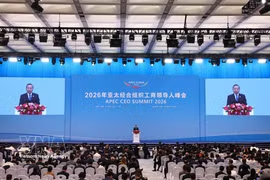
An overview of the dialogue between ASEAN leaders and the ASEAN Business Advisory Council (ASEAN-BAC) in Manila on November 15 (Photo: VNA)

Vietnam puts forward priorities to advance ASEAN cooperation

Appreciating ASEAN-BAC’s report and recommendations, Deputy Minister of Foreign Affairs Dang Hoang Giang, head of Vietnam’s ASEAN Senior Officials’ Meeting (SOM) delegation, called for simplifying procedures, reducing costs, accelerating digitalisation, upgrading the ASEAN Single Window (ASW) and effectively implementing the ASEAN Digital Economy Framework Agreement (DEFA) to make the regional market more accessible.

ASEAN signs Digital Economy Framework Agreement

ASEAN signs Digital Economy Framework Agreement

The Digital Economy Framework Agreement (DEFA), the bloc’s first standalone and legally binding digital economy agreement, establishes common rules covering digital trade, cross-border data flows, electronic payments, cyber security and artificial intelligence (AI).

Minister Counsellor Nguyen Hai Luu, Deputy Permanent Representative of Vietnam to the UN, speaks at the discussion on November 12, 2026. (Photo: VNA)

Vietnam supports peace, reconstruction efforts in Gaza: diplomat

Minister Counsellor Nguyen Hai Luu, Deputy Permanent Representative of Vietnam to the UN, expressed deep concern over the dire humanitarian situation in Gaza, particularly as recent heavy rains and flooding have worsened living conditions for residents.

Thailand diversifies oil sources to ensure energy security

Thailand diversifies oil sources to ensure energy security

Although the diversification of oil import sources has helped reduce the risk of domestic oil shortage, it has not immediately reduced energy costs because import prices depend on market mechanisms, transportation costs, foreign exchange rates and the terms of oil contracts.

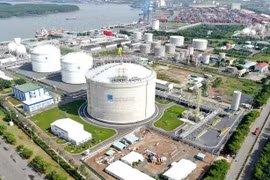
ST Telemedia Global Data Centres (Thailand), an affiliate of Singapore Telecom, is developing three data cehtres in Thailand including this facility on Rama IX Road in Bangkok. (Photo: bangkokpost)

Thailand tightens regulations on data centres

The new rules focus on controlling investment scale, electricity and water consumption, environmental impacts, and preventing investors from reserving resource quotas beyond their actual needs.

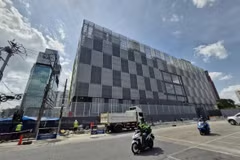
A road is under construction in Dong Nai city, Vietnam. (Photo: VNA)

ADB: Southeast Asia needs 7.1 trillion USD in infrastructure investment by 2040

ADB estimates that the region will need an average of 476 billion USD in infrastructure investment annually during 2026–2040, equivalent to 8.7% of GDP. However, at current investment levels, government budget resources would cover only around 45% of this demand, leaving an annual financing gap of 264 billion USD.

Kyodo News publishes an article titled “Sculptures by Japanese, Vietnamese artists on display in Yokohama,” (Screenshot photo)

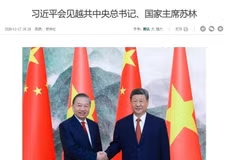
Japanese media widely cover top Vietnamese leader ’s visit

Japanese media have continued extensive coverage of General Secretary of the Communist Party of Vietnam (CPV) Central Committee and President To Lam’s activities in Japan, highlighting his meetings with representatives of leading financial institutions at the Tokyo Stock Exchange, witnessing of cooperation agreement signing and participation in cultural exchanges.