Vietnam develops modern supply system for farm products

Vietnam is working to develop a system of modern agricultural product supply centres to promote the consumption of farm produce, enhance food safety and hygiene, and improve the competitive edge of Vietnamese goods.
Vietnam develops modern supply system for farm products ảnh 1Vietnam is working to develop a system of modern agricultural product supply centres to promote the consumption of farm produce, enhance food safety and hygiene, and improve the competitive edge of Vietnamese goods.(Photo: VNA)

HCM City (VNS/VNA) -
 Vietnam isworking to develop a system of modern agricultural product supply centres topromote the consumption of farm produce, enhance food safety and hygiene, andimprove the competitive edge of Vietnamese goods.

The Ministry of Agriculture and RuralDevelopment aims to restructure the entire chain of production, procession anddistribution of agricultural products.

The centres will improve connectionsbetween production and distribution activities that will enhanceefficiency, increase consumption of agricultural products, andensure quality.

The products entering the centres will becontrolled and have traceable origins to ensure quality, andthere will be classification and packaging of products according torecognised standards.

In particular, a trading floor withinformation about market prices in many countries and integrated paymentservices will be created to offer favourable conditions for businesses.

Minister of Agriculture and Rural DevelopmentNguyen Xuan Cuong said that the country’s agriculture lacks effectiveproductivity because most farms are small, exposing the sector to threatsof loss and crop failure, especially under climate change. 

Besides shrimp, catfish and milk, mostagricultural products have very short value chains, he said. Farmers arethe most vulnerable as production still depends heavily on weatherconditions while infrastructure remains limited.

In the context of globalintegration, more public-private partnerships areneeded to develop financial resources for a complete agricultural managementecosystem that would satisfy food demand of the country's citizens butalso the international market, Cuong said.

“Vietnam has to continue agriculturalrestructuring, and must focus on products in which the countryhas comparative advantages. Innovation and international cooperation needto be enhanced,” he said.

Ousmane Dione, World Bank Country Directorfor Vietnam, has raised concerns over quality and sustainability of Vietnam’sagricultural growth, saying that profits earned by small households were lowand post-harvest losses were considerable. Food quality and safety havenot been ensured, hindering the country’s agriculture sector from expansion.

He recommended that Vietnamstrengthen ties among stakeholders and provinces in planning of productionareas and improve trade promotions as well as productivity.

From 2009 to 2018, Vietnam's agriculturalexport market expanded from 72 countries to 200 countries, with annualturnover of 40 billion USD.

However, about 40 percent of the total valueof agricultural exports are to China,with more than 70 percent of vegetables exported to China.

Because of the heavy dependence on theChinese market, the agricultural sector has faced difficultiesduring the COVID-19 epidemic because of sluggish trade conditions.

Apart from that, the agricultural exportsector also suffers from a deficiency of market information, lack ofstrict control of food safety and hygiene, and unclear origin of goods.

In terms of total export value, Vietnamese agriculturalproducts' export prices are low, even though they are among the world'sleaders in terms of output such as pepper, cashew, shrimp, catfish, coffeeand rice.

Pepper exports rank first in the world,but the export price of pepper ranks only eighth; cashew is also first inthe world, but the price ranks sixth; rice and coffee are second andthird in the world, but the export prices are only 10th, according to theMinistry of Agriculture and Rural Development./.
VNA
See more

Members of the RoK delegation visit booths showcasing signature agricultural products of Da Lat – Lam Dong. (Photo: VNA)

Lam Dong seeks stronger economic, tourism links with RoK

Lam Dong is particularly interested in sectors in which Korean businesses have strengths, including agriculture, green energy, the circular economy, high-quality tourism, healthcare, education, human resources training and digital transformation, an official said.

Illustrative image (Photo: EVNNPT)

EVNNPT seeks over 224 mln USD in bank loans for grid expansion

Three projects account for part of the financing need, including 13.3 million EUR for the 220kV Ung Hoa substation and connection lines, 18.6 million EUR for the 220kV Tan Viet substation and the 220kV Tan Viet–Gia Loc–Pho Noi line, and 35.3 million EUR for the 220kV substation connecting the Dong Anh–Van Tri transmission line.

At a farm produce supermarket in Hue city (Photo: VNA)

Inflation control key to maintaining growth momentum

Average consumer price index (CPI) rose 4.52% in the first nine months, roughly in line with the National Assembly (NA)'s full-year target, while core inflation climbed 4.26%, the National Statistics Office (NSO) reported. CPI in some localities ran above the national average, including economic hubs Hanoi and Ho Chi Minh City.

According to experts, Vietnam’s relatively attractive valuation could help draw active investors. (Photo: VNA)

Capital-market channels widened after FTSE upgrade: expert

Vietnam officially entered FTSE Russell’s Secondary Emerging Market category on September 21 after reforms to trading, settlement and foreign-investor access. The reclassification gives Vietnamese equities access to a much larger pool of international capital, but also puts them in direct competition with other emerging markets.

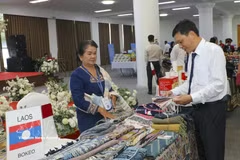
Lao products are promoted at a trade fair in Dien Bien province in September 2026. (Photo: VNA)

Vietnam, Laos seek to expand room for trade, investment cooperation

Vietnam and Laos aim to boost bilateral trade in 2026 towards the milestone of 10 billion USD by 2030, a target said to be challenging but feasible as both Governments work to remove trade barriers, improve border-trade mechanisms, and strengthen transport and logistics connectivity.

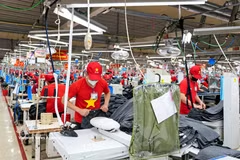
At a garment company in Bac Ninh city. (Photo: VNA)

Bac Ninh maintains its lead nationwide in import-export scale

Exports totaled almost 87.5 billion USD while imports hit 90.3 billion USD. The figures show output at the electronics manufacturing hub is still expanding. They also underscore the need for local companies to build capacity and capture more value in supply chains.

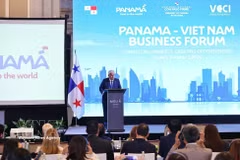
Panamanian President José Raúl Mulino speaks at the Panama-Vietnam Business Forum on October 7 in Hanoi. (Photo: VNA)

Vietnam, Panama seek to expand economic cooperation

In the presence of President Mulino, VCCI and the Chamber of Commerce, Industries and Agriculture of Panama signed a memorandum of understanding (MoU) to strengthen cooperation, enhance trade and investment promotion programmes, and support bilateral investment and trade.

Ministry updates on Vietnam-US reciprocal trade agreement talks

Ministry updates on Vietnam-US reciprocal trade agreement talks

The US is one of Vietnam’s major trading partners and holds paramount importance to the country’s exports. The conclusion of the bilateral trade agreement will help establish a stable and balanced trade framework toward sustainable development and open up greater opportunities for cooperation between the two countries.

MICE visitors enjoy services at Song Be Golf Resort in Ho Chi Minh City. (Photo: VNA)

Ho Chi Minh City shifts MICE tourism from venues to experiences

Ho Chi Minh City boasts significant advantages for MICE tourism, with the central area offering strengths in finance, trade and services; Binh Duong in industry, exhibitions and business connectivity; and Ba Ria-Vung Tau and Con Dao in marine tourism, resorts, ecology and distinctive experiences.