Vietnam and Laos will continue to stand together, share strategic interests, support each other’s development and coordinate closely in addressing common challenges. The Vietnam–Laos relationship remains an invaluable legacy and an exceptional model of international cooperation and shared development in the new era.
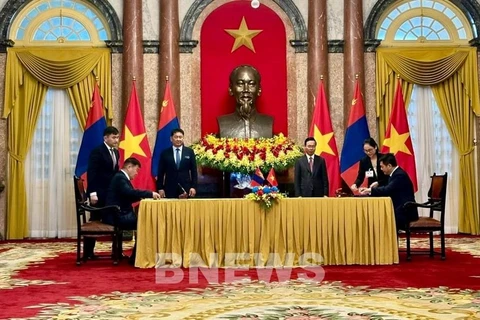
Prime Minister Kay Rala Xanana Gusmão’s official visit to Vietnam and participation in the 3rd ASEAN Future Forum from June 7 to 10, 2026, is considered a highly significant event, particularly for Timor-Leste’s integration process as a newly admitted ASEAN member and for the future development of the ASEAN Community.
Vietnam’s long-standing support for Timor-Leste’s ASEAN membership has laid a solid foundation for expanding cooperation between the two countries.
Phongsava described the forum as a vital mechanism to share views and map out future cooperation, aimed at strengthening the ASEAN Community’s resilience and its ability to respond effectively and promptly to challenges while seizing opportunities.
The bilateral ties, built on strong political trust, are now positioned to pivot from goodwill and political affinity toward a more concrete, focused and results-driven cooperation agenda with clear roadmaps.
Chernyshenko described Vietnam as one of Russia’s most important partners in the region and praised the positive momentum in bilateral cooperation.
Both Vietnam and Thailand are key ASEAN members with critical roles in advancing the forum’s goals. The event will provide a venue for delegates to share experience and approaches in building the ASEAN Community, address common challenges and map out the bloc’s future direction.
Deputy Foreign Minister Le Thi Thu Hang underlined the importance of stronger coordination between APEC and other regional and global mechanisms in order to improve efficiency and optimise resources in addressing common challenges.
Singapore and Vietnam remain committed to supporting a rules-based international order, strengthening ASEAN integration, and enhancing the bloc’s resilience. The two countries upgraded their ties to a Comprehensive Strategic Partnership (CSP) last year, marking Singapore’s first CSP with an ASEAN member state.
Laos will do its utmost to direct relevant agencies, local authorities and military units to coordinate closely with Vietnamese counterparts in carrying out the campaign, affirmed a Lao military official.
Vietnam hopes the forum will continue to demonstrate its role as an active and responsible member of the Association of Southeast Asian Nations (ASEAN), contributing to regional affairs and advancing the Party and State’s foreign policy and international integration strategy.
General Secretary and President To Lam asked the AI experts to help connect Vietnam with international resources, technology enterprises, investment funds, research institutions, and leading global experts to develop human resources, technology businesses, and innovation capacity.
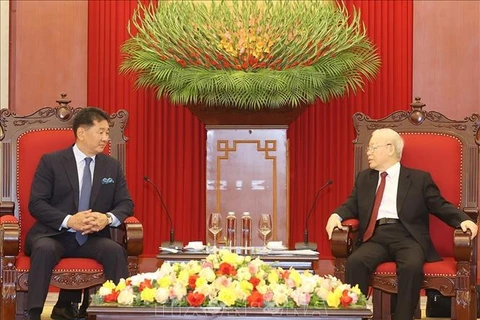
Vietnam remains one of the priority destinations in PM Sonexay’s diplomatic agenda, underscoring the special nature of the bilateral relationship and reaffirming that ties between Vietnam and Laos continue to occupy a foremost position in the foreign policy of each country.
Despite external uncertainty, relations between Vietnam and Cambodia have continued to develop positively across all areas of cooperation.
During the two-day visit, the Thai PM will attend the third ASEAN Future Forum.
The following is a brief review of the day’s events as reported by the Vietnam News Agency.
Indonesian scholar Lamijo of the National Research and Innovation Agency (BRIN) said the speech reflected not only Vietnam’s national interests but also a broader strategic vision for the region, demonstrating the country’s readiness to share leadership responsibilities in the Association of Southeast Asian Nations (ASEAN).
Dr. Nguyen Hung Son, President of the Diplomatic Academy of Vietnam (DAV) said the forum aims to provide an open and innovative platform for governments, scholars, businesses, media organisations and regional and international institutions to exchange ideas and seek breakthrough solutions to help realise the ASEAN Community Vision 2045.
Speaking to Vietnam News Agency correspondents in New Delhi, Pradhan noted that, drawing on his extensive experience in national security and international relations, as well as his deep knowledge of international law, the top Vietnamese leader identified three closely interrelated crises facing the world today: a crisis of the international order, a crisis of the development model, and a crisis of strategic trust.
The survival of documents relating to Nguyen Ai Quoc’s years in France is due in large part to the often-unseen efforts of librarians, archivists and museum professionals. Today, these records provide scholars with valuable insights into a pivotal stage in the intellectual and political development of the man, who later became President Ho Chi Minh.