Vietnam needs to avoid outdated technology in 4G-to-5G transition

Vietnam needs to avoid ineffective investment and outdated technology in the transition from 4G to 5G, Director of the Authority of Radio Frequency Management (ARFM) Doan Quang Hoan has said.
Vietnam needs to avoid outdated technology in 4G-to-5G transition ảnh 1Minister of Information and Communications Truong Minh Tuan speaks at the workshop on June 9 (Photo: VNA)

Hanoi (VNA) – Vietnam needs to avoid ineffectiveinvestment and outdated technology in the transition from 4G to 5G, Director ofthe Authority of Radio Frequency Management (ARFM) Doan Quang Hoan has said.

He made the remark at an international workshopin Hanoi on June 8 on spectrum management for mobile broadband and Internet ofThings (IoT). The event drew representatives of ministries, telecommunicationsbusinesses and radio frequency management agencies of Vietnam, France, Laos andMyanmar.

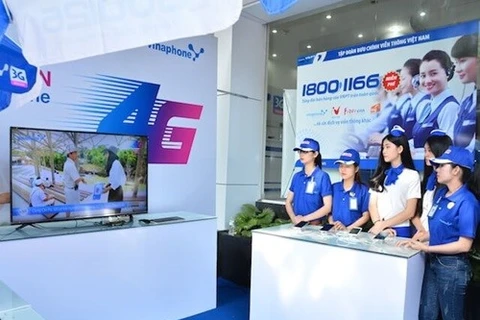
Minister of Information and CommunicationsTruong Minh Tuan said with nearly 130 million mobile phone subscriptions,Vietnam is considered to have high density of telecom services in the world. TheMoIC has recently licensed four telecom companies to provide 4G services, andthey have been swiftly preparing infrastructure for the services provision.

The MoIC will devise effective policies topromote the development of information technology and telecom infrastructure,especially for mobile broadband, he noted.

Telecom services revenue reached 365.5 trillionVND (16.1 billion USD) in 2016, a year-on-year increase of 7.5 percent.

In 2017, telecom carriers began to supply 4G LTEservices on the 1,800MHz band nationwide. The MoIC is preparing to auction the2.6 GHz band so that services providers can boost the speed of their 4Gnetwork.

ARFM Director Hoan said wireless broadband is aninevitable development trend of the telecom industry. The InternationalTelecommunication Union issued a recommendation on the vision of the 5G mobiletechnology and is expected to approve recommendations on technical requirementsfor 5G in October this year.

At the workshop, participants shared solutions tothe 5G technology and urged the early preparations for 5G use in terms ofpolicy and frequency spectrum.

According to the Next General Mobile Networks Alliance, 5G should be rolled outby 2020 to meet business and consumer demands. In addition to providing simplyfaster speeds, 5G networks are predicted to meet new use cases, such as theInternet of Things (internet connected devices) as well as broadcast-likeservices and lifeline communication in times of natural disasters.-VNA
VNA
See more

Vice President of the National Assembly Nguyen Doan Anh (R) and Deputy Speaker of the Australian House of Representatives Sharon Claydon (Photo: VNA)

Vietnam, Australia strengthen parliamentary cooperation

the Australian Parliament looks forward to close coordination with the Vietnamese NA at the Inter-Parliamentary Union (IPU) and other multilateral forums, said Deputy Speaker of the Australian House of Representatives Sharon Claydon.

Deputy Prime Minister Ho Quoc Dung (R) receives Gianluca Pettiti, President and Chief Operating Officer of US-based Thermo Fisher Scientific, in Hanoi on August 12 (Photo: VNA)

Vietnam seeks stronger cooperation with US partner in semiconductors, biomedical technology

Vietnam welcomes leading global technology groups such as Thermo Fisher Scientific to engage more deeply in the country’s science and technology ecosystem through investment, research and development, technology transfer and human resources training, as well as cooperation with domestic research institutes, universities and businesses, Deputy Prime Minister Ho Quoc Dung said.

AI-powered robots help ease the workload of civil servants in providing initial consultations, while enabling citizens to become familiar with AI applications in accessing public services. (Photo: VNA)

National programme on AI human resources development approved

The programme aims to develop an AI workforce of sufficient scale, structure and quality to meet the requirements of strategic technology sectors, enhance national technological self-reliance, promote innovation and digital transformation, and foster the digital economy and digital society.

Illustrative image (Source: techgenez.com)

VinSpace announces satellite launch contract with SpaceX

VinSpace is responsible for the research, development, manufacturing and on-orbit operation of its satellites. The satellites will support the on-orbit demonstration of in-house developed technologies, strengthen VinSpace's satellite engineering capabilities, and pave the way for future commercial space applications.

Elevating digital infrastructure to drive new era of development

Elevating digital infrastructure to drive new era of development

o create new growth momentum for the country in a new development phase, the Politburo's Resolution No. 57-NQ/TW emphasises the need to develop modern digital infrastructure, expand access to high-quality Internet services and build large-scale data centres as the foundation for a national data platform.

Visitors to UBTECH, a company major in the research and development of humanoid robots (Photo: VNA)

Sci-tech diplomacy: A new mission for diplomatic sector

The directive by General Secretary and State President Lam reflects a shift in Vietnam’s development mindset, in line with the Politburo’s Resolution 57-NQ/TW dated December 22, 2024 on breakthroughs in sci-tech, innovation and national digital transformation. For the first time, sci-tech has been placed at the very centre as a driver of growth model.

Prof. Nghiem Duc Long from University of Technology Sydney (UTS), who is also Chairman of the Vietnam-Australia Scholars & Experts Association (VASEA) (Photo: VNA)

Science, technology to become new pillar of Vietnam-Australia ties: expert

The visit to Australia by Party General Secretary and State President To Lam will open a new chapter of cooperation, enabling Vietnamese intellectuals and experts in Australia to contribute more effectively to national development and helping science, technology and innovation become an important driver of the Comprehensive Strategic Partnership.

Deputy Director of the Vietnam National Innovation Centre (NIC) Do Tien Thinh speaks at the launch of RE:ACT in Hanoi on August 7. (Photo: NIC)

Youth innovation challenge for sustainable communities launched

Unlike conventional idea-based competitions, RE:ACT focuses on deploying solutions that have already reached the minimum viable product stage through Living Labs – community-based pilot environments where innovations are tested under real-world conditions.

The special national science, technology and innovation programme on strategic technologies targets mastery of at least four strategic technologies for 2026-2030. (Photo: baochinhphu.vn)

Vietnam approves national programme on strategic technologies

The programme seeks to master, develop, perfect and commercialise highly competitive strategic technology products, with priority given to core technologies. It also aims to build a strategic technology ecosystem and strengthen linkages among the State, businesses and science and technology organisations.

FPT Group headquarters ( Photo courtesy of FPT)

FPT named an OpenAI Select Partner

Under the partnership, FPT and OpenAI will work together to help businesses develop AI transformation roadmaps, build AI platforms, strengthen workforce capabilities and deploy responsible AI solutions tailored to their operational needs.

Dak Lak province's Smart City Monitoring and Operations Centre manages and operates the provincial data centre, as well as shared digital platforms and software systems used across the province. (Photo: VNA)

Vietnam draws hyperscalers, cloud titans, AI players

These developments highlight growing confidence in Vietnam as a destination for hyperscale, cloud, and AI infrastructure. The broader digital infrastructure ecosystem also strengthened during the period.

 Da Nang seeks to become a strategic investment destination

Da Nang seeks to become a strategic investment destination

Da Nang is accelerating efforts to attract investment and mobilise social resources for new development models, leveraging expanded development space, special policy mechanisms and institutional reforms to position itself as a strategic investment destination and a pioneer in Vietnam's economic growth in the new era.

PM Le Minh Hung chairs the second meeting of the National Cybersecurity Steering Committee on August 6. (Photo: VNA)

PM urges stronger coordination in cybersecurity response

PM Le Minh Hung pushed for the Regional Counter Cybercrime Hub for Asia-Pacific to be put into operation in 2027, a “Cybersecurity Economy” initiative to be prepped for APEC 2027, stronger specialised cybersecurity agencies, and an expansion of the national cybersecurity operations centre by the second quarter of 2028.

An overview of BSides Hanoi 2026 on August 5 (Photo: baodautu.vn)

Trust emerges as one of modern cybersecurity’s biggest challenges

Speaking at the event, VSEC Chairman Truong Duc Luong said this was the second time BSides has been held in Hanoi, continuing to attract strong interest from the cybersecurity community. BSides Hanoi 2026 was designed as a platform connecting Vietnam’s cybersecurity community with international networks, encouraging knowledge sharing and contributing to the sustainable development of the cybersecurity ecosystem.