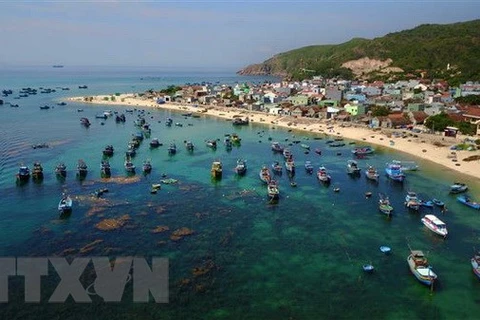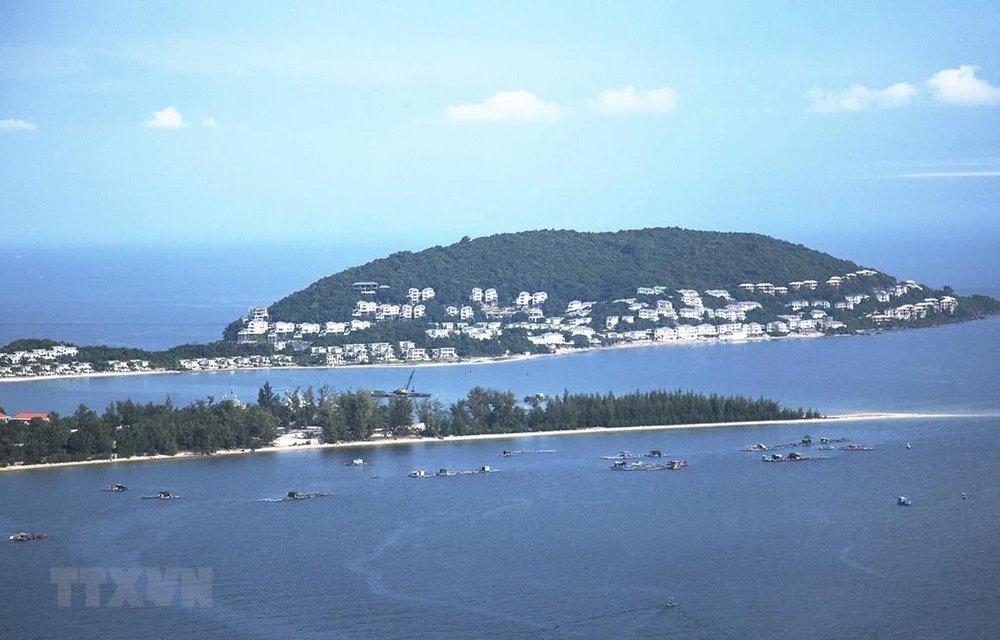
 Vietnam has set the target to become a powerful marine nation, which meets all standards on sustainable development of sea-based economy. (Photo: VNA)
 Hanoi (VNA) – Boasting great potential of marine economy in terms of natural resources, transport, fisheries, tourism and coastal economic zones, Vietnam has set the target to become a powerful marine nation, which meets all standards on sustainable development of sea-based economy.
Immense marine economic potential
The East Sea has been deemed as the second busiest international transport rout in the world as the waters carries more than 45 percent of global maritime shipping. With a total 48 bays and lagoons covering a total area of 4,000 square kilometres, Vietnam has favourable conditions to construct deep-water ports.
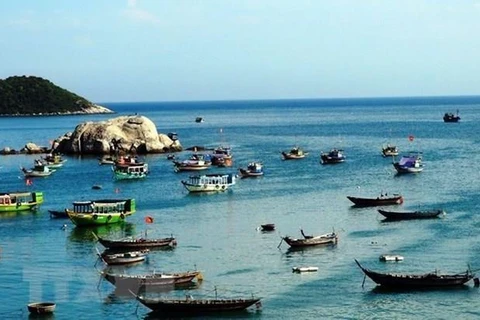
The country has a long coastline extending over 3,260km, thousands of islands, and hundreds of beautiful white sandy beaches from the north to the south such as Ha Long, Nha Trang and Da Nang. The 28 coastal cities and provinces account for 70 percent of national tourism revenue.
Regarding marine resources, Vietnam is one of the most biologically diverse countries in the world, as its waters are home to some 12,000 sea species, including more than 2,000 kinds of fish and 2,500 kinds of mollusc. Fishing reserve is estimated at some 4.2 million tonnes, with exploitation potential reckoned at 1.7 million tonnes per year.
In addition, around 35 types of mineral resources have been located in the Vietnamese waters, including oil and gas, metal, building materials, and gemstones. The Gulf of Tonkin, the Gulf of Thailand, the Hoang Sa and Truong Sa archipelagos, as well as the continental shelf all hold great prospects for oil and gas production exploration.
Besides, the East Sea is among the four regions in Southeast Asia with huge potential for renewable energies, including clathrate – a clean energy which can be used in replacement of traditional energy sources like coal, oil and gas.
Oil and gas industry is a spearhead economy of the nation. The industry is truly a driving force to bolster coastal economy as earnings from oil and gas accounts for 10-13 percent of the country’s gross domestic product, and makes significant contributions to the state budget.
According to statistics from the Ministry of Planning and Investment, the gross regional domestic product (GRDP) of coastal localities grew by an average 7.5 percent each year during 2008-2017, much higher than the national rate. In 2017, these areas made up 60.5 percent of the national GDP. Particularly, GRDP per capita in the localities reached 64.9 million VND (2,780 USD), higher than the country’s average of 53.2 million VND. High GRDP per capita was seen in Ba Ria-Vung Tau (over 225 million VND), Quang Ninh (over 90 million VND), and Da Nang (over 70 million VND).
Striving to become a strong marine country
The target of becoming a strong marine country was clearly stated in the resolution on the strategy for sustainable development of the marine economy by 2030 with vision until 2045, which was adopted at the 8th session of the 12th Communist Party of Vietnam Central Committee.
Accordingly, sea-based industries are expected to contribute about 10 percent to the national GDP, 28 coastal provinces and cities will make up 65-70 percent of the nation’s GDP. Sea-based economic activities will develop sustainably in line with international standards while exploitation of marine resources will be controlled within the resilience of the marine ecosystems.
The resolution lays down three breakthrough areas and seven major guidelines to realise the goal, looking to raise public awareness of sustainable development of marine economy, complete institutions and mechanisms, branch out science technology, train high-quality human resources, improve capacity in ensuring security-defence, and encourage the establishment of powerful sea-based corporations.
Deputy Director General of the Vietnam Administration of Seas and Islands Vu Si Tuan suggested integrated management of sea and island environment plays an important role in regulating human activities to protect the integrity of the ecosystem’s functions and structure, while improving the ecosystem’s productivity to ensure that marine resources are well managed and used effectively.
Other experts believed that it is necessary to build and carry out mechanisms to develop the blue economy.
In fact, many localities have worked to lure investments to develop modern tourism sites which draw large numbers of domestic and international tourists. Many investors registered up to 1 billion USD in their high-end tourism complex projects.
Currently, Vietnam has 17 coastal economic zones established on a land and water surface area of nearly 845,000 hectares. As of the end of 2017, those economic zones attracted 390 foreign investment projects with total investment of 45.5 billion USD, and 1,240 domestic projects valued at 805 trillion VND. Several large coastal economic zones such as Nghi Son, Vung Ang, Chu Lai and Dung Quat have drawn great projects which play an important role in improving local industrial production’s capacity and promoting development of other sectors.
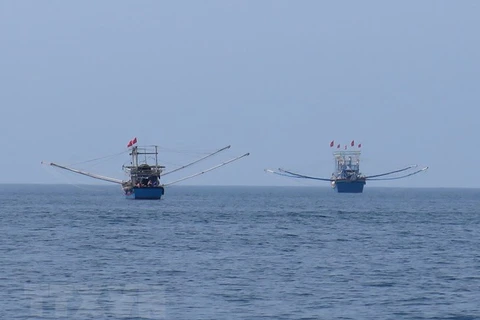
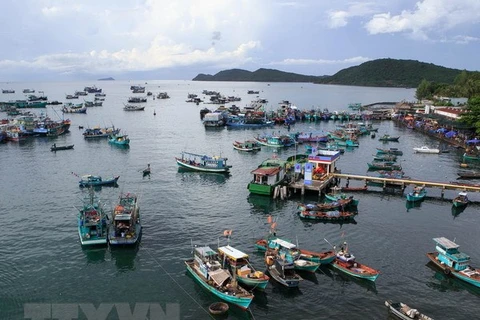
Thanks to the Government’s support policies, the volume of seafood catch has increased over years. The amount rose from 1.8 million tonnes in 2006 to 3.2 million in 2017. The national fishing fleet now numbers 96,600 vessels of at least 6m long.
The number of seafood processing businesses also surged to 620, with 415 meeting requirements to export products to choosy markets like Japan, the US and the EU, among others.-VNA
VNA