Vietnamese economy recovers rapidly thanks to drastic actions: IMF expert

Vietnam's economy recovered rapidly in the first half of 2024 after a challenging period at the end of 2022 and early 2023, thanks to its government’s drastic actions, according to Paulo Medas, head of the International Monetary Fund (IMF)’s 2024 Article IV Mission to Vietnam.

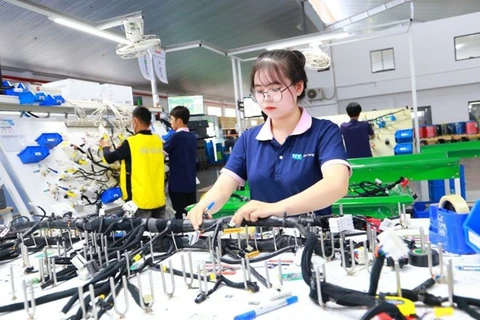
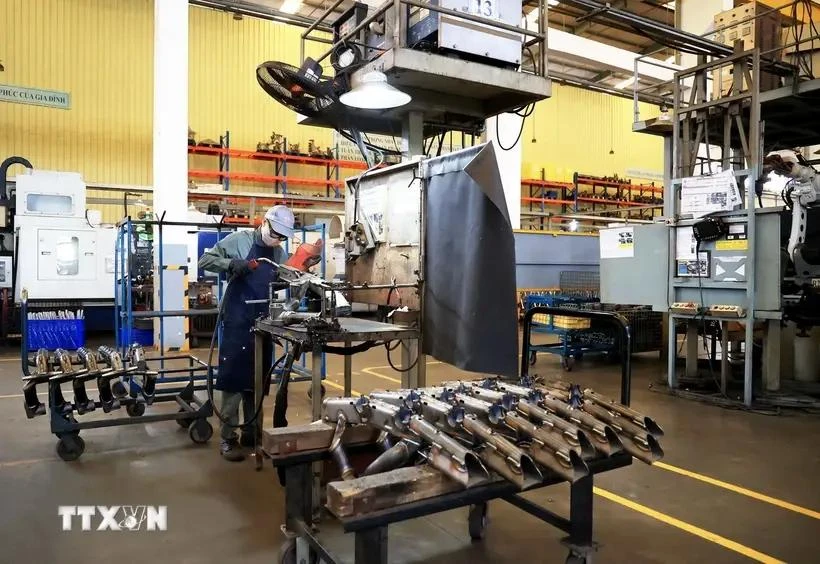
Illustrative image (Photo: VNA)

Washington D.C. (VNA) - Vietnam's economy recovered rapidly in the first half of 2024 after a challenging period at the end of 2022 and early 2023, thanks to its government’s drastic actions, according to Paulo Medas, head of the International Monetary Fund (IMF)’s 2024 Article IV Mission to Vietnam.

The IMF team, led by Paulo Medas, held the 2024 Article IV consultation with Vietnam from June 12-26.

In a recent interview granted to the Vietnam News Agency in Washington D.C., the official said that Vietnam’s economy rebounded and grew by 6.4% year-on-year in the first half. He attributed this to thriving exports and actions taken by the government and the State Bank of Vietnam (SBV) such as reducing interest rates and increasing public investment and wages.

Regarding prospects for the second half, the expert forecast the Vietnamese economy will continue to recover, but at a slower pace, and may expand by over 6% for the whole year.

The country’s inflation has gone up, and reached around 4.3% year-on-year in June, he stated, predicting it's likely to stay around, close to the SBV target of 4.5%.

The expert also pointed out several latent risks, including the currency depreciation and public wage rise that require the central bank to monitor closely and to take measures to regulate.

To help the country overcome the challenges, he recommended Vietnam to balance economic recovery and inflation risk management.

The State Bank must keep a close watch on the situation and be ready to take actions in case inflation rises sharply, he stressed.

According to Medas, Vietnam needs to pay more attention to medium-term economic growth. The IMF is conducting an in-depth study on what could happen to medium-term growth in Vietnam. In the past 15-20 years, Vietnam's economic performance has been really strong, with the growth higher than the average of emerging markets around the world.

He went on to say that the aging population and climate change are major factors that will impact Vietnam’s economic growth in the future.

Regarding productivity, the IMF expert said that the Southeast Asian country’s productivity growth continues to be lower than other countries around the world. So reforms that can push productivity up can compensate for the demographic issue in the future.

He stressed the need for continued efforts to improve the business environment, upgrade infrastructure, including on energy and renewables, accelerate reforms related to climate, and have good capital markets./.

VNA

See more

Vietnam Airlines will deploy wide-body Airbus A350 aircraft on its new nonstop Vietnam–Netherlands service starting June 16. (Photo: VNA)

Vietnam Airlines to launch first nonstop Hanoi–Amsterdam route

Nguyen Quang Trung, Deputy General Director of Vietnam Airlines, said that the nonstop Hanoi–Amsterdam route marks an important milestone in the carrier’s European network expansion strategy. Its presence at one of the world’s leading aviation hubs will not only broaden the airline’s business opportunities but also help strengthen economic, trade and investment connection, as well as people-to-people exchanges between Vietnam and the Netherlands, and Europe in general.

Central Highlands region's products on display at the first Glorious Spring Fair 2026 (Photo: VNA)

Spring Fair 2026: Traditional flavours find new pathways to market

Products rich in traditional flavours - from confectionery and processed agricultural goods to highland tea - are presented in refreshed designs that preserve cultural identity while meeting rising market standards, opening up prospects for expanded consumption and gradual entry into export markets.

Vietnamese fruits introduced to German consumers (Photo: VNA)

“Vietnamese Goods Day” promotes agricultural products in Germany

Vietnamese Ambassador to Germany Nguyen Dac Thanh said the event, held close to Vietnam’s Lunar New Year, helped promote Vietnamese tropical fruits while introducing Vietnamese cultural values to German consumers, and creating opportunities for Vietnamese businesses to connect directly with German importers.

Downtown area in Ho Chi Minh City. (Photo: VNA)

Vietnam's golden gateway: FDI poised for gains in 2026

More than just volume, the quality of FDI entering Vietnam has improved. The nation is evolving from a base for basic assembly and processing into a genuine contributor to hi-tech manufacturing and R&D across global value chains.

Deputy Minister of Finance Do Thanh Trung speaks at the ceremony (Photo: VNA)

Project to advance growth, innovation, leadership for enterprises kicks off

AGILE is not only a testament to the long-standing and trusted strategic partnership between Vietnam and Canada, but also an important contribution to the Vietnamese Government’s efforts to promote innovation and sustainable growth within the private sector, thereby effectively mobilising private investment to realise inclusive and sustainable development goal.

At Regza Vietnam Electronics Co., Ltd. in Dong Nai province. (Photo: VNA)

FDI disbursement in January hits five-year high

Economists said that the continued growth in realised FDI reflects foreign investors’ sustained implementation and expansion of production and business activities in Vietnam. This is seen as an encouraging signal, underscoring investors’ confidence in Vietnam’s business environment and economic prospects.

In Q1 2026, Vietnam records 16 export commodities with turnover exceeding 1 billion USD. (Photo: VNA)

Exports face stiff test in bid to hit 550 billion USD

To achieve export growth of over 15% as directed by the Government, the MoIT said it will prioritise a set of core measures in 2026, including expanding production capacity, developing new export products, increasing domestic content and value added, accelerating the shift from processing to manufacturing, and proactively addressing trade barriers and defence measures.