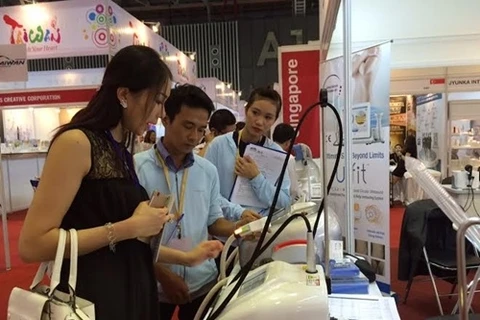
At the conference (Photo: VNA)
 HCM City (VNA) - There are significant opportunities for Vietnamese firms to invest in the beauty sector in Cambodia and Myanmar as well as export beauty products to the two markets, participants at an Ho Chi Minh City conference said on May 18.
Leong Ann Suan Jeremy, Editorial director of Beauty Cosmedica magazine, told the road show to introduce Beauty Connect Expo in Cambodia and Myanmar that Cambodia’s economic growth is steady and would remain so.
With a population of 52 million, of which 39 percent are aged 25-54, it is a promising market for skincare products, he said.
Ha Thi Thanh Binh, general secretary of the Associations of Vietnamese Investors in Myanmar, Cambodia and Laos, said there are not many spas and hair salons in Cambodia, and it is a good opportunity for Vietnamese firms to open them there.
The number of foreign visitors to Myanmar has increased significantly in recent time, she said.
While most large global hotel brands are present in Myanmar, not many five-star hotels offer spa services, and Vietnamese firms can tie up with hotels to provide high-class spa services, she said.
The market also has a high demand for detergents, soaps, shampoos and anti-sunburn products, she said.
She said Vietnamese firms could collaborate with Myanmar businesses to open shops or distribution centres to introduce beauty products in the country since foreign firms are not allowed to sell directly.
Jeremy said Vietnamese companies should also look for local agents or partners in Cambodia since business registration, taxation and regulations are best handled by locals.
He and Binh agreed that enterprises should focus on quality and competitive pricing when trying to enter these markets.
“Cambodia Beauty Connect Expo will be the best place for you to exhibit and find your agents/distributors or even local partners,” Jeremy said.
Binh said Burmese and Cambodians like Vietnamese products. Trade fairs are a key promotion channel since they enable companies to access a market and understand local consumers’ tastes quickly, she said.
Beauty Connect Expo Cambodia and Myanmar, to be held in the Cambodian capital Phnom Penh in September and in Yangon in December, would offer Vietnamese firms a good opportunity to understand more about those markets and explore business and investment opportunities, they said.
The two expos are expected to attract 55-80 exhibitors each and 3,000 trade visitors, according to Minh Vi Exhibition and Advertisement Services Co Ltd, the organiser.
Some large Vietnamese firms took part last year and the number is expected to be higher this year, it said.
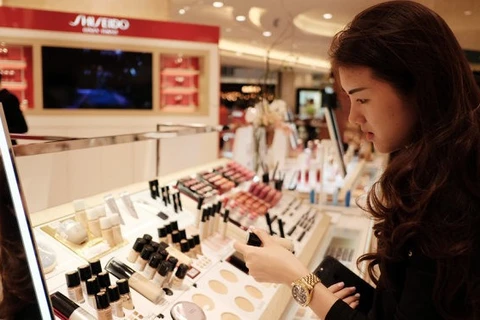
Besides showcasing the latest beauty products, technologies and equipment, the exhibitions also have business matching sessions to connect local buyers and distributors with international companies, seminars and stage performances.-VNA
Leong Ann Suan Jeremy, Editorial director of Beauty Cosmedica magazine, told the road show to introduce Beauty Connect Expo in Cambodia and Myanmar that Cambodia’s economic growth is steady and would remain so.
With a population of 52 million, of which 39 percent are aged 25-54, it is a promising market for skincare products, he said.
Ha Thi Thanh Binh, general secretary of the Associations of Vietnamese Investors in Myanmar, Cambodia and Laos, said there are not many spas and hair salons in Cambodia, and it is a good opportunity for Vietnamese firms to open them there.
The number of foreign visitors to Myanmar has increased significantly in recent time, she said.
While most large global hotel brands are present in Myanmar, not many five-star hotels offer spa services, and Vietnamese firms can tie up with hotels to provide high-class spa services, she said.
The market also has a high demand for detergents, soaps, shampoos and anti-sunburn products, she said.
She said Vietnamese firms could collaborate with Myanmar businesses to open shops or distribution centres to introduce beauty products in the country since foreign firms are not allowed to sell directly.
Jeremy said Vietnamese companies should also look for local agents or partners in Cambodia since business registration, taxation and regulations are best handled by locals.
He and Binh agreed that enterprises should focus on quality and competitive pricing when trying to enter these markets.
“Cambodia Beauty Connect Expo will be the best place for you to exhibit and find your agents/distributors or even local partners,” Jeremy said.
Binh said Burmese and Cambodians like Vietnamese products. Trade fairs are a key promotion channel since they enable companies to access a market and understand local consumers’ tastes quickly, she said.
Beauty Connect Expo Cambodia and Myanmar, to be held in the Cambodian capital Phnom Penh in September and in Yangon in December, would offer Vietnamese firms a good opportunity to understand more about those markets and explore business and investment opportunities, they said.
The two expos are expected to attract 55-80 exhibitors each and 3,000 trade visitors, according to Minh Vi Exhibition and Advertisement Services Co Ltd, the organiser.
Some large Vietnamese firms took part last year and the number is expected to be higher this year, it said.
Besides showcasing the latest beauty products, technologies and equipment, the exhibitions also have business matching sessions to connect local buyers and distributors with international companies, seminars and stage performances.-VNA
VNA