Vietnam’s daily stock trading value ranks second in ASEAN

The average daily trading value on Vietnam’s stock market has reached more than 30.84 trillion VND (1.34 billion USD) per session so far this year, up 15.9 percent from the last year’s figure and now the second largest in ASEAN, only after Thailand, according to the Ministry of Finance.
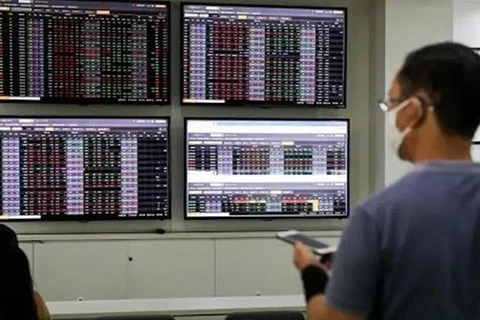
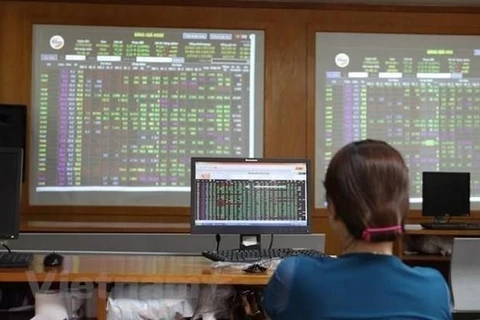
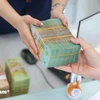
Vietnam’s daily stock trading value ranks second in ASEAN ảnh 1Illustrative photo. (Source: VNA)
Hanoi (VNA) – The average daily trading value onVietnam’s stock market has reached more than 30.84 trillion VND (1.34 billionUSD) per session so far this year, up 15.9 percent from the last year’s figureand now the second largest in ASEAN, only after Thailand, according to the Ministryof Finance.

By the end of March, the market size had risen by3.37 percent from last year to close to 1.8 trillion VND, equivalent to 21.4percent of the GDP. There are 768 securities and fund certificates listed onthe Hanoi Stock Exchange (HNX) and the Ho Chi Minh City Stock Exchange (HOSE), while 883 others are listed on the Unlisted Public Company Market (UPCOM).

The number of securities accounts is on a rise, with morethan 676,600 newly opened in the first quarter of 2022, almost equal to the 2021 figure. Total accounts have exceeded 4.98 million so far, an increase of 15.7percent compared to the end of last year.

However, shares have been suffering decline over the last severalweeks because of negative rumours in the real estate and securities sectorscoupled with rising political tensions globally. The benchmark VN-Index closedat 1,406.45 points on April 19, 6.1 percent lower than last year’s end. Similartrends have been observed elsewhere worldwide, notably in major markets likethe US, Germany, the Republic of Korea, France, and Japan.

The Ministry of Finance has requested the State SecuritiesCommission (SSC) to accelerate the improvement of related regulatory frameworkand finalise the strategy for the development of the stock market by 2030 tofurther enhance its transparency and promote stable growth.

The SSC has also been tasked to increase inspection, gettough on violators, and foster restructuring in securities and fund managementfirms./.
VNA

See more

Toy production at a Hong Kong-invested factory (Photo: VNA)

Vietnam targets deeper market penetration in Hong Kong in 2026

Vietnam-Hong Kong trade hit 62.3 billion USD in the first 11 months of 2025, soaring 73.1% annually. Vietnamese exports to Hong Kong amounted to 36.8 billion USD, a 90.6% hike, ranking fourth among Hong Kong’s import sources, while imports from Hong Kong stood at 25.5 billion USD, up 52.9% and ranking third.

Vietnam’s start-up market enters restructuring phase

Vietnam’s start-up market enters restructuring phase

In 2026, venture capital inflows into Vietnam’s start-up ecosystem are expected to recover gradually, though in a more selective manner. VinVentures forecasts that capital will focus on start-ups that have survived the rigorous screening of 2024–2025, possess clear business models, strong commercialisation capacity, and the ability to generate real cash flows.

Workers process tra (pangasius) for export (Photo: VNA)

Vietnam–Singapore trade continues to thrive

For the year as a whole, Vietnam retained its position as Singapore’s 10th largest trading partner. Bilateral trade reached a record high of nearly 40 billion SGD, up 26.2% from the previous peak of 31.67 billion SGD recorded in 2024.

Eric Van Vaerenbergh, an energy expert and lecturer at the Brussels Engineering School (ECAM) (Photo: VNA)

Belgian expert optimistic about Vietnam’s economic outlook

Vietnam should move from a growth model based mainly on expanding capital and labour to one driven by productivity improvements. He said that this requires enhancing the quality of the workforce, particularly engineers, technicians, and managers in industrial sectors.

Workers at the VSIP Hai Phong industrial and urban complex, which specialises in producing electronic components for office equipment. (Photo: VNA)

Roadmap aims to improve business climate and boost competitiveness

By the end of 2026, Vietnam aims to rank among the world’s top 50 performers in the United Nations Sustainable Development Goals, advance at least three places in the International Property Rights Index, and climb at least one position in the Global Innovation Index.

Vietnam is strengthening its position in the technology value chain, becoming a major manufacturing hub for complete consumer electronics products. (Photo: VNA)

ESG standards offer opportunities to reposition Vietnam’s electronics firms

The 2025-2027 period will be a critical turning point, as exporters to the European market will be required to strictly comply with ESG standards, including net-zero emissions roadmaps, labour standards, corporate governance and transparency requirements. As a key export sector, the electronics industry is being directly and strongly affected by this shift.