Vietnam’s economic growth quality improves: Minister

The quality of Vietnam’s economic growth in 2011-2017 has improved in many aspects with high expansion of gross domestic product (GDP) and increasing labour productivity and incremental capital output ratio (ICOR).
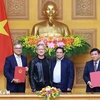
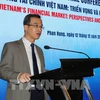
Vietnam’s economic growth quality improves: Minister ảnh 1Minister of Planning and Investment Nguyen Chi Dung  (Photo: VNA)

Hanoi (VNA)
– The quality of Vietnam’s economic growth in 2011-2017 hasimproved in many aspects with high expansion of gross domestic product (GDP)and increasing labour productivity and incremental capital output ratio (ICOR).

Minister of Planning and Investment Nguyen Chi Dung affirmed the positiveoutcomes at the May 25 debate during the fifth session of the 14th NationalAssembly in Hanoi.

He said the business environment and the national competitiveness have also seena lot of progress in recent time.

The average per capita income reached 2,385 USD, approximately doubling that of2010.

The human development index of Vietnam has also significantly increased, headded.

Responding to deputies’ concern over problems related to foreign investmentsuch as environment pollution, transfer pricing, trade frauds or slowtechnology transfer, Minister Dung stressed that the FDI sector is anindispensible part of Vietnam’s economy, especially in the light of extensiveand intensive global integration.

The important matter at present is helping the domestic private economic sectorto join the global value chain and creating a strong link with the FDI sector,he said.

The Government will put out new orientations to attract foreign investment inthe coming time, focusing on hi-tech projects using less land and naturalresources, he added.

Priority will be given to investors who are able to transfer technology to andembrace connectivity with domestic enterprises, according to the minister.

Dung also underlined labour productivity as one of the core factors to improvegrowth quality and push reforms of growth models.

He referred to optimising opportunities from the fourth industrial revolution(Industry 4.0) as one of the most effective measures to increase labourproductivity and help developing countries like Vietnam to accelerate growthand narrow development gaps with developed nations in the world.

The labour productivity in Vietnam is on the upward trend in recent years,expanding by nearly 6 percent in 2017 and an average 4.7 percent in the2011-2017 period.

“This is a good sign, but we cannot be satisfied,” he said, adding thatVeitnam’s labour productivity remains at the low level in the region.

He noted that the Government is directing the Ministry of Planning andInvestment and relevant ministries and departments to devise measures to reformgrowth models, increase growth quality, labour productivity and competitivenessof the economy in the context of the 4.0 industrial revolution.-VNA
VNA
See more

Workers process tra (pangasius) for export (Photo: VNA)

Vietnam–Singapore trade continues to thrive

For the year as a whole, Vietnam retained its position as Singapore’s 10th largest trading partner. Bilateral trade reached a record high of nearly 40 billion SGD, up 26.2% from the previous peak of 31.67 billion SGD recorded in 2024.

Eric Van Vaerenbergh, an energy expert and lecturer at the Brussels Engineering School (ECAM) (Photo: VNA)

Belgian expert optimistic about Vietnam’s economic outlook

Vietnam should move from a growth model based mainly on expanding capital and labour to one driven by productivity improvements. He said that this requires enhancing the quality of the workforce, particularly engineers, technicians, and managers in industrial sectors.

Workers at the VSIP Hai Phong industrial and urban complex, which specialises in producing electronic components for office equipment. (Photo: VNA)

Roadmap aims to improve business climate and boost competitiveness

By the end of 2026, Vietnam aims to rank among the world’s top 50 performers in the United Nations Sustainable Development Goals, advance at least three places in the International Property Rights Index, and climb at least one position in the Global Innovation Index.

Vietnam is strengthening its position in the technology value chain, becoming a major manufacturing hub for complete consumer electronics products. (Photo: VNA)

ESG standards offer opportunities to reposition Vietnam’s electronics firms

The 2025-2027 period will be a critical turning point, as exporters to the European market will be required to strictly comply with ESG standards, including net-zero emissions roadmaps, labour standards, corporate governance and transparency requirements. As a key export sector, the electronics industry is being directly and strongly affected by this shift.

A production line for camera modules and electronic components at the factory of MCNEX VINA Co. Ltd, a Republic of Korean-invested company in Phuc Son Industrial Park, Ninh Binh province. (Photo: VNA)

Science, technology, innovation as engines of economic growth

To ensure that science and technology truly act as a powerful growth engine, experts emphasised the need for the Government to put in place supportive mechanisms and policies that encourage enterprises to invest in research and development, while strengthening cooperation among the State, research institutions and the business sector.

The headquarters of the Ministry of Industry and Trade in Hanoi (Photo: VNA)

PM updates lead roles to drive UKVFTA forward

The Ministry of Industry and Trade (MoIT) is named the lead agency, with overall responsibility for the agreement’s general goals and definitions, trade remedies, non-tariff barriers to trade and investment in renewable energy, competition policies, State-owned enterprises, enterprises with special or exclusive rights and those with designated monopolies, as well as institutional, general and final terms.

Vietravel Airlines is taking measures to enhance service quality and optimise operations amid high travel demand during Tet. (Photo: VNA)

Vietravel Airlines to add new route serving Lunar New Year travel peak

During the peak period of the Lunar New Year (Tet) festival in 2026, Vietravel Airlines plans to operate six – eight flights daily on the Ho Chi Minh City – Hanoi route, three flights daily on the Ho Chi Minh City – Da Nang and Ho Chi Minh City – Vinh routes; and two flights daily on the Ho Chi Minh City – Quy Nhon route.

The completion of Can Tho - Ca Mau expressway has helped shorten travel time from Can Tho to Ca Mau to just one hour and a half (Photo: VNA)

Can Tho–Ca Mau expressway fully opens from January 19

The new section, together with the Can Tho–Hau Giang segment that has been operating smoothly since late December last year, has completed the entire 110.85-km route. With total investment exceeding 27.52 trillion VND (1.04 billion USD), the four-lane expressway is built to modern standards and serves as a key transport artery linking major economic and political centres, industrial zones and seaports in the southwestern region.