Vietnam’s rice and coffee acutely vulnerable from El Nino: HSBC economists

In a recently published report, HSBC Vietnam posits that the recurring El Niño, after an absence of three years, could heighten the threat of droughts, water scarcities, and potential disruptions in trade across the ASEAN region.
Vietnam’s rice and coffee acutely vulnerable from El Nino: HSBC economists ảnh 1Vietnam and Indonesia supply 25% of the world’s coffee. (Source: HSBC graphic)
Hanoi (VNS/VNA) - In a recently published report, HSBC Vietnam positsthat the recurring El Niño, after an absence of three years, could heighten thethreat of droughts, water scarcities, and potential disruptions in trade acrossthe ASEAN region.

This report, bearing the title “ASEAN Perspectives - the arrival of ElNiño", was unveiled last week.

Economists working for HSBC believe that the yield of pivotal agriculturalproducts in Vietnam, including rice and coffee, could suffer significantly inthe wake of the El Niño phenomenon.

The report underscores the primary peril posed to the agricultural sector,highlighting crops such as rice, palm oil, and coffee as particularlysusceptible. However, it also draws attention to potential risks faced by thesemiconductor industry.

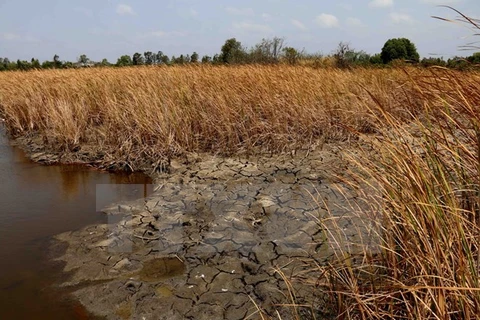
Current severe heatwaves sweeping across ASEAN nations are suggestive of theresurgence of El Niño, a meteorological event usually correlated with droughtand water shortages. The harsh manifestation of El Niño in 2015-16 had adetrimental impact on the region's economy. In its aftermath, rice productionin countries such as Thailand and Vietnam dropped by more than 10%,exemplifying the potential threats posed by this phenomenon.

Whilst coffee might be considered a 'minor' commodity in comparison to others,its significance should not be underestimated, especially given the wide arrayof global consumers who perceive it as a daily essential. Despite the fact thatit constitutes less than 1% of total exports, on a par with palm oil, Vietnamand Indonesia nonetheless supply a quarter of the world's coffee.

The majority of this contribution is in the form of Robusta beans,characterised by their bitter taste and heightened acidity. It's worthrevisiting the 2015-16 period when coffee production in these economies slumpedby 10%, inciting speculation regarding the potential ramifications of El Niñothis time around.

More pointedly, forecasts from the USDA suggest a decline in Robusta productionin Indonesia by 20% in the 2023/24 cycle, as the dry season has made an earlierappearance, impacting over 60% of the coffee-producing region.

Moreover, ASEAN's global preeminence in the palm oil market is well documented.Indonesia and Malaysia collectively generate 85% of the global palm oil supply,trailed by Thailand at 4%. Notably, palm oil accounts for 10% of total exportsin each of these nations.

Whilst the El Niño phenomenon is still in its infancy, authorities in bothIndonesia and Malaysia have raised alerts about potential disturbances to palmoil yields. Indonesia has declared emergency measures in seven provinces,predominantly those engaged in palm oil production.

It is noteworthy that palm oil yield traditionally experiences a drop during anEl Niño year, and also contributes to air pollution as farmers resort toburning fields to make way for new crops. Concurrently, the Malaysian Palm OilBoard has cautioned that production could decrease by 1-3 million tonnes (6-17%)during this episode.

However, the impact is anticipated to be less drastic than during the 2015-16El Niño event, which saw a reduction of 20%, due to better farming practicesand enhanced labour conditions. Nonetheless, the full effect may not be evidentfor another 15-18 months, as per Malaysian officials, suggesting that this is arisk to monitor more closely in 2024 rather than 2023.

The HSBC reports indicate that the ripple effect of El Niño extends beyond theagricultural sector and could potentially cause disruptions to industrialproduction due to energy shortages. Both Vietnam and Malaysia offer pertinentexamples of such materialised risks. As of early June, a number of Vietnam'snorthern provinces, which host major electronics manufacturers such as Samsung andFoxconn, have grappled with electricity shortages. These power disruptions arecaused by a dearth of hydropower, a significant source of electricity in theregion, as the heat and droughts associated with El Niño have led to reservoirsdrying up, even causing major dams in the north to reach dead storage levels.

Fortunately, recent moderate rains have caused the water levels in allreservoirs across the nation to surpass the threshold required for safeelectricity generation, according to state utility Vietnam Electricity (EVN).Consequently, after several electronics manufacturers had to curtailproduction, power shortages have started to diminish recently, facilitatingfactories to extend their operating hours. However, economists at HSBC stressthat El Niño-related energy risks require closer observation, as they mayexacerbate Vietnam’s manufacturing vulnerabilities, especially during a periodwhen the country has been dealing with the escalating challenge of dwindlingexport orders.

Fortuitously, ASEAN policymakers demonstrate acute awareness of theimplications of El Niño, issuing early warnings and proactively adoptingmeasures to fortify against potential economic disruptions. Countries haveturned to tactics such as cloud seeding, augmenting specific agriculturalimports, and implementing partial manufacturing cutbacks to offset potentialdisruptions induced by El Niño, as indicated in the report./.
VNA
See more

Head of the Vietnam Trade Office in Australia Tran Thi Thanh My (Photo: VNA)

Vietnam, Australia eye 20 bln USD trade target

The head of the Vietnam Trade Office in Australia hoped that the visit by Party General Secretary and State President To Lam will mark a new milestone, opening the door for firms on both sides to forge stronger links and launch concrete cooperation agendas, helping hit that 20 billion USD trade goal sooner rather than later.

Phu Quoc pepper products, granted three stars under the OCOP programme in An Giang province, are displayed at an exhibition of outstanding OCOP products from the Mekong Delta. (Photo: VNA)

Phu Quoc leverages OCOP programme to take local specialities global

Better known as one of Vietnam’s premier island destinations, Phu Quoc is leveraging its “One Commune, One Product” (OCOP) programme to transform traditional specialities into internationally recognised products, integrating local agriculture, food processing and tourism to promote sustainable economic growth.

Production at an FDI enterprise in Tay Ninh province. (Photo: VNA)

FTA Index 2025 to be unveiled later this month

The index is designed to provide valuable information not only for State management agencies but also as an important reference for businesses, foreign investors, and industry associations in planning investment and business activities in Vietnam.

Air Premia, a carrier of the Republic of Korea, will resume flights between Incheon and Ho Chi Minh City from November 5. (Photo: The Courtesy of Air Premia)

Air Premia to resume Incheon–Ho Chi Minh City route from November

Flights will depart Incheon International Airport at 6:40 pm (RoK time) and arrive at Tan Son Nhat International Airport in Ho Chi Minh City at 11 pm (Vietnam time). Return flights will leave Ho Chi Minh City at 12:30 am on Mondays, Tuesdays, Thursdays, Fridays and Sundays, landing in Incheon at 7:40 am.

Production at Viet Hai High-Tech Structure Production Company Limited in Vung Ang Economic Zone. Ha Tinh province aims to develop Vung Ang Economic Zone into a regional centre for industry, energy, seaports and logistics (Photo: VNA)

Revised master plan of Vung Ang EZ approved

The adjustment aims to create a more rational development framework to maximise the zone’s potential and advantages while providing a legal foundation for construction management and ensuring sustainable development.

Illustrative image (Photo: VNA)

Vietnam looks to domestic market to sustain wood industry growth

Vietnam’s wood sector has long been a top foreign-currency earner. Exports of wood and wooden products neared 17.3 billion USD in 2025, reaching more than 160 countries and territories and clearing the high bars set by the US, the European Union and Japan.

Delegates at the event (Photo: VNA)

Vietnam remains key market for Polish food producers

The campaign promotes selected European Union agricultural and food products, including fresh, chilled and frozen beef and pork, fresh apples, apple juice and dried apples, targeting consumers, importers, distributors, retailers and the hospitality sector.

Wei Xiaoli, a representative of Shandong Jindafeng Machinery Co., Ltd., in an interview granted to the Vietnam News Agency. (Photo: VNA)

Chinese firms see strong potential for agricultural mechanisation cooperation with Vietnam

Business representatives said mechanisation not only helps reduce reliance on manual labour but also improves production efficiency, shortens planting and harvesting times, reduces post-harvest losses and enhances the quality of agricultural products. For rice-producing countries like Vietnam, they noted, accelerating mechanisation is an inevitable trend to strengthen the competitiveness of the agricultural sector.

Community-led fisheries groups have become frontline defenders of coastal fisheries. (Photo: VNA)

Community-led fisheries groups strengthen IUU fight in Ha Tinh

With a long coastline and abundant inshore fishing grounds, Ha Tinh has long identified the marine economy as a key growth driver. However, growing fishing pressure and destructive practices have posed major management challenges. Community-led self-management initiatives are now providing an effective solution.

At the VIFC-HCMC (Photo: VNA)

700 bln USD for net zero: Vietnam bets on VIFC

Assoc. Prof. Dr. Nguyen Huu Huan, Vice Chairman of the Executive Board of VIFC-HCMC, said the VIFC will focus on building market infrastructure needed to bridge the gap between big investment pledges and bankable projects.

A view of the launch ceremony for the expanded Vietnam–China cross-border QR payment service. (Photo: NAPAS)

Over 1 billion Weixin Pay users can make QR code payments in Vietnam

NAPAS, Weixin Pay, and BIDV will study the rollout of the reverse payment service, enabling users of Vietnamese banking applications and e-wallets to make QR code payments in China, with the aim of completing a comprehensive cross-border payment ecosystem between the two countries.