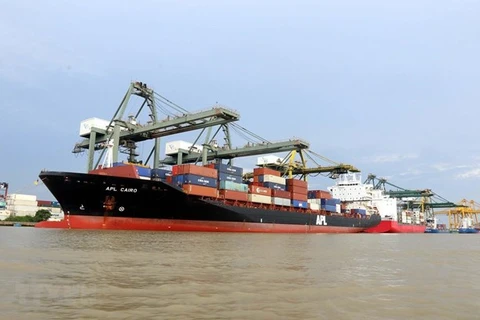
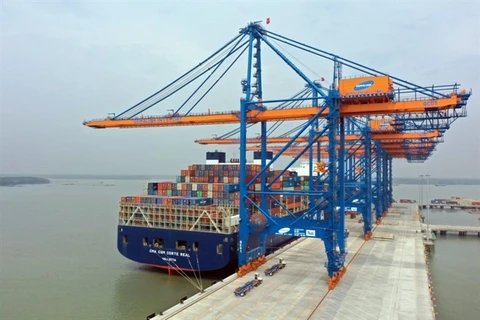
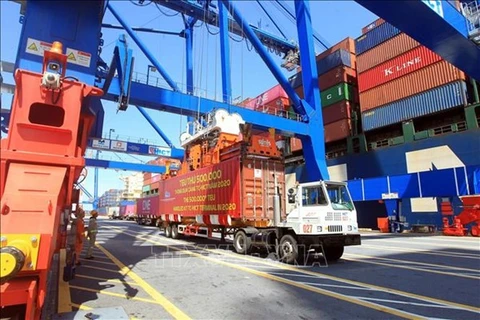
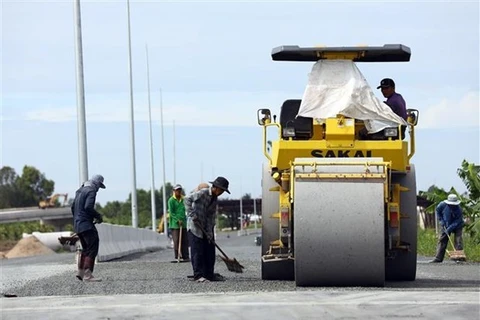
Vietnam’s seaports set to handle 1.14-1.42 billion tonnes of cargo by 2030. (Photo: VNA)
 Hanoi (VNA) – Vietnam’s seaports are set to handle about 1.14-1.42 billion tonnes of cargo, including 38-47 million TEUs of container goods, and welcomed 10.1 – 10.3 million passengers annually by 2030, according to a freshly approved master plan.
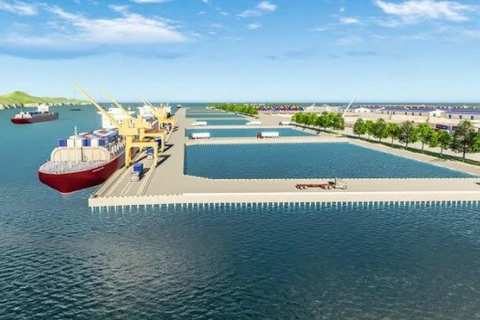
Under the master plan on developing domestic seaport network over the next 10 years, with a vision towards 2050, Vietnam aims to develop a uniform system of modern seaports that provide high-quality services, meet needs for socio-economic development, and ensure national security and defence, maritime safety and environmental protection, and improving the economy’s competitiveness. It is expected to help the country fulfill its goal of becoming an upper-middle-income developing country with modern industry by 2030.
The plan gives priority to developing infrastructure at major international gateway ports such as Lach Huyen (Hai Phong) and Cai Mep (Ba Ria-Vung Tau). The country will also adopt suitable policies for the construction of an international transshipment port in Van Phong (Khanh Hoa) and look into the possibility of a port in Tran De (Soc Trang).
Under the master plan on developing domestic seaport network over the next 10 years, with a vision towards 2050, Vietnam aims to develop a uniform system of modern seaports that provide high-quality services, meet needs for socio-economic development, and ensure national security and defence, maritime safety and environmental protection, and improving the economy’s competitiveness. It is expected to help the country fulfill its goal of becoming an upper-middle-income developing country with modern industry by 2030.
The plan gives priority to developing infrastructure at major international gateway ports such as Lach Huyen (Hai Phong) and Cai Mep (Ba Ria-Vung Tau). The country will also adopt suitable policies for the construction of an international transshipment port in Van Phong (Khanh Hoa) and look into the possibility of a port in Tran De (Soc Trang).
 Vietnam aims to develop a uniform system of modern seaports that provide high-quality services. (Photo: VNA)
 The plan classifies Vietnamese seaports into five groups based on their geographical locations. The first group includes five northern ports in Hai Phong, Quang Ninh, Thai Binh, Nam Dinh and Ninh Binh. They are set to handle 305-357 million tonnes of cargo and 162,000-164,000 passengers by 2030, with an annual growth of 5-5.3 percent and 1.5-1.6 percent, respectively, by 2050.
The second group consists of six ports in the north central region namely Thanh Hoa, Nghe An, Ha Tinh, Quang Binh, Quang Tri and Thua Thien-Hue; while the third one features eight ports in the south central provinces of Da Nang, Quang Nam, Quang Ngai, Binh Dinh, Phu Yen, Khanh Hoa, Ninh Thuan and Binh Thuan.
The fourth group comprising five ports in Ho Chi Minh City and the southern provinces of Dong Nai, Ba Ria-Vung Tau, Binh Duong and Long An are set to handle the largest share of cargo volume – from 461-540 million tonnes – by 2030 and the goods volume going through the ports is forecast to grow 3.5-3.8 percent by 2050.
The last one consists of 12 ports in the Mekong Delta city of Can Tho and provinces of Dong Thap, Tien Giang, Vinh Long, Benh Tre, An Giang, Hau Giang, Soc Trang, Tra Vinh, Ca Mau, Bac Lieu and Kien Giang. They will focus on serving passenger transport with 6.1 – 6.2 million annually by 2030, the largest among the five groups.
Vietnam also plans to develop its network of railways and expressways to enhance connectivity between the Hai Phong and Ba Ria-Vung Tau Ports, categorised as special class, and other ports nationwide./.
The second group consists of six ports in the north central region namely Thanh Hoa, Nghe An, Ha Tinh, Quang Binh, Quang Tri and Thua Thien-Hue; while the third one features eight ports in the south central provinces of Da Nang, Quang Nam, Quang Ngai, Binh Dinh, Phu Yen, Khanh Hoa, Ninh Thuan and Binh Thuan.
The fourth group comprising five ports in Ho Chi Minh City and the southern provinces of Dong Nai, Ba Ria-Vung Tau, Binh Duong and Long An are set to handle the largest share of cargo volume – from 461-540 million tonnes – by 2030 and the goods volume going through the ports is forecast to grow 3.5-3.8 percent by 2050.
The last one consists of 12 ports in the Mekong Delta city of Can Tho and provinces of Dong Thap, Tien Giang, Vinh Long, Benh Tre, An Giang, Hau Giang, Soc Trang, Tra Vinh, Ca Mau, Bac Lieu and Kien Giang. They will focus on serving passenger transport with 6.1 – 6.2 million annually by 2030, the largest among the five groups.
Vietnam also plans to develop its network of railways and expressways to enhance connectivity between the Hai Phong and Ba Ria-Vung Tau Ports, categorised as special class, and other ports nationwide./.
VNA