Vietnam's shrimp export rises in H1 but still faces competition

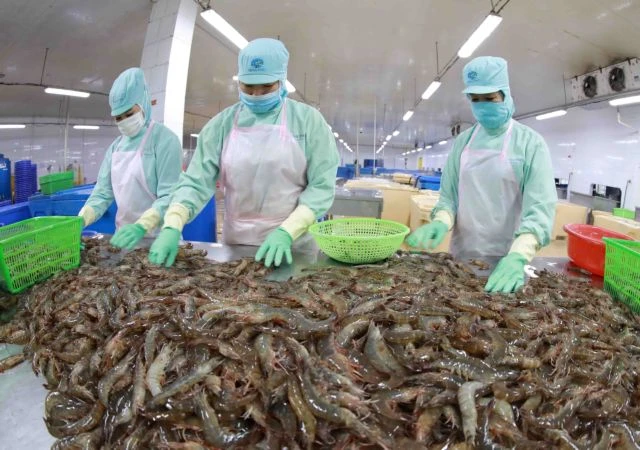
Vietnam's shrimp exports grew in the first half of this year, but the market is facing competition from other countries in the world.

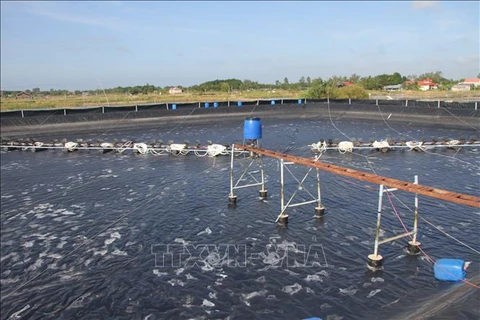
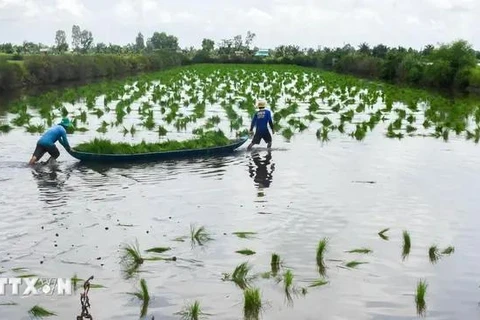
The shrimp export value is about 1.6 billion USD in the first half. (Photo: VNA)

Hanoi (VNS/VNA) - Vietnam's shrimp exports grew in the first half of this year, but the market is facing competition from other countries in the world.

According to the Vietnam Association of Seafood Exporters and Producers (VASEP), in the first six months of this year, the shrimp export value reached about 1.6 billion USD, up 6% year on year.

In June alone, this value reached 344 million USD, an increase of 5% on year.

During the first half, mainland China and Hong Kong, the largest export market of Vietnamese shrimp, showed a recovery in shrimp exports in June, after decreasing in May.

In the first half of the year, the shrimp exports to this market reached 328 million USD, 17% higher than the same period last year.

By the end of the year, Vietnam's shrimp exports to this market will be under pressure on price, especially for black tiger shrimp and white-leg shrimp. Vietnamese shrimp competition from markets such as Ecuador, India and Indonesia that will be promoting shrimp export to China due to high tariffs imposed by the US.

The second largest market for Vietnamese shrimp was the US. In the first half of the year, shrimp exports to this market grew 1% year-on-year to 303 million USD. After decreasing in May, exports to the US recovered in June.

But shipping costs have increased dramatically, up by 40% from May due to conflict in the Middle East.

In the US market too, Vietnamese shrimp has strong price competition from shrimp from Ecuador, India and Indonesia.

VASEP expects that the US's demand for Vietnamese shrimp may increase slightly in the third quarter of this year when importers increase purchasing for year-end festivals.

Meanwhile, Vietnam saw a slight reduction of 3% and 10% to 229 million USD in Japan and 149 million USD in the Republic of Korea, respectively.

In Japan, Vietnam's value-added goods still maintain a better competitive advantage compared to other suppliers such as India and Ecuador.

According to VASEP, the import demand of these two markets is expected to increase slightly from September to meet the year-end demand.

For the EU market, after a slow first quarter, the shrimp exports to increased solidly in the second quarter.

In the first six months, exports to EU reached 217 million USD, an increase of 13% on year. In June, this value stood at 52 million USD, up by 31%.

The EU market's demand for shrimp imports is expected to continue to increase in the second half.

However, VASEP said that besides facing price competition with Ecuadorian and Indian shrimp in the US and EU, Vietnamese shrimp face an additional problem: disease outbreaks in farmed shrimp, potentially causing a shortage of raw materials for processing.

Companies may be forced to reduce shrimp exports to the US although this market has a large consumption power. Meanwhile, they will focus on nearer markets such as Japan, the Republic of Korea, Australia and China.

In the second half of the year, it is expected that the main import markets of Vietnamese shrimp will have better markers, such as lower inventory, easing of transportation difficulties and recovery in demand and prices.

If all expectations follow a positive scenario, Vietnam could achieve a shrimp export value of 4 billion USD in 2024, VASEP said./.

VNA

See more

A refilling station of Petrolimex (Photo: VNA)

Import tariffs on certain fuel products reduced to 0%

Rising tensions in the Middle East, particularly the conflict involving the US, Israel and Iran, have significantly affected the global energy market, especially shipping activity through the Strait of Hormuz – a strategic route for transporting crude oil from the region.

Fishermen raise the national flag before heading out to the sea to affirm Vietnam’s sovereignty over its seas and islands. (Photo: VNA)

Dong Thap promotes IUU awareness from start of fishing season

Gia Thuan commune, located in the eastern part of the province, is a key fishing locality with 563 fishing vessels, including 423 offshore boats and 140 nearshore vessels, producing an average annual catch of over 42,970 tonnes of seafood.

Industrial production surges in the first two months of 2026. (Photo: VNA)

Industrial production posts strong growth in first two months

According to the National Statistics Office (NSO) under the Ministry of Finance, the index of industrial production (IIP) in February was estimated to decrease 18.4% from the previous month but increase 1% year on year. Overall, in the January–February period, the IIP rose 10.4% compared with the same period last year.

A delegation from the Nghe An provincial People’s Committee inspects production and business activities at the VSIP Nghe An Industrial, Urban and Service Park. (Photo:nhandan.vn)

Nghe An steps up reforms to attract FDI

In 2025, the provincial People’s Committee licensed 25 new FDI projects and approved capital adjustments for 20 others, bringing the total newly registered and additional investment to more than 1 billion USD. Many large-scale projects in the Southeast Nghe An Economic Zone have already become operational, contributing to export growth, state budget revenues and job creation.

Nearly 35,500 enterprises are newly registered nationwide, with total registered capital reaching nearly 313.7 trillion VND and more than 167,500 registered workers. (Photo: VNA)

Nearly 35,500 new businesses set up in first two months

The enterprises registered combined capital of about 313.7 trillion VND and more than 167,500 employees. Compared with the same period last year, the number of new businesses surged by 70.7%, while registered capital rose by 36.1% and registered labour increased by 19.1%.

The yarn factory of Unitex Textile and Dyeing Company Limited applies new technology to optimise operations using an automated model. (Photo: VNA)

Resolution 68: International lessons for private sector development

A common feature in many successful economies is a fundamental shift in the perception of private enterprises. In countries such as Singapore, Germany, Republic of Korea (RoK) and China, private firms are viewed not mainly as entities requiring strict control but as development partners and key forces generating growth, jobs and innovation.