Vinh Phuc’s information, communication sector maintains stronghold amid int’l integration

Vinh Phuc’s information and communications sector has been striving to develop telecom infrastructure and improve service quality in the province over recent years, which in turn has had positive effects on the growth of all other sectors.
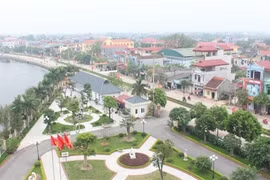
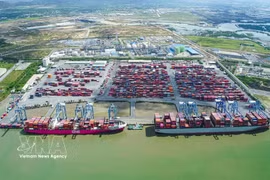
Vinh Phuc’s information, communication sector maintains stronghold amid int’l integration ảnh 1Illustrative photo. (Source: baovinhphuc.com.vn)

Hanoi (VNA) – VinhPhuc’s information and communications sector has been striving to developtelecom infrastructure and improve service quality in the province over recentyears, which in turn has had positive effects on the growth of all othersectors.

When Vinh Phucwas re-established, its telecom infrastructure was underdeveloped with onlybasic postal services provided.

The sector hasmade all-out efforts to modernise infrastructure, foster use of informationtechnology and improve quality of human resources, thanks to which the sectorhas achieved considerable development.

It has nowsatisfied demand of local organisations and people and kept up with moderntrends in the era of the Fourth Industrial Revolution (Industry 4.0).

Vinh Phuc isnow home to 11 enterprises providing postal services with anetwork of 169 post offices in total across the province. They all togethergenerated more than 200 billion VND (8.6 million USD) in average annually with anaverage growth of over 20 percent per annum between 2016 – 2019, andcontributed about 20 billion VND to the State budget.

Now all of theInternet subscribers usedbroadband, including over 95percent using FTTH OpticalFiber Cable.

Last year, thenumber of Internet subscribers reached 165,000 while there were about 85,000 post-paid subscribers, anincrease of 75 percent and 21 percent, respectively, from 2016.

Allgovernmental departments and agencies at district level and above have a local area network (LAN), Internetaccess using fiber-optic cable and are connected with the special-use datatransmission network. All civil servants at the district and provincial levels and about 80 percentof communal level officialshave been provided with computers to help them improve their performance.

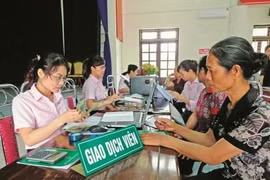
Provincial departmentsand agencies have now delivered a total of 89 level-3 and -4 public services online. All one-doorunits at district and communal departments, agencies and People’s Committeesuse one single software system to enable smooth coordination among theseorganisations.

The province’semail system has created 7,921 accounts for all departments, agencies and officials atlevels, granted 745 government digital certificates and instructed them how touse a software designated for document management and operation.

Media and publishing activities are developing, contributing to the popularisation of the Party and State’s policiesand education of local history and traditional culture for people.

During the 2019 – 2020 period, Vinh Phuc province has granted about 430 publishing licences to the release of around 4 million copies ofpublications, as well as 170 permits for importation of non-commercial ones.

The province’sinformation and telecommunication sector has been urged to continue expandingand modernising infrastructure, diversifying services, improving quality ofpress publications and becoming a contributor to the local socio-economicdevelopment.

Military-run ViettelVinh Phuc, a leading telecom provider in the northern province, has worked toimprove quality of local telecom, information and technology (IT), and postalservices.

It has putforth a specific infrastructure development strategy covering the entireprovince, with nearly 500 4G base stations and more than 400 3G stations, alongwith 3,500 outlets and 200 employees.

The companyhas contributed significantly to providing information on socio-economic development for the public, especially news regardingCOVID-19, removing the development gap between urban and rural areas.

Given thepandemic, Viettel Vinh Phuc has offered free services to frontline workers inthe fight against COVID-19 whiledoubling its broadband speed in order to facilitate online learning andworking.

Despite theimpact of the COVID-19 pandemic,the company earned more than 490 billion VND (20.9 million USD) in revenue inthe first half of this year, up 1.4 percent year-on-year./.
VNA
See more

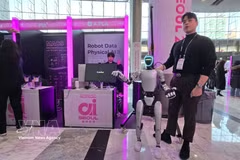
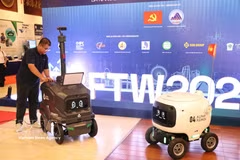
An AI-powered robot at the 2026 Seoul AI Conference. (Photo: VNA)

RoK’s AI robotics drive opens cooperation opportunities with Vietnam

Dao Tuan Hung, President of the Business Association of Vietnamese in Korea (BAVIK), said Vietnam should adopt a practical approach by prioritising specialised robots, including autonomous mobile robots (AMR/AGV), collaborative robots and machine vision systems, in sectors such as agro-fishery processing, textiles and garments, electronics and logistics.

Russian survey vessel Akademik M.A. Lavrentyev (Photo: VNA)

Russian survey vessel docks in Hai Phong

This is the third joint marine scientific survey in Vietnamese waters, running from November 4 - December 12, and one of the opening field activities under the Vietnam–Russia roadmap for marine scientific research cooperation for 2026-2035.

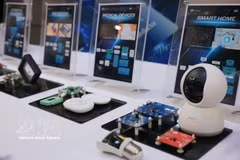
Smart products, chips and semiconductor materials are displayed at the launch ceremony of the national semiconductor chip prototyping support centre in Hanoi on June 26, 2026. (Photo: VNA)

Vietnam-Japan semiconductor cooperation paves the way for high-tech investment

The two countries are implementing five semiconductor research projects involving leading universities, with funding agreements signed in July. The projects cover three-dimensional integrated circuits, advanced semiconductor materials, secure artificial intelligence (AI) chips and power electronic components.

An exhibition space at the “Da Nang Semiconductors and High-Tech 2026” conference, organised by the Da Nang People’s Committee. (Illustrative photo: VNA)

Mobilising international resources to drive Vietnam’s technology development

Vietnam previously focused mainly on attracting overseas experts and intellectuals to work in the country over the long term, but this approach encountered certain difficulties. Cooperation methods are now shifting towards greater flexibility, allowing experts to take part in conferences and scientific seminars, contribute to addressing major national challenges, or participate in short-term training and research programmes.

Assoc. Prof. Dr. Dinh Ngoc Thach, lecturer and researcher in automatic control theory and robotics at the French National Conservatory of Arts and Crafts (Cnam) (Photo: VNA)

Core technologies key to sustainable robotics development in Vietnam: expert

Vietnam should select suitable robotic platforms and gradually build capacity in core technologies, including sensing, environmental perception, positioning, state estimation, AI, control and system integration. This will help develop technologies applicable across multiple sectors while avoiding fragmented investment and dependence on a single product category.

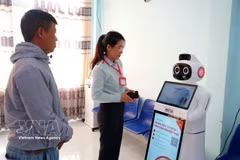
AI robots have become effective assistants in providing administrative services and reducing the workload of officials in Lam Dong province (Photo: VNA)

AI robots help streamline administrative procedures

Operating around the clock, AI robots provide information on administrative procedures, required documents, processing times, fees and relevant regulations, complementing assistance from civil servants.

High prospects for Vietnam-Italy cooperation in robotics industry

High prospects for Vietnam-Italy cooperation in robotics industry

Vietnam and Italy have highly complementary strengths in this robotics field. Italy has experience in machinery manufacturing, industrial robotics applications and an established business network, while Vietnam has a dynamic market, strong demand for production modernisation and a promising young engineering workforce.

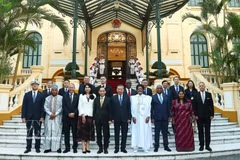
General Secretary of the Communist Party of Vietnam (CPV) Central Committee and President To Lam and the foreign ambassadors at the meeting (Photo: VNA)

Top leader receives new foreign ambassadors

Vietnam wishes to step up cooperation with the countries in such areas as economy, trade and investment; cutting-edge science and technology applications, semiconductors, artificial intelligence, new materials, digital transformation, sustainable agriculture, the environment, energy and renewable energy, the marine economy and maritime transport.

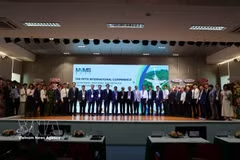
Delegates at the event (Photo: VNA)

Over 400 scientists attend international material conference

Discussions focus on six key areas, including advanced materials and their applications for sustainable development; environmentally friendly material processing technologies; product lifecycle engineering; sustainable machine design; low-carbon industries and the circular economy; and artificial intelligence and digital transformation in material and mechanical engineering.

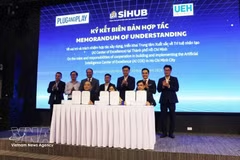
Deputy Prime Minister Ho Quoc Dung (R) and Pierre Barnabé, Chief Operating Officer of French technology group Dassault Systèmes. (Photo: VNA)

Vietnam, France step up cooperation in AI, digital twin technology

At the meeting, the Deputy PM praised the group's contributions to promoting technology cooperation between Vietnam and France, particularly its collaboration with the Ministry of Finance and the National Innovation Centre (NIC) to establish a Centre of Excellence (CoE) for digital twins and artificial intelligence (AI) in Hanoi.

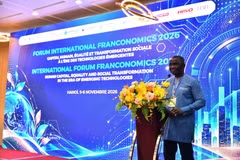
Rigobert Pinga Pinga, Acting Representative of OIF for Asia-Pacific speaks at the event. (Photo: VNA)

Franconomics 2026 explores human-centred technological transformation

Addressing the opening ceremony, Nguyen Anh Tuan, Rector of VNU-IS, said Franconomics was launched in 2019 as a multidisciplinary platform connecting scientists, policymakers, businesses and international organisations to discuss socio-economic issues relevant to Vietnam and the Francophone community.

A new technology exhibition area arranged within the framework of the International Research and Innovation Funders Forum in Hanoi (Photo: VNA)

Vietnam promotes int'l cooperation in science, technology and innovation

Science is opening up new opportunities in artificial intelligence, healthcare, semiconductors and clean energy, while challenges such as climate change, energy security and epidemics require international cooperation. Science, technology, innovation and digital transformation are central to Vietnam’s new growth model.

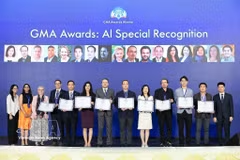
GMA Awards are presented to honour outstanding AI courses at the Global MOOC & Online Education Conference 2026. (Photo: VNA)

Responsible AI, teaching overhaul, global ties dominate GMC 2026

Panelists said AI can support knowledge delivery, information processing and personalised learning, but cannot replace teachers in building independent thinking, critical capacity, emotional intelligence and humanistic values. Universities therefore need to overhaul teaching, testing and assessment and redefine lecturers’ role in an AI-integrated environment.