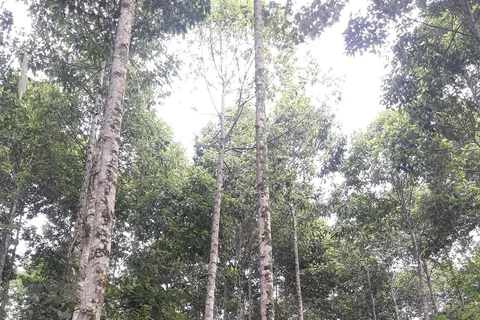
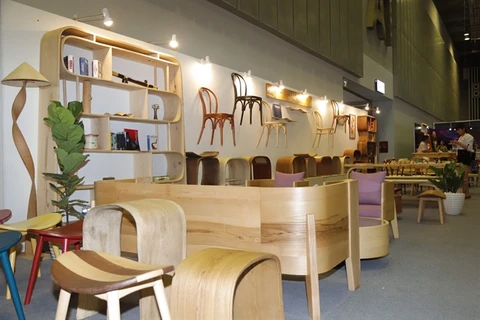
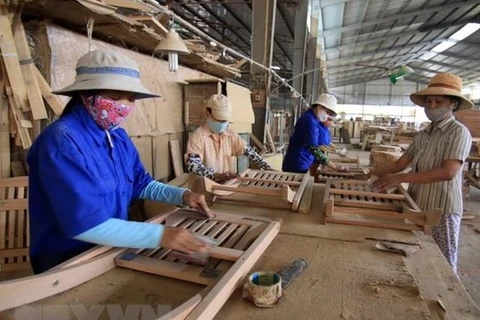
Illustrative image (Photo: VNA)
 Hanoi (VNA) – Local wood processing enterprises need to expand supply chains with a focus on seeking suppliers from domestic and overseas markets to ease disruptions from China due to the novel coronavirus SARS-CoV-2 outbreak, experts have said.
According to Do Xuan Lap, Chairman of the Vietnam Timber and Forest Product Association (VTFPA), this year may be turbulent for the wood processing industry as the wide-spreading virus outbreak have been impacting trade between Vietnam and China, as well as Vietnam’s exports to other countries.
Lap said in the price of wood products, wood materials account for only 35 percent, while the other cost comes from auxiliary materials such as paint products, which may be US brands but are also made in China.
Lap urged local enterprises to actively and swiftly seek alternative raw material suppliers in Vietnam as well as other countries.
“Domestic enterprises also need to connect with each other so that their products can join the supply chains of export products. When they collaborate to produce products that meet the importers’ demand, they can quickly join the global supply chain,” he told a seminar on prospects for Vietnam’s timber industry in 2020 last week in Hanoi.
However, Lap pointed out that until now, the links in the value chain of the timber industry – vertically or horizontally – are very limited. The newly-formed links are small scaled, between the forestry plantation households and some wood processing companies such as Scancia Pacific, Woodsland and Nam Dinh Forest Products Joint Stock Company.
Foreign direct investment (FDI) still plays an important role in exports with half of Vietnam’s wood export value coming from this sector. However, the links between the FDI sector and domestic companies barely exist, dividing the wood industry into two separate segments – FDI and domestic, Lap said.
Dr. To Xuan Phuc, an expert from Forest Trends, agreed the disruptions in both supply and demand from China would cause delays in the export of Vietnam.
“China is an important source of auxiliary materials for Vietnam’s wood industry with items such as straps, accessories, sliders, hinges, paints and chemicals. Businesses also need to find alternative sources of supplies, especially when the materials imported from the previous period are only enough for 2-3 months of production,” Phuc said.
Wood chips are Vietnam’s main export products to China with a turnover of more than 972 million USD in 2019, or 79.2 percent of total export turnover of wood and timber products. Meanwhile, Vietnam imported wooden planks worth 400 million USD.
Phuc said COVID-19 has driven down demand from Chinese paper and pulp companies. At the same time, halts of some ports in China and its stringent inspection for means of transportation and loading goods activities by ships have also caused difficulties for Vietnam’s exports to this country.
Vu Hai Bang, chairman of Woodsland Joint Stock Company, said the epidemic will have a major impact on wood companies in the early stages but with the dynamic and quick solutions, they will overcome difficulties. He also called on enterprises to search for domestic suppliers.
The US is currently the largest importer of wood and wooden products from Vietnam. In 2019, the US imported 5.1 billion USD worth of wood products, accounting for nearly 50 percent of Vietnam’s total exports and up 42 percent year-on-year.
There are opportunities to expand exports for the timber industry, mainly to the US market, but the risks of trade and investment fraud in the timber industry still go hand in hand with these opportunities, Bang said.
According to experts, the EU-Vietnam Free Trade Agreement (EVFTA) will open wider doors for Vietnam’s wood products to enter the EU market (with tariffs being just 6 percent or less), but any breakthrough exports to this market may be seen until next year after Vietnam’s ratification of the agreement, expected at the National Assembly meeting in the middle of this year.
The Government has set a target of 20 billion USD in wood exports by 2025 – nearly double the current turnover. To achieve this goal, it will require fundamental changes in both business strategies in each enterprise and the development strategy of the whole industry.
The industry meanwhile is also calling on the Government’s support in institutional and policy environment to create the most favourable conditions for their business activities. In addition, the Government also needs to create a channel to promote Vietnam’s clean wood and timber brand./.
According to Do Xuan Lap, Chairman of the Vietnam Timber and Forest Product Association (VTFPA), this year may be turbulent for the wood processing industry as the wide-spreading virus outbreak have been impacting trade between Vietnam and China, as well as Vietnam’s exports to other countries.
Lap said in the price of wood products, wood materials account for only 35 percent, while the other cost comes from auxiliary materials such as paint products, which may be US brands but are also made in China.
Lap urged local enterprises to actively and swiftly seek alternative raw material suppliers in Vietnam as well as other countries.
“Domestic enterprises also need to connect with each other so that their products can join the supply chains of export products. When they collaborate to produce products that meet the importers’ demand, they can quickly join the global supply chain,” he told a seminar on prospects for Vietnam’s timber industry in 2020 last week in Hanoi.
However, Lap pointed out that until now, the links in the value chain of the timber industry – vertically or horizontally – are very limited. The newly-formed links are small scaled, between the forestry plantation households and some wood processing companies such as Scancia Pacific, Woodsland and Nam Dinh Forest Products Joint Stock Company.
Foreign direct investment (FDI) still plays an important role in exports with half of Vietnam’s wood export value coming from this sector. However, the links between the FDI sector and domestic companies barely exist, dividing the wood industry into two separate segments – FDI and domestic, Lap said.
Dr. To Xuan Phuc, an expert from Forest Trends, agreed the disruptions in both supply and demand from China would cause delays in the export of Vietnam.
“China is an important source of auxiliary materials for Vietnam’s wood industry with items such as straps, accessories, sliders, hinges, paints and chemicals. Businesses also need to find alternative sources of supplies, especially when the materials imported from the previous period are only enough for 2-3 months of production,” Phuc said.
Wood chips are Vietnam’s main export products to China with a turnover of more than 972 million USD in 2019, or 79.2 percent of total export turnover of wood and timber products. Meanwhile, Vietnam imported wooden planks worth 400 million USD.
Phuc said COVID-19 has driven down demand from Chinese paper and pulp companies. At the same time, halts of some ports in China and its stringent inspection for means of transportation and loading goods activities by ships have also caused difficulties for Vietnam’s exports to this country.
Vu Hai Bang, chairman of Woodsland Joint Stock Company, said the epidemic will have a major impact on wood companies in the early stages but with the dynamic and quick solutions, they will overcome difficulties. He also called on enterprises to search for domestic suppliers.
The US is currently the largest importer of wood and wooden products from Vietnam. In 2019, the US imported 5.1 billion USD worth of wood products, accounting for nearly 50 percent of Vietnam’s total exports and up 42 percent year-on-year.
There are opportunities to expand exports for the timber industry, mainly to the US market, but the risks of trade and investment fraud in the timber industry still go hand in hand with these opportunities, Bang said.
According to experts, the EU-Vietnam Free Trade Agreement (EVFTA) will open wider doors for Vietnam’s wood products to enter the EU market (with tariffs being just 6 percent or less), but any breakthrough exports to this market may be seen until next year after Vietnam’s ratification of the agreement, expected at the National Assembly meeting in the middle of this year.
The Government has set a target of 20 billion USD in wood exports by 2025 – nearly double the current turnover. To achieve this goal, it will require fundamental changes in both business strategies in each enterprise and the development strategy of the whole industry.
The industry meanwhile is also calling on the Government’s support in institutional and policy environment to create the most favourable conditions for their business activities. In addition, the Government also needs to create a channel to promote Vietnam’s clean wood and timber brand./.
VNA