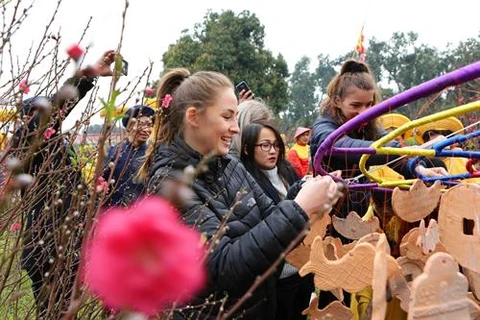
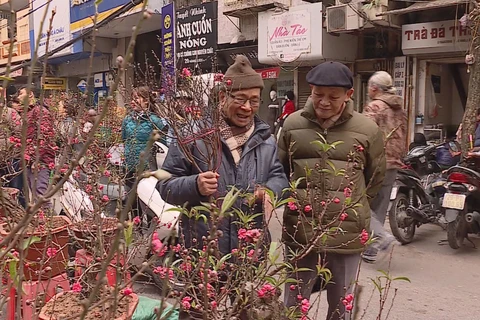
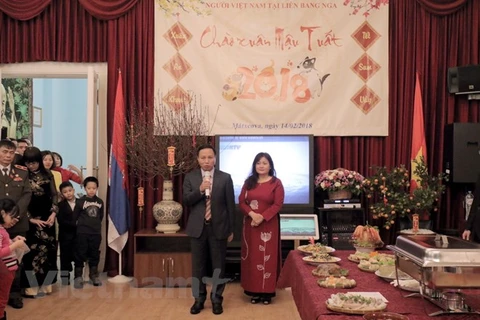
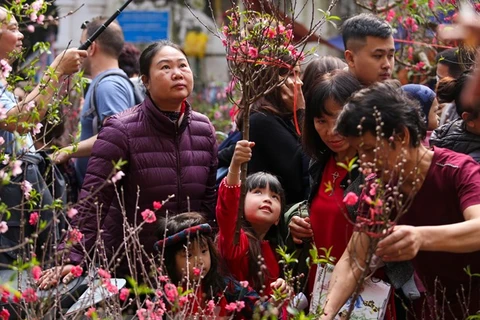
Illustrative image
 Hanoi, (VNA) – Passing down through generations and continued with equal enthusiasm today, “Xong dat” (first footing), a Tet tradition in Vietnam, has always been associated with hopes for a fruitful year ahead.
According to the tradition, the first guest to enter the house after midnight on the Lunar New Year’s Eve is believed to have a bearing on the family’s fortune throughout the year.
Many families ask a close friend or relative to carry out this New Year mission.
To ensure good luck for the house, the selected “first foot” is normally required to have zodiac signs compatible with the host. He or she should also be successful and content with life.
The invited guest usually visits the house in the morning of the first day of the Lunar New Year, bringing with him small gifts for the family, including lucky money in red envelops for children. He greets each member, wishing the old with longevity, businessmen with thriving prosperity, and kids with good academic achievements.
The host generously welcomes the special guest, offering the family’s best New Year treats, wine or tea.
Some families choose a member to become the first to enter the house. In this case, the “first foot” normally goes out and comes home after midnight with a spring branch, which represents year-round blessings.
Due to the belief, Vietnamese people used to avoid visiting each other in the first morning after New Year’s Eve.
The most noticeable change to the age-old tradition is that more and more people have begun to think of it as a New Year delight, rather than a sight of future fortune./.
According to the tradition, the first guest to enter the house after midnight on the Lunar New Year’s Eve is believed to have a bearing on the family’s fortune throughout the year.
Many families ask a close friend or relative to carry out this New Year mission.
To ensure good luck for the house, the selected “first foot” is normally required to have zodiac signs compatible with the host. He or she should also be successful and content with life.
The invited guest usually visits the house in the morning of the first day of the Lunar New Year, bringing with him small gifts for the family, including lucky money in red envelops for children. He greets each member, wishing the old with longevity, businessmen with thriving prosperity, and kids with good academic achievements.
The host generously welcomes the special guest, offering the family’s best New Year treats, wine or tea.
Some families choose a member to become the first to enter the house. In this case, the “first foot” normally goes out and comes home after midnight with a spring branch, which represents year-round blessings.
Due to the belief, Vietnamese people used to avoid visiting each other in the first morning after New Year’s Eve.
The most noticeable change to the age-old tradition is that more and more people have begun to think of it as a New Year delight, rather than a sight of future fortune./.
VNA