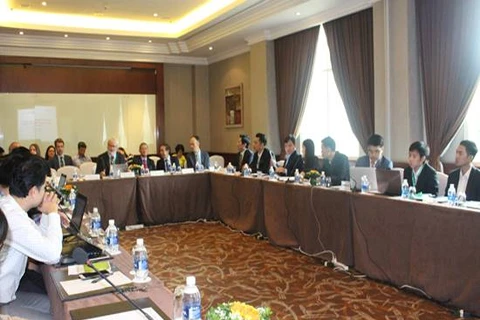
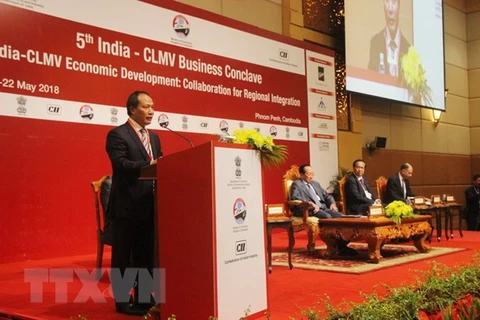
Illustrative image (Source: VNA)
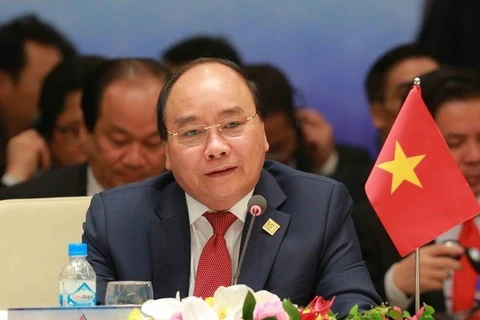
 Hanoi (VNA) – A Vietnamese delegation led by Prime Minister Nguyen Xuan Phuc will attend the eighth Ayeyawady-Chao Phraya-Mekong Economic Cooperation Strategy Summit (ACMECS 8) and the ninth Cambodia-Laos-Myanmar-Vietnam Summit (CLMV 9) in Bangkok, Thailand from June 15-16.
*ACMECS: enhances cooperation, narrows development gap
The ACMECS, also known as the Economic Cooperation Strategy (ECS), was set up in November 2003, named after the three main rivers in the Mekong River basin. Vietnam joined the framework at its first ministerial meeting in November 2004. It now consists of Cambodia, Laos, Myanmar, Thailand and Vietnam, aiming to strengthen bilateral economic collaboration, tap comparative advantages of member regions and countries and narrow development gaps.
The ACMECS now covers eight cooperation fields of trade-investment, agriculture, industry-energy, transportation, tourism, human resources development, health care and environment.
Each country coordinates at least one field. Thailand coordinates joint efforts in trade-investment and health care, Vietnam directs workforce development, industry-energy and co-coordinates with Cambodia in environment.
Cambodia coordinates tourism collaboration while Laos and Myanmar direct transportation and agriculture, respectively.
The biennial ACMECS Summit is held alternately in each country. During the ACMECS 2 in 2006, countries agreed to hold a mid-term review on the sidelines of ASEAN high-level meetings.
Vietnam hosted the ACMECS 3 in Hanoi from November 4-7, 2008, which adopted a joint statement on trade, investment, tourism facilitation and prioritised economic connectivity, especially promoting internal trade and investment to cope with challenges and established a working group on the environment.
The Phnom Penh Declaration and ACMECS Plan of Action were adopted during the AMCECS 4 in the Cambodian capital city in 2010.
During the ACMECS 5 in Vientiane, Laos in 2012, leaders adopted the Vientiane Declaration and ACMECS Plan of Action for 2013-2015 which specifies plans for cooperation in industry-energy, tourism, trade-investment, agriculture, workforce development, transport connectivity, health care, social welfare and the environment.
The ACMECS 6 in Myanmar in 2014 passed the Nay Pyi Taw Declaration and Action Plan for the 2016-2018 period with a view to turning ACMECS into a top destination for investment and tourism.
The ACMECS 7, held in Hanoi in 2016, was themed “Towards a Dynamic and Prosperous Mekong Sub-region”. It adopted the Hanoi Declaration and pledged to boost priority collaboration in transportation, trade-investment, industry, tourism, agriculture and environment.
*CLMV: Promotes integration in Mekong sub-region and ASEAN
During the ASEAN-Japan Summit in December 2003 in Tokyo, leaders of Cambodia, Laos, Myanmar and Vietnam agreed to hold the first CLMV Summit on the occasion of the 10th ASEAN Summit held in Vientiane in November 2004.
The CLMV cooperation is based on the idea of narrowing development gap between CMVL and other countries in the region, thus facilitating their integration into the region’s development. It is also a channel to call for support from other ASEAN countries and development partners for CLMV countries as well as a forum for CLMV to coordinate stances, thus protecting their interests during the process of economic connectivity in ASEAN and between ASEAN and its partners.
CLMV cooperation covers trade, investment, agriculture, industry, energy, transport, tourism and human resources development. The countries agreed to establish six working groups and Vietnam coordinates three of them, namely trade-investment, information technology and human resources development.
The CLMV 1 in 2004 ratified the Vientiane Declaration on enhancing economic partnership and integration within Mekong Sub-region, ASEAN and regional cooperation frameworks.
The CLMV 2 in 2005 adopted the Action Plan that mentioned joint work with Thailand to consider the possibility of combining CLMV with ACMECS coordination to avoid overlapping and improve cooperation efficiency.
The CLMV 3 in 2007 saw the signing of agreements on combining CLMV and ACMECS action plans.
The CLMV 4 in 2008 set orientations for regional collaboration in trade, investment, transport, agriculture, industry, energy, tourism and human resources development. It committed favourable conditions for partnerships across processing industry, mining, hydropower, infrastructure, services and logistics.
Vietnam built the CLMV Scholarship Fund from which tens of scholarships are offered to Cambodia, Laos and Myanmar each year, which will continue till 2020.
The CLMV 5 in 2010 adopted Joint Statement on enhancing cooperation to narrow development gap with other ASEAN members.
The CLMV 6 in 2015 pledged to improve cooperation efficiency and facilitate trade, investment and tourism and strengthen connectivity via developing economic corridors and human resources.
The CLMV 7 in 2016 vowed to reinforce trade-investment ties among the four countries, devise new policies to facilitate trade and signed bilateral and multilateral agreements.
The CLMV 8 in Hanoi in 2017 agreed on work to launch projects in transport, trade and investment facilitation, industry, tourism and human resources development./.
*ACMECS: enhances cooperation, narrows development gap
The ACMECS, also known as the Economic Cooperation Strategy (ECS), was set up in November 2003, named after the three main rivers in the Mekong River basin. Vietnam joined the framework at its first ministerial meeting in November 2004. It now consists of Cambodia, Laos, Myanmar, Thailand and Vietnam, aiming to strengthen bilateral economic collaboration, tap comparative advantages of member regions and countries and narrow development gaps.
The ACMECS now covers eight cooperation fields of trade-investment, agriculture, industry-energy, transportation, tourism, human resources development, health care and environment.
Each country coordinates at least one field. Thailand coordinates joint efforts in trade-investment and health care, Vietnam directs workforce development, industry-energy and co-coordinates with Cambodia in environment.
Cambodia coordinates tourism collaboration while Laos and Myanmar direct transportation and agriculture, respectively.
The biennial ACMECS Summit is held alternately in each country. During the ACMECS 2 in 2006, countries agreed to hold a mid-term review on the sidelines of ASEAN high-level meetings.
Vietnam hosted the ACMECS 3 in Hanoi from November 4-7, 2008, which adopted a joint statement on trade, investment, tourism facilitation and prioritised economic connectivity, especially promoting internal trade and investment to cope with challenges and established a working group on the environment.
The Phnom Penh Declaration and ACMECS Plan of Action were adopted during the AMCECS 4 in the Cambodian capital city in 2010.
During the ACMECS 5 in Vientiane, Laos in 2012, leaders adopted the Vientiane Declaration and ACMECS Plan of Action for 2013-2015 which specifies plans for cooperation in industry-energy, tourism, trade-investment, agriculture, workforce development, transport connectivity, health care, social welfare and the environment.
The ACMECS 6 in Myanmar in 2014 passed the Nay Pyi Taw Declaration and Action Plan for the 2016-2018 period with a view to turning ACMECS into a top destination for investment and tourism.
The ACMECS 7, held in Hanoi in 2016, was themed “Towards a Dynamic and Prosperous Mekong Sub-region”. It adopted the Hanoi Declaration and pledged to boost priority collaboration in transportation, trade-investment, industry, tourism, agriculture and environment.
*CLMV: Promotes integration in Mekong sub-region and ASEAN
During the ASEAN-Japan Summit in December 2003 in Tokyo, leaders of Cambodia, Laos, Myanmar and Vietnam agreed to hold the first CLMV Summit on the occasion of the 10th ASEAN Summit held in Vientiane in November 2004.
The CLMV cooperation is based on the idea of narrowing development gap between CMVL and other countries in the region, thus facilitating their integration into the region’s development. It is also a channel to call for support from other ASEAN countries and development partners for CLMV countries as well as a forum for CLMV to coordinate stances, thus protecting their interests during the process of economic connectivity in ASEAN and between ASEAN and its partners.
CLMV cooperation covers trade, investment, agriculture, industry, energy, transport, tourism and human resources development. The countries agreed to establish six working groups and Vietnam coordinates three of them, namely trade-investment, information technology and human resources development.
The CLMV 1 in 2004 ratified the Vientiane Declaration on enhancing economic partnership and integration within Mekong Sub-region, ASEAN and regional cooperation frameworks.
The CLMV 2 in 2005 adopted the Action Plan that mentioned joint work with Thailand to consider the possibility of combining CLMV with ACMECS coordination to avoid overlapping and improve cooperation efficiency.
The CLMV 3 in 2007 saw the signing of agreements on combining CLMV and ACMECS action plans.
The CLMV 4 in 2008 set orientations for regional collaboration in trade, investment, transport, agriculture, industry, energy, tourism and human resources development. It committed favourable conditions for partnerships across processing industry, mining, hydropower, infrastructure, services and logistics.
Vietnam built the CLMV Scholarship Fund from which tens of scholarships are offered to Cambodia, Laos and Myanmar each year, which will continue till 2020.
The CLMV 5 in 2010 adopted Joint Statement on enhancing cooperation to narrow development gap with other ASEAN members.
The CLMV 6 in 2015 pledged to improve cooperation efficiency and facilitate trade, investment and tourism and strengthen connectivity via developing economic corridors and human resources.
The CLMV 7 in 2016 vowed to reinforce trade-investment ties among the four countries, devise new policies to facilitate trade and signed bilateral and multilateral agreements.
The CLMV 8 in Hanoi in 2017 agreed on work to launch projects in transport, trade and investment facilitation, industry, tourism and human resources development./.
VNA