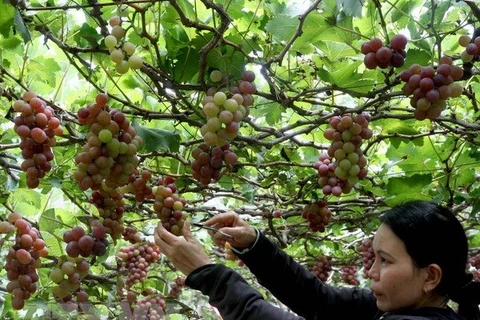
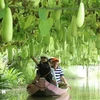
Gac (spiny gourd) fruit, which has special health benefits, grows in Thach Thao Garden in Tien Giang province’s My Tho City (Photo: VNA)
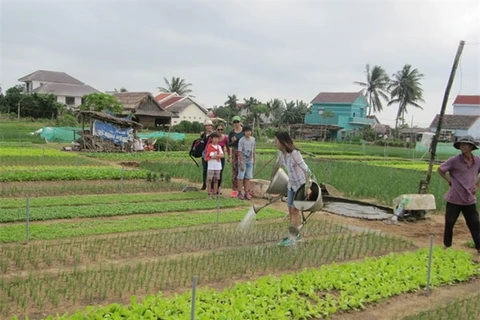
 HCM City (VNS/VNA) - Farmers in the Mekong Delta have developed agri-tourism models that have not only increased their incomes but also contributed to sustainable agriculture and rural development in the area.
The Mekong Delta, which is the country’s largest agricultural production area, has great potential to develop ecotourism. It has been listed among the best destinations to visit in 2019 by the US travel magazine Condé Nast Traveler.
The delta attracts millions of visitors each year thanks to its cultural diversity, natural beauty and a large range of tourism products.
According to HCM City’s Department of Tourism, tourist demand to seek hands-on experiences has increased from 20-30 percent compared to recent years.
In many localities in the delta, organisations and individuals have begun to pour more investment in agri-tourism models.
The models help to both preserve traditional culture and increase farmers’ incomes.
Pham Van Hoang, 54, owner of Chin Hong Fruit Garden in Phong Dien district’s My Khanh commune in Can Tho city, said he grows star fruit, mango, rambutan, coconut and guava on 1.8ha.
The garden started opening to serve visitors as an agri-tourism model in August 2016. Tickets are 30,000 VND (1.3 USD) per person. Visitors can pick fruit to eat while relaxing later in the garden. “Visitors usually buy more fruits to bring home,” he said.
David Forrest, a French tourist, said he saw fruits that were never available in Europe. “This place was very interesting to visit. I’m going to visit rice fields to understand how farmers grow rice,” he said.
Hoang said that the eco-tourism model had helped him increase his income and expand production.
He earns a profit of about 400 million VND (17,245 USD) each year, with revenue from tourism accounting for 70 percent of the total.
Previously, he sold all the fruit directly to traders at cheaper rates, but now he sells 70 percent of fruits to visitors.
The garden welcomes about 130-150 domestic and foreign visitors daily, and up to 200 visitors on weekends and holidays.
Popular traditional dishes can be prepared to visitors’ orders with accompanying drinks served in the garden.
Hoang plans to open a homestay service in the near future to meet demand of visitors.
Cao Van Hoa, deputy director of Tien Giang province’s Department of Agriculture and Rural Development, said the most profitable model was agri-tourism, which contributes to sustainable agricultural development.
The province’s 77,000ha of fruit trees produce about 1.5 million tonnes of fruits each year.
Among these, durian trees are one of the key fruits with more than 12,000ha. Other fruits grown in the area are blue dragon, pineapple, mango, grapefruit, star apple and many others.
Fruit farmers earn an annual profit of about 400 million VND (17,245 USD) per ha, with durian farmers earning about 1 billion VND (43,000 USD) per ha per year.
The value of fruit trees accounts for 64 percent of the total value of agricultural production in the province.
Combining agricultural production with tourism, farmers can raise their incomes by two to three times compared to production and consumption of agricultural products, Hoa said.
“We plan to develop specialty fruits as the province’s key agri-tourism products in the coming years,” he said.
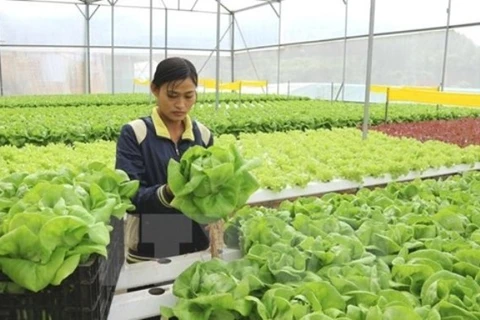
The department is working with the province’s Department of Culture, Sports and Tourism to design tours that will include visits to flower gardens, fruit and vegetable fields cultivated with high-tech methods, new rural areas, historic and cultural relic sites, and traditional craft villages.
“Agencies should cooperate more closely to help the tourism industry exploit agriculture,” Hoa said.
Tran Anh Tuan, 58, owner of Thach Thao Garden in Tien Giang province’s My Tho city, said when he had noticed the growing desire of tourists to explore nature and agricultural products, he switched from growing vegetables, oranges and lemons, which are not economically efficient, to gac (Momordica cochinchinensis) fruit and many kinds of flowers.
Tickets for visitors to his garden are 30,000 VND (1.3 USD) per person. “My garden brings higher income now and I can see the number of visitors has been increasing,” he said.
Luu Le Phuong, a visitor from Vinh Long province, said she had heard of gac fruit but had never seen the plant before. “It’s really beautiful.”
The garden also rents traditional dresses of ao dai and ao ba ba for visitors to wear for photos taken in front of beautiful flowers.
Besides income from tourism, four times a week, Tuan sells 300-400kg of fruit each time, for 10,000 VND (0.43 USD) per kilo, earning 3-4 million VND (130-170 USD) a week.
Despite the progress, many experts said that agri-tourism models in the Mekong Delta had developed haphazardly without coordination. Many are small and overlap in function, and not commensurate with the potential of the region, they said.
Limited connection between destinations and travel businesses, and a shortage of human resources are other challenges facing agri-tourism development.
Vo Huong, deputy director of Kien Tri Human Resource Training Co., Ltd in Can Tho city, said the most difficult task was training human resources.
“Most of them lack skills and knowledge about conducting tourism and being a tourist guide, while tour guides who have graduated from tourism schools lack experience and knowledge about agricultural production,” she said.
Localities in the delta should work more closely with tourism schools to improve the quality of staff for agricultural-based tourism, she said.
Each year, the delta welcomes millions of domestic and foreign visitors, but only about 10 percent of the total extend their stays.
“New agricultural tourism products should be created to attract more tourists who will stay longer and spend more money,” said Nguyen Hoang On, deputy head of the Centre for Tourism Development under the Can Tho city’s Department of Culture, Sports and Tourism.
In recent years, the city has helped farmers and artisans develop fruit gardens and traditional craft villages to enhance eco-tourism combined with agriculture, he said.
However, the services and products are still basic and on a small- to medium-sized scale. Many locals and provinces offer similar products.
In addition, facilities at many agricultural tourism sites have not been fully developed.
“Lack of effective policies and strategies has hindered development in agri-tourism,” he said.
Brand promotion and the use of information technologies are also needed. To achieve sustainable development, authorities in the Mekong Delta should strive for improved efficiency, On said.
Each locality in the region should improve connections between farmers, travel agents, local authorities, and agencies that represent tourism, agriculture, and trading activities.-VNS/VNA
The Mekong Delta, which is the country’s largest agricultural production area, has great potential to develop ecotourism. It has been listed among the best destinations to visit in 2019 by the US travel magazine Condé Nast Traveler.
The delta attracts millions of visitors each year thanks to its cultural diversity, natural beauty and a large range of tourism products.
According to HCM City’s Department of Tourism, tourist demand to seek hands-on experiences has increased from 20-30 percent compared to recent years.
In many localities in the delta, organisations and individuals have begun to pour more investment in agri-tourism models.
The models help to both preserve traditional culture and increase farmers’ incomes.
Pham Van Hoang, 54, owner of Chin Hong Fruit Garden in Phong Dien district’s My Khanh commune in Can Tho city, said he grows star fruit, mango, rambutan, coconut and guava on 1.8ha.
The garden started opening to serve visitors as an agri-tourism model in August 2016. Tickets are 30,000 VND (1.3 USD) per person. Visitors can pick fruit to eat while relaxing later in the garden. “Visitors usually buy more fruits to bring home,” he said.
David Forrest, a French tourist, said he saw fruits that were never available in Europe. “This place was very interesting to visit. I’m going to visit rice fields to understand how farmers grow rice,” he said.
Hoang said that the eco-tourism model had helped him increase his income and expand production.
He earns a profit of about 400 million VND (17,245 USD) each year, with revenue from tourism accounting for 70 percent of the total.
Previously, he sold all the fruit directly to traders at cheaper rates, but now he sells 70 percent of fruits to visitors.
The garden welcomes about 130-150 domestic and foreign visitors daily, and up to 200 visitors on weekends and holidays.
Popular traditional dishes can be prepared to visitors’ orders with accompanying drinks served in the garden.
Hoang plans to open a homestay service in the near future to meet demand of visitors.
Cao Van Hoa, deputy director of Tien Giang province’s Department of Agriculture and Rural Development, said the most profitable model was agri-tourism, which contributes to sustainable agricultural development.
The province’s 77,000ha of fruit trees produce about 1.5 million tonnes of fruits each year.
Among these, durian trees are one of the key fruits with more than 12,000ha. Other fruits grown in the area are blue dragon, pineapple, mango, grapefruit, star apple and many others.
Fruit farmers earn an annual profit of about 400 million VND (17,245 USD) per ha, with durian farmers earning about 1 billion VND (43,000 USD) per ha per year.
The value of fruit trees accounts for 64 percent of the total value of agricultural production in the province.
Combining agricultural production with tourism, farmers can raise their incomes by two to three times compared to production and consumption of agricultural products, Hoa said.
“We plan to develop specialty fruits as the province’s key agri-tourism products in the coming years,” he said.
The department is working with the province’s Department of Culture, Sports and Tourism to design tours that will include visits to flower gardens, fruit and vegetable fields cultivated with high-tech methods, new rural areas, historic and cultural relic sites, and traditional craft villages.
“Agencies should cooperate more closely to help the tourism industry exploit agriculture,” Hoa said.
Tran Anh Tuan, 58, owner of Thach Thao Garden in Tien Giang province’s My Tho city, said when he had noticed the growing desire of tourists to explore nature and agricultural products, he switched from growing vegetables, oranges and lemons, which are not economically efficient, to gac (Momordica cochinchinensis) fruit and many kinds of flowers.
Tickets for visitors to his garden are 30,000 VND (1.3 USD) per person. “My garden brings higher income now and I can see the number of visitors has been increasing,” he said.
Luu Le Phuong, a visitor from Vinh Long province, said she had heard of gac fruit but had never seen the plant before. “It’s really beautiful.”
The garden also rents traditional dresses of ao dai and ao ba ba for visitors to wear for photos taken in front of beautiful flowers.
Besides income from tourism, four times a week, Tuan sells 300-400kg of fruit each time, for 10,000 VND (0.43 USD) per kilo, earning 3-4 million VND (130-170 USD) a week.
Despite the progress, many experts said that agri-tourism models in the Mekong Delta had developed haphazardly without coordination. Many are small and overlap in function, and not commensurate with the potential of the region, they said.
Limited connection between destinations and travel businesses, and a shortage of human resources are other challenges facing agri-tourism development.
Vo Huong, deputy director of Kien Tri Human Resource Training Co., Ltd in Can Tho city, said the most difficult task was training human resources.
“Most of them lack skills and knowledge about conducting tourism and being a tourist guide, while tour guides who have graduated from tourism schools lack experience and knowledge about agricultural production,” she said.
Localities in the delta should work more closely with tourism schools to improve the quality of staff for agricultural-based tourism, she said.
Each year, the delta welcomes millions of domestic and foreign visitors, but only about 10 percent of the total extend their stays.
“New agricultural tourism products should be created to attract more tourists who will stay longer and spend more money,” said Nguyen Hoang On, deputy head of the Centre for Tourism Development under the Can Tho city’s Department of Culture, Sports and Tourism.
In recent years, the city has helped farmers and artisans develop fruit gardens and traditional craft villages to enhance eco-tourism combined with agriculture, he said.
However, the services and products are still basic and on a small- to medium-sized scale. Many locals and provinces offer similar products.
In addition, facilities at many agricultural tourism sites have not been fully developed.
“Lack of effective policies and strategies has hindered development in agri-tourism,” he said.
Brand promotion and the use of information technologies are also needed. To achieve sustainable development, authorities in the Mekong Delta should strive for improved efficiency, On said.
Each locality in the region should improve connections between farmers, travel agents, local authorities, and agencies that represent tourism, agriculture, and trading activities.-VNS/VNA
VNA