Agricultural products need improvements to better compete in EU market

The EU-Vietnam Free Trade Agreement (EVFTA) is seen as a comprehensive and high-quality trade pact that helps diversify export markets for products originating from Vietnam.

Hanoi (VNA) – The EU-Vietnam Free Trade Agreement (EVFTA) is seen as a comprehensive and high-quality trade pact that helps diversify export markets for products originating from Vietnam, particularly agricultural products and seafood. However, exporters should work to ensure their goods can reach these fastidious markets with strict standards for imports.

According to insiders, Vietnamese husbandry will be greatly impacted due to small-scale farming, less competitive prices and failure to meet food safety and hygiene criteria.

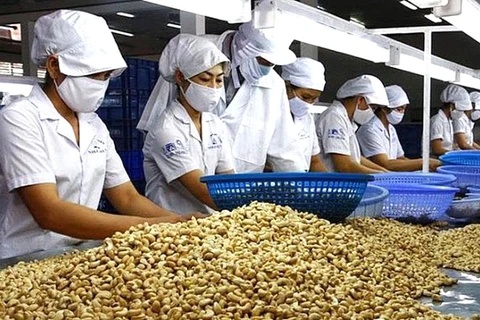
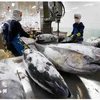
Agricultural products need improvements to better compete in EU market ảnh 1Vietnam is among the world’s top exporters of many agricultural products(Photo: VietnamPlus)


Prices of agricultural products still unstable

Vietnamese agricultural products have won many consumers worldwide. The country is the world’s second largest rice exporter and has been among the world’s top pepper and cashew shippers for years.

The country’s farm produce and seafood products have been shipped to 190 countries and territories.

Currently, the EU is the second biggest consumer of Vietnamese agricultural products, with 15.4 percent of the country’s total exports, compared to 13.8 percent to the US in third.

However, the value of agro-forestry-fishery exports has varied enormously in recent years, according to the Ministry of Agriculture and Rural Development. In the first six months of the year, export revenue fell 6.9 percent year-on-year to estimated 12.4 billion USD.

Dramatic drops were seen in coffee (10.6 percent in volume, and 21.1 percent in revenue), rice (2.9 percent in volume, and 17.6 percent in value), and cassava (17.7 percent in volume, and 13.9 percent in value).

Chairman of the Vietnam Farmers’ Union Thao Xuan Sung pointed out a lack of agricultural value chains as well as high rate of unprocessed exports as the main weakness of the sector.

Additionally, many goods failed to meet food safety and hygiene standards of the EU.

“Those factors have put up barriers for Vietnamese products on the way to global markets, particularly large and high-quality ones,” Sung said.

Agricultural products and seafood have been returned or faced increased inspection frequency due to failure to meet Sanitary and Phytosanitary Measures (SPS) and Technical Barriers to Trade (TBT) requirements in choosy markets like the EU.

With the EVFTA, Deputy Head of the Ministry of Agriculture and Rural Development’s Institute of Policy and Strategy for Agriculture and Rural Development Tran Cong Thang said: “Although a line-up of tax lines will be removed under the EVFTA, the trade pact holds stricter regulations on food safety and traceability.”

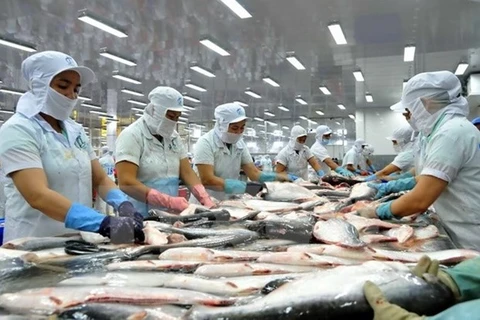
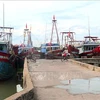
Agricultural products need improvements to better compete in EU market ảnh 2

Exports of seafood and some agricultural products in first half of 2019 (Photo: VietnamPlus)

Farmers not left behind

Once the EVFTA takes effect, tariffs imposed on Vietnamese agricultural exports, including processed goods, will be reduced or even removed.

Specifically, the EU will eliminate 94 percent of the total 547 tariff lines on vegetable and fruit products, many of which are Vietnam’s strengths, including litchi, longan, rambutan, dragron fruit, pineapple, and melon. Currently, Vietnamese fruits and vegetables face the most favoured nation (MFN) tax of up to 20 percent.

However, thanks to the deal, EU farm produce will also be able to reach the Vietnamese market, threatening local products’ market share.

Experts have said the agricultural sector should be reorganised towards competitiveness to take full advantage of the trade pact.

According to Chairman of Thai Binh Seed Joint Stock Company Tran Manh Bao, processing and preserving systems must be developed to meet strict technical and food safety and hygiene standards of importers.

The State, businesses and farmers should work together to create a complete value chain, helping improve competitive edge globally.

“The Government should join hands with companies to build strong national brands,” he recommended.

Meanwhile, PhD. Nguyen Minh Phong suggested the agricultural sector shift towards a cooperative economic model to adapt to global economic integration.

“The State needs to improve planning quality, give better forecast of the global farm produce market as well as accelerate automation and mechanisation in the whole production process,” he said.

Vice President of Vietnam Farmers’ Union Nguyen Xuan Dinh stressed that the household business model should receive due attention from the State. Rational mechanisms must be mapped out to develop new-style cooperatives, as well as encourage the participation of local farmers.

These factors, when brought together, are prerequisites for agricultural development. Particularly, they help ensure no farmers are left behind during the integration process.-VNA
VNA

See more

Customers buy petrol at a Petrolimex petrol station in Tran Hung Dao ward, Hung Yen province. (Photo: VNA)

PM orders stronger measures to ensure stable petrol supply

The MoIT was instructed to direct key petrol producers and traders to proactively develop supply plans to guarantee adequate fuel provision for distribution systems, maintain regular sale operations, and sell products at listed prices. It must also closely monitor developments in global and domestic petrol markets and adopt appropriate management measures when necessary.

Farmers in Ca Mau province use combine harvesters to harvest rice. (Photo: VNA)

PM orders coordinated measures to stabilise rice production and markets

The Minister of Agriculture and Environment is tasked with instructing local authorities to closely monitor production developments, improve forecasting capacity, strengthen pest control measures, and proactively respond to adverse weather conditions to protect crops, maintain planned yields and output, and reduce production costs.

A worker refuels a vehicle at a petrol station in Hung Yen province. (Photo: VNA)

Fuel prices slashed as stabilisation fund used

According to a joint decision by the Ministry of Industry and Trade and the Ministry of Finance, the price of RON95-III petrol – the most widely used grade – fell by 3,880 VND to 25,240 VND (0.95 USD) per litre.

Customers purchase petrol at Station No. 03 (Petrolimex Hung Yen) on Quang Trung Street, Tran Hung Dao ward, Hung Yen province. (Photo: VNA)

Hung Yen takes measures to curb speculation, stabilise fuel market

Petrolimex Hung Yen maintains regular reserves of about 5,500 cubic metres at directly managed outlets and roughly 2,000 cubic metres at franchised stations. The provincial Department of Industry and Trade has ordered closer monitoring of supply and demand and retail prices to detect shortages or unjustified price hikes.

The automobile assembly line of the Honda Phuc Yen factory in Phu Tho province (Photo: VNA)

Honda Vietnam sees decline in motorcycle, car sales

Sales of both motorcycles and automobiles by Honda Vietnam declined in February, dropping 19.6% and 41.8% year-on-year, respectively, according to the company’s latest business results released on March 11.

Team 2 of the Hanoi Market Surveillance Sub-department inspects operations of a Petrolimex petrol station on Tran Quang Khai street (Photo: VNA)

Hanoi maintains stable supply of petrol, LPG

The Hanoi Market Surveillance Sub-department said petrol and LPG trading activities across the city remain stable, with supply largely meeting demand despite volatility in global energy prices.

A Qatar Airways aircraft is seen at Noi Bai International Airport in Hanoi. (Photo: VNA)

Qatar Airways cancels 13 more flights amid Middle East conflicts

Statistics show that airspace across the Middle East has yet to return to normal operations, with multiple FIRs still imposing restrictions or partial closures. As a result, international flight operations through the region continue to face disruptions and route adjustments.

New FDI registrations remained robust in the first two months of 2026, with 620 newly licensed projects worth 3.54 billion USD, up 20.2% in the project number and 61.5% in registered capital compared to the same period last year. (Photo: VNA)

FDI attraction in 2026: Vietnam adapts to new global investment standards

To further enhance FDI attraction amid rising global and regional competition, Deputy Minister of Finance Tran Quoc Phuong said the ministry is drafting new strategies on foreign-invested economic development and next-generation FDI attraction, focusing on more open, transparent and competitive institutional frameworks.

Prime Minister Pham Minh Chinh speaks at the conference. (Photo: VNA)

PM highlights 'silver economy' as sustainable growth driver

The PM stressed that population ageing is an inevitable part of development, and the key challenge is not to avoid it but to respond proactively with sound policies and decisive action to turn the "silver economy" into a new driver of growth, innovation and sustainable development.

The first EU – Vietnam Global Gateway Business and Investment Forum is scheduled to take place in Hanoi on March 24, 2026. (Photo: vneconomy.vn)

EU – Vietnam Global Gateway business forum to be held in Hanoi

Key discussions will centre on sectors viewed as catalysts for Vietnam’s sustainable growth such as sustainable transport, energy transition, infrastructure connectivity, green and digital transformation, and the adoption of ESG standards in investment and business practices.

Vietnamese Ambassador to France Trinh Duc Hai meets with representatives of FPT at its office in the La Défense area of Paris on March 10. (Photo: VNA)

Vietnamese tech firm FPT expands footprint in France

According to Dang Tran Phuong, Deputy CEO of FPT Software in charge of the European and Middle Eastern markets, FPT considers France one of its key markets in Europe. Since opening its first office there in 2008, the company has built a solid presence with offices in Paris, Lyon, Toulouse and Marseille.