Alarm for FDI sector in environmental protection

The foreign direct investment (FDI) sector, which has significantly contributed to the growth of the Vietnamese economy, has on the other hand posed negative impacts to the nation’s ecosystem.
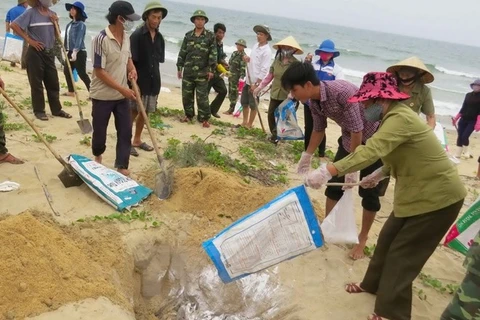
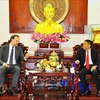
Alarm for FDI sector in environmental protection ảnh 1Leaders of Formosa apologise to Vietnamese people for causing mass fish deaths along central coast (Photo: VNA)

Hanoi (VNA) - The foreign direct investment (FDI) sector, which has significantly contributed to the growth of the Vietnamese economy, has on the other hand posed negative impacts to the nation’s ecosystem with a number of environmental destruction cases seriously affecting the public health, as well as the sustainability of the country’s economic growth and development.

Some experts hold that the main reason behind the situation is FDI enterprises’ poor observation of regulations on environmental protection in Vietnam.

A recent survey by the University of Economy under the Hanoi National University showed that 45 percent of 150 FDI firms in 2011 did not apply a low-emission production process, while 69 percent said they would not implement the process if they were not obliged to, and 57.7 percent took high cost as an excuse.

Currently, only 66 percent out of a total of 289 industrial parks nationwide have a concentrated wastewater treatment station. Especially, up to 75 percent of industrial parks and 85 percent of industrial clusters in the Mekong Delta are yet to be equipped with such facility.

At the same time, FDI projects in Vietnam , mostly run by Asian investors, have medium technology using large amounts of natural resources and releasing high emissions.

According to the Central Institution for Economic Management, as of 2013, only 5 percent of FDI firms in Vietnam own high technology, while about 80 percent of them operate medium technology and the remaining percent use out-of-date technology.

Between 2011 and 2015, FDI mostly flowed to such areas as apparel, chemicals, electronics, paper and iron with many latent risks of environment pollution.

Meanwhile, from 1988 to 2013, only 28 out of 16,000 FDI projects, or 0.2 percent, were launched on wastewater treatment, with only 710 million USD or 0.36 percent of total registered investment.

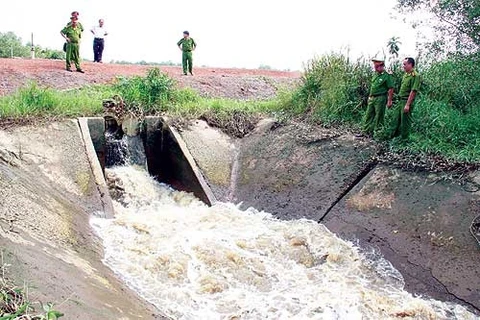
Some serious environmental incidents have been recorded, changing the ecosystem and affecting economic growth and social security at the sites. Notably, the Vedan company in the southern province of Dong Nai released its untreated wastewater to the Thi Vai River over 14 years, while the Miwon company in the northern province of Phu Tho let 900 cubic meters of wastewater out to the Red River. Most recently, Formosa Ha Tinh’s poisoning wastewater caused mass fish deaths along the country’s central coasts.

In order to prevent negative impacts on the environment by the FDI sector, experts held that it is crucial to prioritise projects from developed countries with a good sense of environmental protection, while strengthening the effectiveness of state management over the FDI sector’s environmental conservation.-VNA
VNA

See more

Quang Tri recently received two endangered pangolins from local resident. (Photo published by VNA)

Two pangolins handed over to authorities in Quang Tri

At around 8:30 pm on April 12, Le Thanh Tung, a resident of Thuong Nghia hamlet in Cam Lo commune, and his friend spotted the two pangolins, weighing over 4 kg, while working near the Cam Lo–La Son Expressway.

A view of Phong Nha - Ke Bang National Park in Da Nang city (Photo: VNA)

Phong Nha – Ke Bang: untapped biological treasure in Truong Son mountains

Unlike ecosystems where species inventories are largely complete, Phong Nha–Ke Bang National Park remains scientifically “open,” with each survey revealing new findings. Recent studies - from local research projects to international collaborations - have recorded additional bird species and identified the rare parasitic plant Sapria himalayana, which only survives in intact primary forests.

The interface of Vietnam Weather KTTV mobile application (Photo: baochinhphu,vn)

Application of dangerous weather warning introduced

All unusual weather events, from widespread thunderstorms, lightning strikes, landslides, flash floods, tropical depressions to strong winds at sea, are continuously updated from official data sources of the NCMHF and meteorological stations and prominently displayed on the main interface.

An overview of the kick-off meeting for the “Sustainable Management of Substances Controlled by the Montreal Protocol” project (Photo: VNA)

Vietnam launches 13 mln USD project to phase out ozone-depleting substances

Funded by the Multilateral Fund for the Implementation of the Montreal Protocol and implemented through the World Bank (WB) and the United Nations Environment Programme (UNEP), the project aims to help Vietnam meet its international commitments in managing and phasing out controlled substances. It will run from 2026 to 2031 with a total budget of over 13 million USD.

Tram Chim National Park and the Mekong Conservancy Foundation (MCF) organise the workshop on sustainable restoration of wetland ecosystems in the Mekong Delta on March 24. (Photo: VNA)

Solutions sought to restore Mekong Delta wetland ecosystems

Experts at the workshop described wetlands as the “ecological heart” of the Mekong Delta, playing a vital role in water storage and regulation, climate moderation, carbon sequestration, biodiversity conservation, and livelihoods for millions of people through aquaculture, agriculture, and ecotourism. These ecosystems also help reduce disaster risks and enhance climate resilience.

Deputy Minister of Agriculture and Environment Le Cong Thanh speaks at the ceremony to launch major environmental campaign. (Photo: VNA)

Vietnam calls for collective action on water, air, climate and sustainable future

Deputy Minister of Agriculture and Environment Le Cong Thanh underscored that water, climate, and energy are fundamental pillars of sustainable development. In Vietnam, water resources and weather patterns influence every aspect of life, from food and water security to livelihoods, ecosystem stability, and economic growth.