An Giang province promotes agro-fishery exports

International economic integration has helped An Giang’s key exports such as agricultural and fishery products, as well as frozen vegetables and fruits occupy many major markets like the US, the EU, Japan and the Republic of Korea.
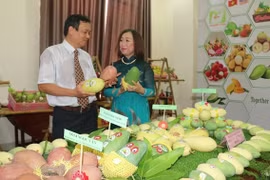
An Giang province promotes agro-fishery exports ảnh 1Illustrative image (Photo: VietnamPlus)

An Giang (VNA)
– International economic integration hashelped An Giang’s key exports such as agricultural and fishery products, aswell as frozen vegetables and fruits occupy many major markets like the US, theEU, Japan and the Republic of Korea.

In 2019, An Giang’s export revenue amounted to 890 million USD,increasing 5.95 percent over a year earlier.

The province’s key exports gaining high revenues include frozen seafoods with 113,000 tonnes for 273.5 million USD; rice with 454,200 tonnes for223.8 million USD; vegetables and fruits with 9,500 tonnes for 16 million USD;and garments for 130 million USD.

Five years after the start of the implementation of the agriculturaldevelopment with an application of high technology for the 2012-220 with avision to 2030, by now An Giang province has formed many areas for theproduction of its key agricultural products such as rice (jasmine, glutinous),fruit trees (banana, mango), aquatic products (tra fish, shrimp), and safevegetables.

Thanks to that, An Giang’s exports have reaped many successes,including in the scale and rate, with export revenue increasing every year. In2016, the province’s export revenue was only 700 million USD but the figurerose to 890 million USD in 2019, with agricultural and fishery exportsincreasing annually.

In 2020, An Giang plans to increase its key exports for 930 millionUSD, and raise the figure in subsequent years.

The provincial People’s Committee has asked the departments andauthorities to take this as a key task for the current stage to helpenterprises weather the difficulties and boost export in the time to come. Theprovince has also defined that the current urgent need is to boost official keyexports and bring export revenue to 1.2 billion USD in 2025.

However, the province’s exports are currently facing various challengescaused by technical barriers from its markets, as well as the severecompetition from regional and world countries such as Thailand, Cambodia,India, Pakistan, etc.

According to the An Giang Department of Industry and Trade, currentlythe province’s exports are mainly not deeply processed, with lowcompetitiveness and without a trademark. Meanwhile, the growth in its exportrevenue is slower after each year.

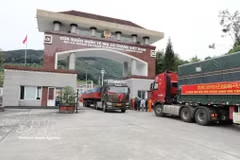
Besides, An Giang’s main exports depend much on China, which makes upover 70 percent of its export value. As China is raising its technical barriersin terms of quarantine, the requirement in this field will become more severe.

In 2020 and subsequent years, An Giang province will pay specialattention to the improving of quality and added value of its key exports suchas rice, aquatic products, vegetables and fruits, and having at least twoproducts with trademarks.

For its key products to become spearheads, Vice Director of the AnGiang Department of Industry and Trade Phan Loi said the province will supportfarmers and enterprises to shift to the direction of high quality and addedvalue, adding it will boost the application of scientific advances so as todiversify the processing of the exports.

Besides, An Giang province will accelerate the attraction of investmentfrom enterprises to the production of rice and develop large-scale and organicproduction, focusing on the cultivation of banana and mango.

In the work of attracting investment, An Giang province will beselective and prioritise projects of high and modern technology, friendly tothe environment and not land intensive but use high-quality labour force./.
VNA
See more

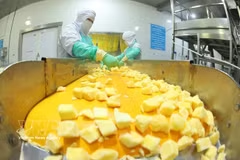
Processing frozen mangos for export in An Giang province (Photo: VNA)

Vegetable, fruit export boom hinges on technology

Pham Quoc Liem, General Director of U&I Agricultural JSC (Unifarm), said Vietnam needs chain-linked models for each key product, with clear roles for lead enterprises and clear responsibilities and benefits for stakeholders. The State should issue coordination policies and preferential credit support to build standardised raw material zones with stable productivity and quality. Research, development and commercialisation of competitive varieties will add further momentum.

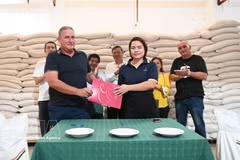
At the rice handover record signing ceremony. (Photo: VNA)

Vietnamese company hands over 1,500 tonnes of rice to Cuban partner

Vietnamese rice producer AgriVMA has expanded its cultivation area from 1,000ha to more than 2,500ha across the provinces of Pinar del Rio, Granma, Sancti Spiritus and Villa Clara. Its CT16 hybrid rice variety has achieved yields of more than 7 tonnes of fresh paddy per hectare.

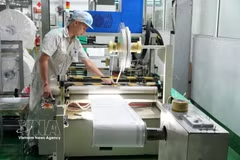
A ballpoint pen production line at Thien Long Group in Ho Chi Minh City. (Photo: VNA)

Ho Chi Minh City steps up efforts to unlock growth drivers

The municipal People's Committee has identified the year-end period as crucial to mobilising more than 1.2 quadrillion VND (46.7 billion USD) for development investment, boosting traditional and new growth drivers, and removing bottlenecks related to land, planning, site clearance, construction materials and investment procedures.

At the business networking programme between Vietnamese and Polish enterprises in Ho Chi Minh City on November 10. (Photo: sggp.org.vn)

Poland promotes trade, culinary culture in Ho Chi Minh City

The “Taste Europe!” programme is part of a series of promotional activities aimed at demonstrating that European food products represent not only high quality but also a commitment to environmental responsibility, Polish Ambassador to Vietnam Joanna Skoczek said.

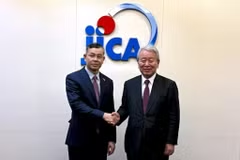
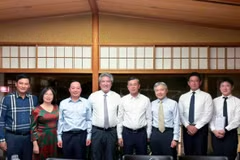
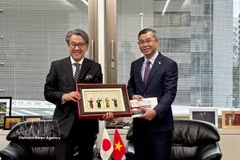
Vietnamese Minister of Finance Ngo Van Tuan (R) presents a souvenir to Chairman of the Board of Directors of the Japan Bank for International Cooperation (JBIC) Maeda Tadashi in Tokyo on November 10. (Photo: VNA)

Vietnam strengthens cooperation with Japan Bank for International Cooperation

Tuan expected JBIC to help promote investment flows from Japan into Vietnam, with priority given to large-scale projects in green energy, smart infrastructure, semiconductors and high-tech electronics, as well as projects with spillover effects that enable Vietnamese businesses to participate more deeply in global supply and value chains.

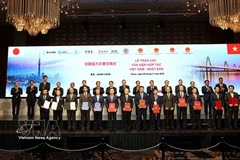
General Secretary of the Communist Party of Vietnam Central Committee and President To Lam and officials witness the exchange of cooperation documents at the Vietnam-Japan Public-Private Forum on Economic, Science and Technology Cooperation in Tokyo on November 9, 2026. (Photo: VNA)

Petrolimex steps up strategic cooperation with Japan’s ENEOS

Under the MoU, the two sides will focus on ensuring and diversifying fuel supplies to improve their responsiveness to supply chain fluctuations. They will also explore cooperation opportunities in high-quality petroleum products, petrochemicals and new energy solutions.

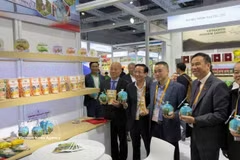
Vietnamese Consul General in Shanghai Tran Huy Hung (centre) and Vu Ba Phu (first, left), General Director of the Vietnam Trade Promotion Agency under the Ministry of Industry and Trade, visit Vietnam's trade pavilion at the 2026 China International Import Expo (CIIE). (Photo: VNA)

Vietnamese goods make strong impression at CIIE 2026

A wide range of products is on display, particularly processed fruits and vegetables, dairy products, bird's nest, coffee, tea and canned foods. Participating businesses focus on deep processing, modern packaging and strict compliance with China's food safety and hygiene standards.