Ancient houses in Quang Tri imbued with typical characteristics of Vietnamese countryside

Ancient houses in Hoi Ky village of Hai Chanh commune, the central province of Quang Tri’s Hai Lang district, still maintains many unique values and characteristics of Vietnamese villages, showing the architectural talent of people in the old times.
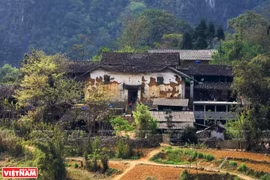
Ancient houses in Quang Tri imbued with typical characteristics of Vietnamese countryside ảnh 1An ancient house in Hoi Ky. (Photo: hailang.quangtri.gov.vn)

Quang Tri (VNA) - Ancient houses in Hoi Ky village of Hai Chanh commune, the central province of Quang Tri’s Hai Lang district, still maintains many unique values and characteristics of Vietnamese villages, showing the architectural talent of people in the old times.

Lying beside the O Lau River, Hoi Ky village still preserves century-old houses with unique architecture, which stir up visitors' interest for their unique architectural and cultural values.

The village was established 400 years ago. Locals are always proud of Hoi Ky village, which is protected by bamboo groves and surrounded by the legendary O Lau River.

Hoi Ky village is now home to 16 houses which are over 100 years old, with some built even more than 200 years ago.

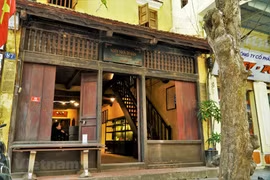
Ancient houses in Quang Tri imbued with typical characteristics of Vietnamese countryside ảnh 2Columns of ancient houses in Hoi Ky village are decorated with elaborate carvings. (Photo: VNA)

The old houses are made of thick solid wood. They usually have three main rooms and two wing rooms, or one main room and two wing rooms.

The roofs of ancient houses in Hoi Ky are covered with yin-and-yang tiles. The columns and doors are engraved with dragons, phoenixes and other delicate patterns.

Depending on the size of the house, each roof has between 10,000 and 20,000 tiles. The tiles are rectangular, thin, flat and can produce a bell sound when knocked on. This way of tiling makes the houses cool in summer and warm in winter. Walls are made from lime and wood hammered bricks. Meanwhile, roofs are low to help the houses withstand strong winds from storms.

The houses’ interior is decorated by their owners, with paintings and lacquered boards. Several families still maintain many old items, making their houses more attractive, nostalgic and rustic.

Altars for Buddha and ancestors, and lacquered boards with parallel sentences teaching people to do good things are usually arranged in the middle room of the houses.

Of the two wing rooms, the one on the left is for males and the one in the right, for females.

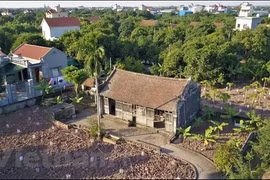
Ancient houses in Quang Tri imbued with typical characteristics of Vietnamese countryside ảnh 3The ancient house of Mr. Nguyen Huu Tien in Hoi Ky village. Tien is the 5th generation descendant of teacher Do - one of the famous people in the village in the past. (Photo: VNA)

The outside space of the ancient houses was also designed in harmony with the nature. Every house is surrounded by trimmed green fences and fruit-laden orchards.

The landscape in the village is beautiful with a river zigzagging around, small lanes, wharves, and a communal yard. These are typical characteristics of the Vietnamese countryside.

Hoi Ky village is also famous for its communal house, temples and ancestral houses of families with unique ancient architecture.

Visiting the village, tourists will have an opportunity to see the tomb of Duong Thi Ngot - the wife of King Thanh Thai (1879 - 1954), and a 300-year-old mango tree - the oldest in the village.

Although it is said to have the most ancient houses in Quang Tri province, the number of the remaining ones in Hoi Ky is quite modest due to the devastation of wars and climate.  

Ancient houses in Quang Tri imbued with typical characteristics of Vietnamese countryside ảnh 4An ancient ancestral house of the Nguyen family in the village. (Photo: VNA)

Before 1975, the village had more than 100 ancient houses, but because of limited restoration conditions, some are downgrading and others were sold by their owners.

In recent years, locals have tried to preserve remainders. One of the measures being considered is turning ancient houses into tourist destinations.

Bui Van Sinh, Chairman of the Hai Chanh communal People's Committee, said that the communal administration is coordinating with Hai Lang district’s Department of Culture to carry out a project for developing eco-tours to Hoi Ky.

The project is expected to help uphold the unique cultural and architectural values of ancient houses in the village, he said./.
VNA

See more

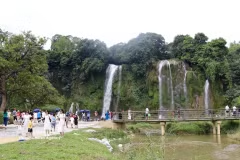
Tourists visit Ban Gioc Waterfall in Cao Bang province (Photo: VNA)

Vietnamese, Chinese localities agree to build border marker square

Dam Thuy commune in Vietnam’s Cao Bang province and Daxin county in China’s Guangxi Zhuang Autonomous Region have agreed to jointly build a border marker square in the area encompassing former Markers No. 53, No. 835 and No. 835/1, within the Ban Gioc (Vietnam) – Detian (China) Waterfall Scenic Area.

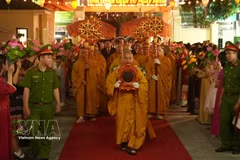
A procession for the Nhan Tower Buddha relic box (Photo: VNA)

Nghe An puts 1,400-year-old Buddhist relic on display

The national treasure, a pure gold box with intricate patterns, was unearthed in 1986 at the Thap Nhan relic site in Nam Dan, now Kim Lien commune. Bricks found there carry the date “Trinh Quan luc nien,” or 632 AD during the Tang Dynasty, a key clue for dating both the site and the box’s historical context.

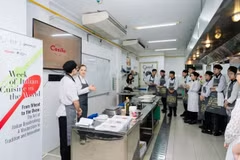
A workshop held at Pegasus International College in collaboration with Molino Casillo as part of Italian Cuisine Week 2025. (Photo courtesy of the organiser)

11th Italian Cuisine Week underway in Hanoi

Launched in 2016 by Italy’s Ministry of Foreign Affairs and International Cooperation, the Week of Italian Cuisine in the World is an annual global initiative showcasing the country’s culinary excellence and deep cultural roots.

Lanterns, once a traditional handicraft closely associated with Hoi An, have become one of the most recognisable symbols of the heritage destination. (Photo: VNA)

Hoi An International Lantern Festival to promote heritage and cultural exchange

The festival, to be held at Hoai River Square and other venues across the ancient town, is organised by the Da Nang Department of Culture, Sports and Tourism under the direction of the municipal People’s Committee, with the participation of 12 cities from China, Japan, the Republic of Korea, Thailand, Indonesia, the Philippines, Laos and Singapore.

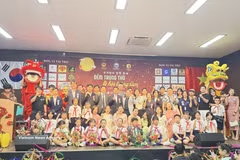
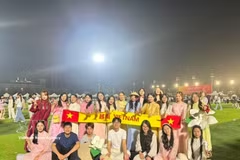
Participants pose for a photo at the 2026 Mid-Autumn Festival for overseas Vietnamese in the Republic of Korea (Photo: vNA)

Vietnamese families, language and community key to preserving national identity abroad

Preserving national identity starts at home, from Vietnamese conversation, stories about grandparents and ancestors, to Lunar New Year (Tet) and Mid-Autumn celebrations and traditional customs. Affection, filial piety, sharing and mutual aid keep members tied to one another and to the homeland, said Le Thuong, Chair of the Vietnamese Association in Japan’s Kansai region and Director of the Centre for Vietnamese Studies.

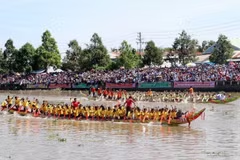
During the Ok Om Bok Festival, alongside rituals such as floating lanterns and moon worship, the Ngo boat race is always the most eagerly anticipated event among the Khmer community. (Illustrative photo: VNA)

First Vietnam Culture Festival 2026 to take place from November 23-27

Featuring the flow of Vietnamese culture from its origins to the future, the festival will create a vibrant cultural space where the past, present and future converge. It will highlight values shaped over thousands of years of history and demonstrate how these are preserved, passed down and creatively developed in contemporary life.

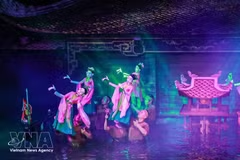
A performance by Thang Long Water Puppet Theatre. Photo: VNA

Water puppetry: from Vietnamese village ponds to UNESCO recognition

Vietnam is taking steps towards realising its ambition of bringing water puppetry, one of the country's distinctive cultural treasures, to the international stage, following the Government's approval in principle of the preparation of a scientific dossier seeking UNESCO recognition for the art form as an outstanding intangible cultural heritage. This marks a strategic move in preserving and promoting Vietnamese cultural identity amid deeper international integration.

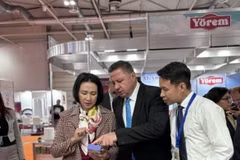
Bulgarian Deputy Foreign Minister Christo Polendakov and Vietnamese Ambassador Nguyen Thi Minh Nguyet at the Vietnamese pavilion. (Photo published by VNA)

Vietnamese products promoted at international food fair in Bulgaria

The Vietnamese embassy, in coordination with the Vietnam Trade Office in Bulgaria, set up two booths featuring coffee, tea, fruit juices, traditional confectionery and natural health supplements. The displays aimed to introduce Vietnamese products to visitors, importers and distributors, while helping Vietnamese businesses seek partners and expand into the Bulgarian and European markets.

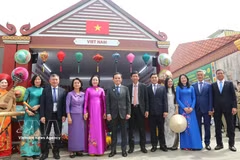
The Vietnamese delegation visits the Village Francophone (Photo: VNA)

Vietnam joins cultural exchange at Village Francophone in Phnom Penh

Vietnam’s presence at the Village Francophone reaffirms Vietnam’s focus on cultural diplomacy and its view of culture as a spiritual foundation, an internal strength and a key driver of sustainable development. Through displays, performances and international exchanges, Vietnam is projecting an image of a country rich in tradition, diverse in identity, dynamic, creative and proactive in integration.

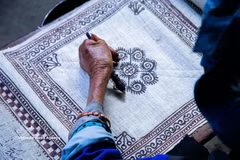
With their skillful hands and innovative thinking, Mong women have transformed traditional flax fiber into a "cultural ambassador". (Photo: VNA)

Mong women turn traditional craft into destination appeal

Alongside local cuisine, traditional attire, and folk games, linen weaving has become a crucial asset in enhancing Lung Tam commune's tourism appeal, creating new livelihood opportunities, and inspiring locals to preserve their heritage.