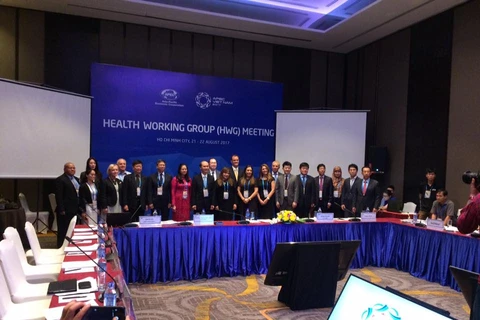
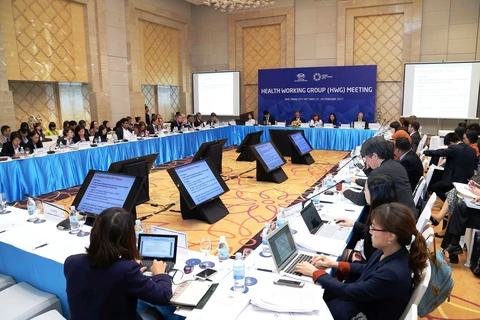
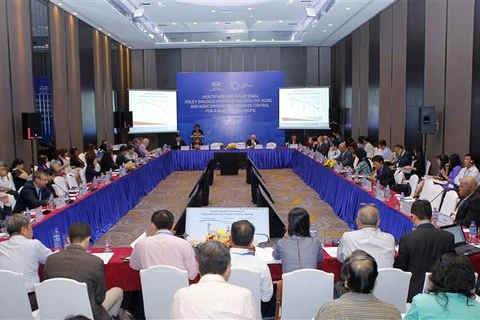
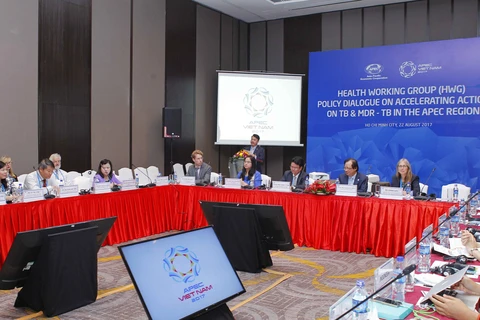
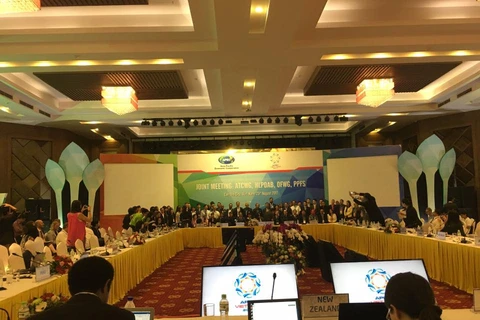
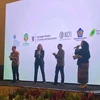
Participants in the 7th APEC High-Level Meeting on Health and the Economy pose for a photo (Photo: VNA)
 HCM City (VNA) – APEC officials shared the views that finance remains one of the biggest challenges to the health sector at a meeting in Ho Chi Minh City on August 23.
The seventh APEC High-Level Meeting on Health and the Economy forms part of the third APEC Senior Officials Meeting (SOM 3).
In his opening remarks, Deputy Prime Minister Vu Duc Dam described the meeting as a specific action to materialise the APEC leaders’ commitments to a healthy Asia-Pacific region.
The official pointed out a range of challenges to the health sector like the rapid spread of new diseases, population aging and the prevalence of non-communicable diseases.
“Vietnam has paid attention to developing good-quality medical centres and the staff of health workers while seeking ways to make it easier for residents in remote areas and vulnerable groups to access the best health services, especially preventive medicine,” he said.
To that end, it is necessary to invest more in the health sector, he said, noting that Vietnam spends 6.6 percent of its GDP on health care. However, the outcomes remain moderate as medical equipment and materials are sold at global prices, causing difficulties for developing countries like Vietnam.
Thanks to the support of international organisations and many of the APEC members, Vietnam has basically completed the UN Millennium Development Goals and expects to reach health-related objectives set in the Sustainable Development Goals, he said.
Health insurance now covers 82 percent of Vietnam’s population, Deputy PM Dam said, noting that to fulfill the target of having all people covered with health insurance, it requires different services packages to meet their diverse requirements.
He also underlined the need to encourage the participation of economic sectors in grassroots health facilities and health care services for the elderly.
Vietnam is working on a master programme, which puts forth measures for the health sector in the time to come, he said.
Addressing the event, Health Minister Nguyen Thi Kim Tien said each APEC economy, considering its social, economic, political, historical, and cultural context, will need to determine the most effective and efficient way to ensure all people and communities receive quality health services they need, without suffering the financial hardship.
Securing sustainable and sufficient funds for health is crucial, but it is not a single prerequisite to achieve universal coverage. Using the available fund efficiently and strategically, arranging appropriate service delivery model, regulating health service quality and safety, empowering people and communities on their health awareness, just to name a few, are all needed on the pathway to universal health coverage, she said.
This process requires efficient regulation which can harness dynamic and innovative approaches, from both public and private sectors, in solving complex health system issues.
Vietnam has taken many good practices and measures in making progress toward universal health coverage. In recent years, Vietnam has invested substantially in the supply-side infrastructure and human resources for health as well as promoted more equal access to health services for the people. These measures have significantly improved health outcomes and life expectancy of the Vietnamese people.
However, she said, like many APEC developing economies, Vietnam faces health financing issues, such as high out-of-pocket spending, a large informal sector, still limited access to health in rural remote settings, hospital-centric systems, and inefficiencies in the use of health care resources.
Resources seem to be concentrated heavily in curative services while not enough on cost-effective preventive, promotive and primary health care services. The call for universal health coverage based on the principles of primary health care has encouraged a policy dialogue on health care financing reform to build more equitable, efficient and effective health systems.
In the forthcoming time, Vietnam will shift the focus and resources towards the primary levels of care for providing the people with public health and essential health services that are accessible, safe, effective, and affordable, Minister Tien said.
Lokky Wai, WHO Chief Representative in Vietnam, told Vietnam News Agency reporters that it is very timely to have this meeting because many of the APEC economies are in the middle income status and economic growth needs healthy people.
He shared Tien's views that finance remains the biggest challenges to the health sector in efforts to improve its quality.
Matilde Maddeleno from Chile’s Ministry of Health said APEC member economies are mobilsing social resources for the medical sector.
Vietnam has raised initiatives at the meeting thanks to its good insight into the global health sector, she said.-VNA
VNA