ASEAN consumer market attracts Australian firms

A growing consumer market has been identified as one of the attractions of ASEAN in driving Australian investors into the region, according to local media.
ASEAN consumer market attracts Australian firms ảnh 1Illustrative image (Source: Reuters)

Sydney (VNA) – A growing consumer market has been identified as one of the attractions of ASEAN in driving Australian investors into the region, according to local media. 

The Australian Business in ASEAN Survey 2017, conducted among Australian businessmen by the Australian chambers and business councils from ASEAN member countries, showed that 61 percent of Australian firms have identified the growing consumption among ASEAN people as the main reason for doing business in the region. 

The second reason identified was improvement in infrastructure at 35 percent, a 5-percent increase from 30 percent in the previous survey. 

Regional integration ranked only third among the top three factors for business expansion in the region with only 36 percent of Australian businessmen putting importance on the ASEAN Economic Community (AEC) as a major come on for them. 

In the previous survey, 53 percent of Australian businessmen ranked economic integration as the second most important reason for investing in ASEAN. However, only 19 percent of Australian businesses believe that ASEAN integration does not matter to their business, although it has also increased from 16 percent in 2016. 

According to the survey, a lesser attraction in the region’s economic integration was attributed to insufficient provision of information on the ASEAN integration for Australian firms, while ASEAN is a priority region for many Australian companies. The survey said that 17 percent of firms did not consider that their head office had a strong understanding of the region. 

President of the Australia-ASEAN Chamber of Commerce Fraser Thomson said in their 2016 survey that the AEC and regional integration was the second important motivation for Australian firms wanting to invest and operate in the region. 

According to Thomson, Australian firms wanted more information to properly understand what ASEAN regional integration could mean for their business. 

Despite these challenges, the survey showed that Australian businessmen still continue to transact business with the world’s fastest growing region. 

The survey showed that 62 percent of respondents had expanded their trade and investment in the region over the past two years, with only 6 percent of firms reducing their presence in the region over that time. 

In the last year’s survey, 60 percent of firms said they had expanded their trade and investment and 7 percent contracted. 

Among the ASEAN countries, Singapore has been the favourite destination with more than 50 percent of Australian firms operating their regional hubs in the country, followed by Malaysia and Thailand with 40 percent. 

In addition, the survey said 86 percent of firms plan to increase their investment in the ASEAN region over the next five years, with less than 2 percent of businesses planning to reduce their presence in the region. Vietnam has overtaken Myanmar as the most popular market for expansion. 

ASEAN accounted for 14 percent, or 93 billion AUD, of Australia’s total trade in 2015-2016. Two-way investment was valued at 224 billion AUD at the end of 2016.-VNA 

VNA

See more

A road is under construction in Dong Nai city, Vietnam. (Photo: VNA)

ADB: Southeast Asia needs 7.1 trillion USD in infrastructure investment by 2040

ADB estimates that the region will need an average of 476 billion USD in infrastructure investment annually during 2026–2040, equivalent to 8.7% of GDP. However, at current investment levels, government budget resources would cover only around 45% of this demand, leaving an annual financing gap of 264 billion USD.

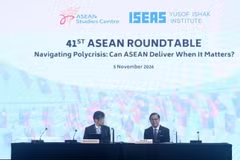
Thai Deputy Prime Minister and Minister of Foreign Affairs Sihasak Phuangketkeow (R) takes part in the Q&A session at the 41st ASEAN Roundtable. (Photo: VNA)

Thailand calls on ASEAN to proactively address polycrisis

Thai Deputy Prime Minister and Minister of Foreign Affairs Sihasak Phuangketkeow noted that no single member state could tackle challenges ranging from major-power competition and economic fragmentation to climate change and energy and food security on its own. Regional cooperation is therefore a strategic imperative, enabling ASEAN not only to overcome crises but also to sustain its development momentum.

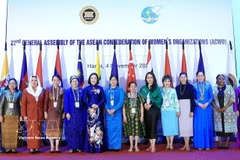
Participants in the 22nd General Assembly of the ASEAN Confederation of Women’s Organisations pose for a group photo. (Photo: VNA)

Women play key role in building united, resilient, sustainable ASEAN Community

Hosted by the Vietnam Women’s Union (VWU), the 22nd ACWO General Assembly marked another milestone in ACWO’s cooperation and development, allowing ASEAN women’s organisations to strengthen solidarity and mutual trust, share experience and identify cooperation priorities for the region’s next stage of development.

Delegates sign an agreement admitting the Timor-Leste Women’s Network Rede Feto as ACWO’s 11th member. (Photo: VNA)

ASEAN Confederation of Women’s Organisations holds Board of Directors meeting in Hanoi

Amid ongoing regional and global changes, which bring both new opportunities and challenges for women, the role of the ASEAN Confederation of Women’s Organisations in connecting organisations and promoting collective action has become increasingly important. This requires continued innovation in its operating methods, stronger ties among members and greater promotion of women's voices and roles in building a united, resilient, inclusive and sustainable ASEAN Community.

Haze in Kuala Lumpur Airport, Malaysia (Photo: VNA)

ASEAN countries step up efforts to combat transboundary haze

ASEAN already has the ASEAN Specialised Meteorological Centre (ASMC), based in Singapore since 1993. The establishment of the ASEAN Coordinating Centre for Transboundary Haze Pollution Control is expected to complement this mechanism by strengthening cooperation among member states and improving the region's response to transboundary haze pollution.

Japanese Minister of National Defence Koizumi Shinjiro (Photo: Xinhua/VNA)

Japan shores up defence ties with ASEAN

Japanese Minister of National Defence Koizumi Shinjiro said members must bridge differences to tackle shared challenges and proposed expanding Japan–ASEAN cooperation with outside partners into AI, unmanned systems and the protection of undersea critical infrastructure.

Speakers at the discussion (Photo: VNA)

ASEAN digital pact key to facilitating cross-border business

At a panel discussion on policy frameworks for the digital economy, held as part of the Autumn Economic Forum 2026 on October 27, speakers said ASEAN needed to ensure national systems could work together while protecting data and facilitating business, rather than impose uniform rules across the region.

Cambodia promotes sport ties in ASEAN

Cambodia promotes sport ties in ASEAN

As part of its commitment to regional development, Cambodia is preparing to host several major events, including the 2028 ASEAN University Games, the 2029 Asian Youth Para Games and the 2031 ASEAN Youth Games.

Police raid an online scam centre in Cambodia (Photo: AKP)

ASEAN urged to crack down on cyber, transnational scams

One of the key items on the meeting’s agenda was an ASEAN declaration on protecting children from online sexual abuse and exploitation, which addressed risks associated with artificial intelligence (AI)-generated content.