ASEAN needs to prioritise narrowing development gaps

Narrowing the development gaps within and between the ASEAN member states is one of the top and long-term priorities of the association to build a dynamic, connective, and integrative bloc.
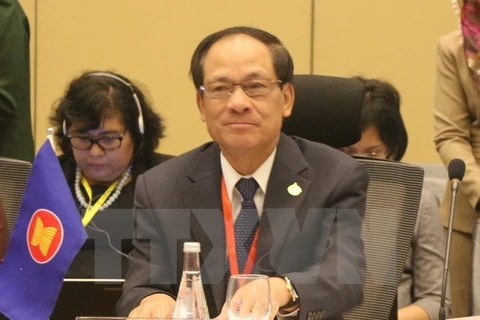
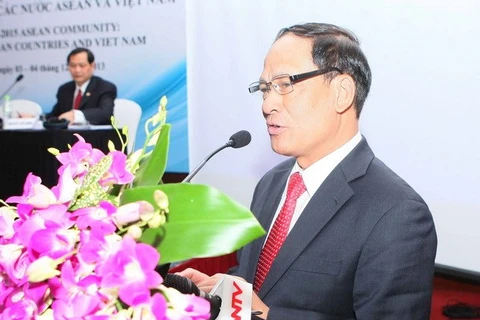
ASEAN needs to prioritise narrowing development gaps ảnh 1ASEAN Secretary General Le Luong Minh (Photo: VNA)

Hanoi (VNA) – Narrowing the development gaps within and between the ASEAN member states is one of the top and long-term priorities of the association to build a dynamic, connective, and integrative bloc.

Therefore, since 2009, the group has implemented a Master Plan on ASEAN Connectivity and an Initiative for ASEAN Integration, said ASEAN Secretary General Le Luong Minh in an interview granted to Jakarta-based Vietnam News Agency correspondents.

He noted that ASEAN - 6 comprising the first members of Brunei, Indonesia, Malaysia, the Philippines, Singapore and Thailand, together with its partner countries and international organisations provided technical and capital support for their other peers of Cambodia, Laos, Myanmar, and Vietnam (CLMV) to enhance capacity in realising integration initiatives and programmes.

Despite encouraging outcomes in the field, the development gaps between the ASEAN member nations remain big, he said, citing the per capita income in the richest ASEAN countries is 45 times that of the poor ones – where development between urban and rural areas is also uneven.

He urged the bloc to further the implementation of the Post-2015 Vision, the Initiative for ASEAN Integration, and the ASEAN Framework for Equitable Economic Development.

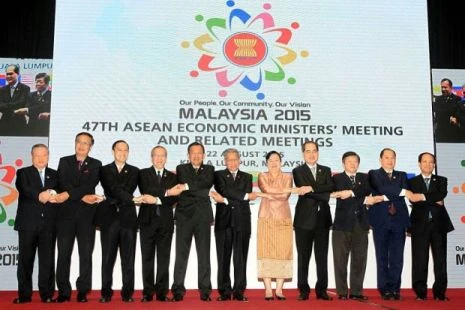
At the recent 47th Meeting of the ASEAN Economic Ministers (AEM) in Malaysia, leaders of the member countries agreed to promote economic integration by harmonising rules, regulations, and standards and increasing greater transparency.

They concurred to expedite the use of information-technology to facilitate intra-ASEAN trade and investment and strengthen sub-regional growth and spur border trade and investment.

Accelerating the liberalisation of services, including financial ones and capital market integration, is expected to provide necessary infrastructure and facilities for businesses, especially small-and medium-sized enterprises.

The private sector is encouraged to proactively integrate into the global economy.-VNA
VNA

See more

Timor-Leste President Jose Ramos-Horta (Photo: VNA)

Timor-Leste diversifies economy, seeks to attract investment

The President noted Timor-Leste is pursuing sustainable development, stronger regional connectivity and expanded international cooperation while seeking investment opportunities in energy, tourism and emerging economic sectors to reduce its dependence on oil and gas revenues.

A Vietnamese business introduces durian cakes to Chinese visitors at the 22nd China-ASEAN Expo (CAEXPO) in 2025. (Photo: VNA)

Vietnam steps up trade, investment promotion at China-ASEAN Expo

According to the CAEXPO Secretariat, Vietnam will once again lease an entire exhibition area of about 3,000sq.m, featuring 170 booths, making it one of the ASEAN countries with the largest exhibition spaces at this year’s event. Nearly 100 Vietnamese businesses have confirmed their participation, including major brands such as Trung Nguyen Group, TH Group, Saigon Coffee and Biti’s.

Delegates pose for a group photo at the workshop (Photo: VNA)

Vietnam voices concerns over future of traditional media at ASEAN workshop

In his speech, Long outlined challenges related to policy, human resources, technological gaps and platforms, economic factors, and new issues arising from AI. He also introduced the VNA's solutions to address the challenges of digital transformation and shared VietnamPlus' experience in adapting to the digital environment.

An overview of the 29th ASEAN Labour Ministers Meeting (Photo: VNA)

Vietnam reaffirms commitment to building resilient, inclusive and integrated ASEAN Labour Market

To this end, Vietnam proposed three strategic priorities for ASEAN cooperation. First, ASEAN should expand and harmonise mutual recognition mechanisms by increasing the scope and number of Mutual Recognition Arrangements (MRAs) in the region; and promote the role of the ASEAN TVET Council (ATC) in connecting national skills certification systems with regional and global standards, based on national occupational skills qualification frameworks and regional references.

British Ambassador to Vietnam Iain Frew (Photo: VNA)

UK-Vietnam cooperation deepens ASEAN-UK partnership trust: ambassador

The UK is accelerating investment in clean power across Southeast Asia. The country is working closely together through its co-leadership of the Just Energy Transition Partnership (JETP) to support Vietnam’s ambition to expand renewable energy, unlock investment in offshore wind, and build a cleaner, more resilient energy system for the future.

A discussion at the forum "Vietnam-ASEAN in Global Value Chains: From Signal to Action". (Photo: VNA)

Vietnamese firms urged to strengthen capacity as ASEAN pushes deeper digital integration

Vietnamese businesses have established leading positions in some supply chains, including seafood, wood processing, cashew and coffee processing. However, in manufacturing and electronics, many firms remain concentrated in assembly and the supply of simple components. Data transparency, traceability and effective supply-chain management are key to helping leading businesses maintain their positions.