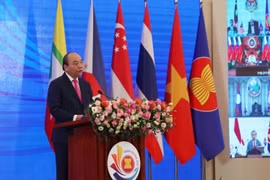
Minister of Construction Pham Hong Ha speaks at the conference (Photo: VNA)
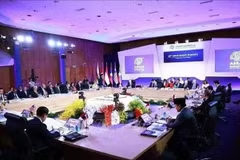
Hanoi (VNA) - Minister of Construction Pham Hong Ha chaired the 3rd conference of the ASEAN Smart Cities Network (ASCN) on July 17, in the form of a video conference.
Ha affirmed that Vietnam has taken many specific actions since joining the network.
Prime Minister Nguyen Xuan Phuc has approved the country’s smart city development plan for the 2018-2025 period and a vision to 2030, which identified three priority groups: smart urban planning, smart urban management, and smart urban utilities.
On the basis of interconnected databases, many urban areas in Vietnam, including Hanoi, Da Nang, and Ho Chi Minh City, have had initial success in providing smart utilities in education, health care, transportation, construction, and the environment; optimised urban development management; improved urban living standards; and created opportunities for human development, Ha said.
He emphasised that comprehensive urban development and management is done through improving decision-making capacity based on interconnected data systems and multidisciplinary coordination.
Developing smart cities requires significant investment capital and human resources from the whole society, in which the private sector plays an important role in providing resources and technology solutions, helping to accelerate the development of smart cities.
With the theme “Smart cities towards community identity and sustainable development for a cohesive and responsive ASEAN”, ANSC’s activities in 2020 aim to promote the active participation and cooperation of ASEAN member nations, agendas with the group’s partner countries, the participation of the private sector, and the maintenance and development of the ASCN dialogue.
ASEAN Secretary-General Lim Jock Hoi said the group has given impetus for smart cities to invest in technology, resolve urban challenges, and create new sources of growth.
This is a good opportunity to take advantage of the leadership and capacity of cities from ASEAN’s partner countries to address the COVID-19 crisis.
When rebuilding an economy post-pandemic, it is important to rebuild partnerships among smart cities inside and outside of the region in order to achieve tangible impacts, he said.
Smart cities need to have effective responses to health crises, the official noted.
He underlined the importance of promoting intra-bloc efforts on building smart cities, in particular efforts related to digital connection and urbanisation strategies.
It is necessary to establish better understanding between the public and private sectors to help strengthen the region’s potential and resources, as well as realise opportunities for the development of smart cities post-pandemic, he said.
The conference focused on discussing and approving a number of documents.
The 26 member cities of ASCN aim to build a medium-term vision and develop and implement an action plan each year in accordance with the situation in each country, towards promoting the unique identity of each city and each country, thus contributing to the common identity of the ASCN.
Member cities will update others on smart city development and share experiences in responding to COVID-19.
As the Chairman of the ASCN 2020, Vietnam will make every effort to push the overall development of the network and strive to accomplish its goals, Ha said.
If the COVID-19 pandemic is soon brought under control, Vietnam will hold the ASCN High-Level Forum later this year to discuss more deeply and comprehensively experiences and good practice in developing smart cities and promoting partnerships outside ASEAN, he added.
The ASCN was established at the 32nd ASEAN Summit in Singapore in 2018 and aims to build a cooperative platform for cities to share common goals in developing smart and sustainable municipalities./.