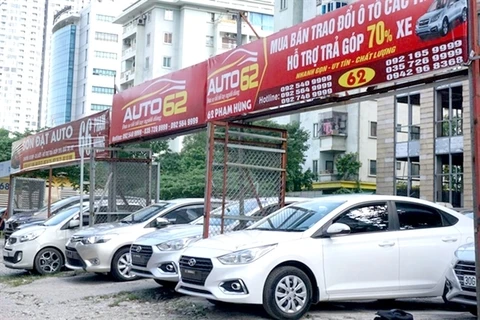
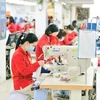
An outlet of Hang Xanh Motors Service Joint Stock Company (Haxaco). (Photo: haxaco)
 The Vietnam Engine and Agricultural Machinery Corporation (VEA) ended 2021 with revenue of 4.02 trillion VND (176.4 million USD), an increase of 9.6 percent compared to 2020.
Its joint ventures and associates brought in profit of more than 5.1 trillion VND for the whole year. This helped VEA earn profit before tax of 5.94 trillion VND for the whole year. Profit after tax increased by 3.6 percent to 5.79 trillion VND. Earning per share (EPS) was 4,321 VND.
VEA’s joint venture companies include Honda Vietnam, Toyota Vietnam, and Ford Vietnam. VEA is enjoying high profits from joint ventures and associates.
After the first three quarters of negative earnings, even losing 30 billion VND in Q3, Saigon General Service Corporation (Savico) recorded a net profit of 75.5 billion VND in Q4.
In the whole of 2021, Savico’s revenue reached 14.12 trillion VND, a decrease of 12 percent compared to last year. After tax profit decreased by 6 percent to 144 billion VND.
In 2021, Savico set a target of nearly 237 billion VND in after-tax profit, thereby it achieved 90 percent of the revenue plan. Meanwhile at the end of the first 9 months of the year, the completion rate was only 38 percent.
Trading is Savico’s main business as it contributes up to 90 percent of annual revenue, of which automobile distribution brings the majority of revenue of this segment. Currently, Savico owns about 50 dealers, including 13 Toyota dealers, 15 Ford dealers, eight Hyundai dealers, two Chevrolet, three Volvo, two Fuso, and some other brands such as Veam, Hino, Mitsubishi, Honda and Suzuki.
Thanks to increased revenue and improved gross profit margin, Hang Xanh Motors Service Joint Stock Company (Haxaco) earned net profit of 126 billion VND in Q4 of 2021, doubling the same period a year earlier. This result helped the business achieve profit growth of 28 percent for the whole of 2021 with 160 billion VND.
The company attributed the high profit to the reopening of HCM City from the fourth quarter. Haxaco promoted advertising campaigns on online platforms, maximising profit on each vehicle and further reducing costs.
The Government's supportive policy on reducing registration fees for cars stimulated the shopping demand of consumers. Accordingly, the number of vehicles sold by Haxaco increased again, reaching the sales target, the company said.
In addition, the preferential interest rates of affiliated banks as well as the effective use of capital contributed to reducing financial costs and increasing profits.
In the whole of 2021, Haxaco achieved 5.55 trillion VND of net revenue, equivalent to 2020. Post-tax profit reached 160 billion VND, up 28 percent compared to last year. Earning per share (EPS) was 3.34 VND. This was also the highest profit Haxaco ever achieved.
City Auto (CTF), specialising in the distribution of Ford cars, announced its revenue in the fourth quarter of 2021 reaching 1.67 trillion VND, 5 times higher than in the third quarter. The fourth quarter's profit reached 39 billion VND, the highest profit in many recent quarters of CTF.
Profit for the whole of 2021 reached 47 billion VND, many times higher than 1 billion VND in 2020. City Auto explained that the auto market grew in the fourth quarter of 2021 and the cost control policy helped increase profits.
This year, CTF sets a business plan to grow strongly with revenue reaching 7.38 trillion VND, up 130 percent and profit after tax reaching 80 billion VND, up 5,59 percent.
Positive outlook for 2022
Recently, SSI Research released a report assessing the short-term prospects of auto companies. Accordingly, SSI Research forecast that with the Government's rapid and strong vaccination strategy and new COVID-19 variants, it is likely that there will be less risks to health, thereby less social distancing measures. Automotive demand in 2022 is expected to increase by 16 percent.
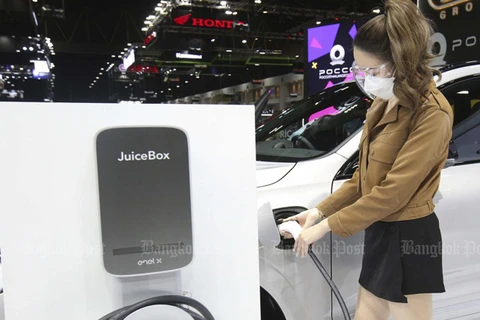
According to SSI Research, the current car ownership rate in Vietnam is still low. In addition, the trend of using electric vehicles in Vietnam led by VinFast will drive the demand for cars even higher.
SSI Research believes that car buying demand will not be strong in the first half of this year due to the possibility of new variants of COVID-19. In the second half of 2022, car sales will begin to increase, which will be the driving force for auto sales results./.
VNA