Auto support industry needs to take initiative

The domestic automobile parts industry has failed to reach the set target despite support from the Government, said Nguyen Thi Tue Anh, deputy director of the Central Institute for Economic Management (CIEM).
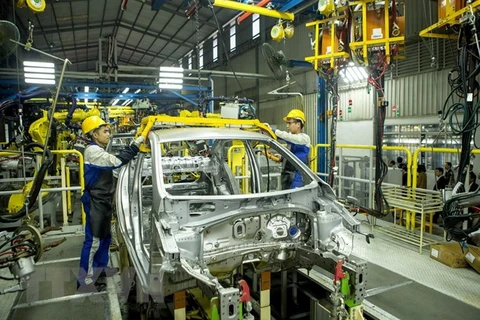
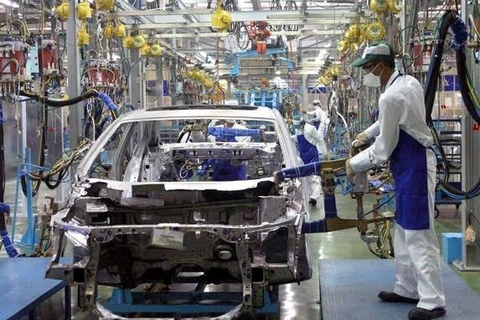
Auto support industry needs to take initiative ảnh 1The domestic automobile parts industry has failed to reach the set target despite support from the Government. (Photo: VNA)

Hanoi (VNS/VNA) -The domestic automobile parts industry has failed to reach the set targetdespite support from the Government, said Nguyen Thi Tue Anh, deputy directorof the Central Institute for Economic Management (CIEM).

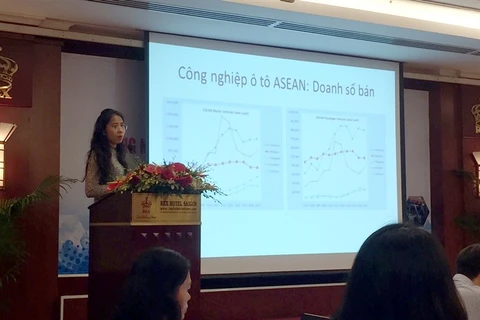
Speaking at a seminar on policies, barriers and solutions to developing theindustry in Hanoi on October 30, Anh said the industry still had a lowlocalisation rate (or rate of local part supply).

She said Vietnam needed to promote the development of support industries tocompete with other countries in the region.

"It is important to have policy research related to the automotive andautomotive support industries to promote the use of domestic automobileparts," said Anh.

Vietnam has 358 automobile-related manufacturing enterprises, including 50 autoassembly businesses, 45 car chassis and body manufacturers and 214 auto partproducers.

The number of auto part producers is reportedly much lower than in Malaysia andThailand, which have 385 units and 2,500 units respectively.

The industry produces a number of simple parts such as components for chassis,trunks, cabinets, car doors, tires and tubes, radiators, brake lines,electrical wires and wheel rims. Vehicles with nine seats or fewer typicallyhave low localisation rates.

According to Luong Duc Toan, an official from the Ministry of Industry and Trade’sDepartment of Industry, firms only achieved high localisation rates in theproduction of trucks and buses of 10 seats or more. Locally manufacturedspecial-purpose vehicles had a local parts rate between 45 and 55 percent.

He said the parts were mainly produced and imported by enterprises funded byforeign direct investment (FDI). More than 90 percent of all part suppliers in Vietnamwere FDI firms.

Deputy General Director of Toyota Motor Vietnam (TMV) Shinjiro Kajikawa saidthe Vietnamese automobile market had not had stable regulations, leavinginvestors hesitant and keeping domestic production low.

TMV’s output in Vietnam is much lower than in other ASEAN countries, accordingto Kajikawa.

He said market fluctuations and low output kept the localisation rate low andlimited the network of parts suppliers. The cost of making automobiles in VietNam was 10-20 percent higher than production costs of imported cars from otherASEAN countries.

Toan said market capacity was limited by auto assemblers and many differentmodels, which makes it difficult for automakers and part producers to invest indeveloping production. Part suppliers also found it impossible to access theautomobile production chain in foreign countries.

Kajikawa said the auto industry could not develop without the growth of themarket, domestic assembly, manufacturing and support industries. The domesticsupport industry’s parts need to be more competitive in quality, cost anddelivery.

In 2017, Vietnam imported nearly 3.17 billion USD worth of parts for automobileproduction. Exports of components and spare parts reached 4.4 billion USD.

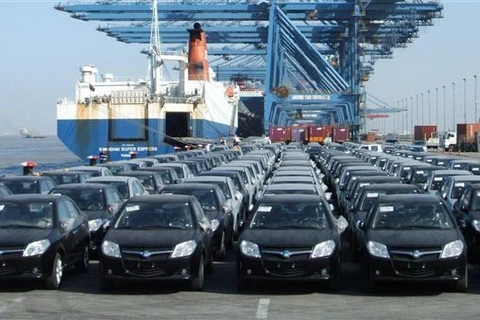
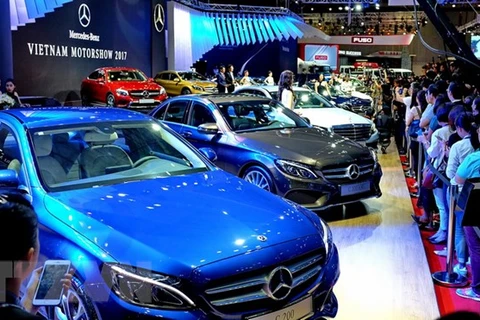
About 300,000 vehicles were sold, making up about different 150 models. Some ofthe best selling cars were from Toyota Motor Vietnam, Truong Hai AutoCorporation and Thanh Cong Hyundai Company.-VNS/VNA
VNA
See more

Garment production for export at the Thai Nguyen Garment Company. (Photo: VNA)

Spring Fair 2026 strengthens Vietnam – India cooperation

The seminar aimed to help the Indian business community gain a clearer understanding of the scale, role and potential of the Spring Fair 2026 one of Vietnam’s major trade promotion events hosted by the Government and the Ministry of Industry and Trade.

VinFast Evo battery-swap electric motorbike (Photo: VNA)

VinFast rolls out four new electric motorbike models

The automaker introduced three battery-swappable models, Evo, Feliz II and Viper, designed for different customer segments. It also launched the Amio, a compact pedal-assisted model that does not require a driving licence, aimed primarily at students and short-distance urban commuters.

Handling export cargo at Lach Huyen Port, Hai Phong city. (Photo: hanoimoi.vn)

Internal strength crucial for building export resilience

In the new era, strengthening domestic capacity will be crucial to ensuring that Vietnam’s exports grow not only rapidly, but also sustainably, contributing meaningfully to the country’s development aspirations in the new era.

Production activities at a centrifugal concrete pillar manufacturing plant (Photo: VNA)

Rising FDI, investor optimism reinforce Vietnam’s appeal for inflows

Commenting on Vietnam’s FDI performance in 2025, Dr. Nguyen Quoc Viet, a public policy expert at the University of Economics under the Vietnam National University, Hanoi, said that the strong growth in disbursed capital, particularly additional funding for ongoing projects, reflects sustained confidence among international investors.

An illustration of the North-South high-speed railway project (Image created by AI)

Vietnam fast-tracks key national railway projects

With the completion of a key legal framework, Vietnam's major national railway projects have kicked off the new year of 2026 with an accelerated implementation phase, notably the North-South high-speed railway and the Lao Cai-Hanoi-Hai Phong railway line

The signing ceremony of a cooperation agreement between Star Fintech and Lao Airlines in Vientiane on January 14 (Photo: VNA)

Vietnamese firm provides digital airline ticket payment services in Laos

Under the agreement, payments for Lao Airlines tickets will be made through the Umoney e-wallet provided by Star Fintech. The partnership marks an important step forward in Laos’ aviation digital transformation roadmap, while helping remove long-standing monopolistic barriers in the country’s airline payment system.

A corner of Ho Chi Minh City (Photo: VNA)

Vietnam gears up for full-force growth push in 2026

A growth path for 2026 has been outlined in line with the National Assembly’s resolution setting a target of more than 10% expansion. Under this scenario, gross domestic product (GDP) would need to rise 9.1% in the first quarter and 10.2% in the second.

OCOP products are displayed at the Autumn Fair 2025 (Photo: VNA)

Domestic demand drives OCOP expansion

The domestic market has seen a shift in consumer awareness. While locally made goods were once viewed as secondary choices, improvements in quality and transparency have helped OCOP products become a preferred option in many households.

A Vietjet Air aircraft (Photo: VNA)

Vietjet remains among world’s safest airlines

Vietjet Air has consistently maintained AirlineRatings’ highest safety rating of seven out of seven stars since 2018, underscoring its sustained efforts to ensure safe and reliable journeys for passengers.

Illustrative photo (Photo: VNA)

Vietjet to transport apricot, peach blossoms on Lunar New Year occasion

Vietjet Air will transport apricot and peach blossoms on domestic flights from/to Ho Chi Minh City, Hanoi, Da Nang, Da Lat and Hai Phong from January 15 to February 28 on the occasion of the Lunar New Year (Tet) festival, at 450,000 VND (17.13 USD) per bundle (excluding taxes and fees).