Ba Na ethnic community celebrates new crop

Celebrating a new harvest season is one of the biggest events of the year for the Ba Na ethnic minority group in the Central Highlands region.
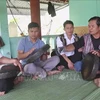
Ba Na ethnic community celebrates new crop ảnh 1The oldest man in the village beats a drum to urge people to gather around the communal house to organise the worship ceremony. (Photo: VNA)
Gia Lai (VNS/VNA) - Celebratinga new harvest season is one of the biggest events of the year for the Ba Naethnic minority group inthe Central Highlands region.

The event includes a ceremony to thank heaven and earth, then festiveactivities to entertain the community.

A Ngui, the culture officer in Kbang District’s Culture, Sports and InformationCentre, said this period of the year is the right moment for the community tocelebrate the new rice crop.

When the elders in the villages see the rice is mature and has turned yellow,they will choose a date and inform the villagers to prepare for the ceremony.

They prepare offerings and decorations, which include a pig of some 90-100kgand two chickens.

According to local customs, each family should bring one chicken and one jar ofwine, as well as some newly made com (sticky young rice flakes).

Ba Na people can host the ceremony as a family or with the whole village in theyard of the communal house.

The oldest man of the village assigns the middle-aged men to prepare the altarwhile women arrange jars of wine and bring water to the site.

Some other women make sticky rice flakes right at the site, while the oldestman then prays for the rivers, mountains and nature.

“Dear all gods, God of Rice, God of River, God of Mountain, today we host aceremony to celebrate the new crop, we would like to invite all of you here todrink, to eat and share happiness with us…,” he would say. “Please bless uswith good health and good crops this and next year…”

Women process rice flakes while men kill a chicken and put its blood on thebamboo altar.

"They then will use take the bamboo sticks with chicken blood to theforest, then home to lead the soul of rice to their home," A Ngui said.

All young people in the village would then shout out loud, beat on drums,gongs, and dance around the altar.

Then they visit each home to congratulate, eat young rice and drink wine./.
VNA
See more

Flavours of three regional Tet feasts in contemporary life. (Photo: VNA)

Flavours of three regional Tet feasts in contemporary life

Each dish embodies not only taste but also memories and cultural values nurtured over generations. Sustaining this heritage ensures that Vietnamese cuisine is not eroded by time, but continues to be cherished, renewed and shared with care and respect.

As Lunar New Year approaches, videos guiding viewers on how to prepare a traditional Tet feast attract increasing numbers of likes and comments. (Photo: tienphong.vn)

Gen Z reconnects with their roots, spreads rural Tet spirit

In recent years, Vietnamese social media has witnessed the rise of a content stream that feels old-fashioned yet resonates strongly with young audiences in the digital age: documenting rural life, especially kitchen scenes, Tet preparations, and everyday family routines.

Phan Thi Hong Lien wins the last gold for of Vietnam to help the team place No 1 in the sixth World Kun Khmer Championships' tally. (Photo: VNA)

Vietnam tops medal table at World Kun Khmer Championships

The Vietnamese team claimed 18 gold medals on their debut at the sixth World Kun Khmer Championships in Cambodia, edging hosts Cambodia to finish first overall and strengthening their push for Olympic recognition of the sport.

An exhibition on "do" paper and recycled materials at Dien Hong flower garden. (Photo: nhandan.vn)

Art reawakens Hanoi's public spaces

Last year, Hanoi saw a surge in both quantity and quality of public art endeavours, a leap forward in the art of breathing new life into urban landscapes

The horse image symbolises resilience, endurance, and spirit of “success upon arrival.” (Photo: VNA)

Horse mascot leaves strong impression at spring fair

A major attraction is a unique “Eight galloping horses” (Bat Ma) sculpture displayed at the To Trinh gemstone booth. Carved from a rare monolithic jade block, the artwork features eight spirited horses racing across golden rice fields. The harmonious blend of pure jade veins and natural golden tones enhances both its aesthetic depth and symbolic meaning, evoking prosperity and abundance associated with Vietnam’s rice civilisation.

Delegates cut the ribbon to launch the 46th Spring Flower Festival at Tao Dan Park. (Photo: VNA)

Festive activities herald Lunar New Year of the Horse

A vibrant array of cultural and media events has been launched across Vietnam to welcome the Lunar New Year of the Horse 2026, highlighting both the country’s enduring traditions and its dynamic socio-economic progress.

A calligraphy booth at the festival (Photo: VNA)

Spring Calligraphy Festival 2026 opens in Hanoi

A central attraction remains the traditional New Year calligraphy request activity, featuring 35 booths staffed by calligraphers selected through a rigorous, transparent evaluation process.