Ba Ria - Vung Tau: Xuyen Moc boasts tourism appeal

With its pristine land, stunning beaches, and lush primeval forests, Xuyen Moc district is emerging as a new and promising tourist destination in the southern province of Ba Ria - Vung Tau.
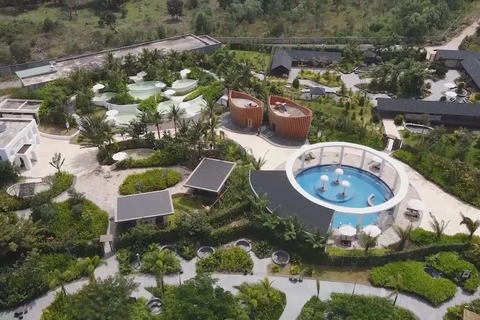
Ba Ria - Vung Tau: Xuyen Moc boasts tourism appeal ảnh 1Minera Hot Springs Binh Chau tourist area in Xuyen Moc district, Ba Ria-Vung Tau province. (Photo: VNA)

Hanoi (VNA) - With its pristine land, stunning beaches, and lush primeval forests, Xuyen Moc district is emerging as a new and promising tourist destination in the southern province of Ba Ria - Vung Tau.

Apart from the province’s popular Vung Tau city, Xuyen Moc is now a fresh and ideal choice for many travellers.

Located over 100km from Ho Chi Minh City, it is the last district in Ba Ria - Vung Tau, bordering Dong Nai and Binh Thuan provinces. Xuyen Moc enjoys easy transportation thanks to the national highway No. 55 and a picturesque coastal road leading to Vung Tau city.

The district, which possesses diverse natural resources and a long coastline, is positioning itself a new tourism hub of the province. Evidence of its tourism allure could be seen clearly in 2022, when the number of visitors to the district more than doubled that of the previous year.

According to the report from the district’s management board of tourist areas, over 1.7 million visitors, including 47,269 foreigners, came to Xuyen Moc last year, an annual increase of 239%, hence a total revenue of more than 3.32 trillion VND, up 159% year-on-year. In the first nine months of 2023, the total number of visitors exceeded 2.1 million and the revenue generated reached 2.749 trillion VND, rising by almost 88% and 8.4% against the same period in 2022, respectively.

The growth of tourism in Xuyen Moc is attributed to its advantages, such as a 32km coastline, pristine beach areas like Ho Tram, Ho Coc, and Binh Chau, primeval forests of the Binh Chau - Phuoc Buu nature reserve, and a natural hot spring system. These factors make the district suitable for the development of resorts and eco-tourism, which are increasingly favoured by tourists. The area has attracted more than 48 tourism projects, including internationally recognised ones with investments worth billions of US dollars from foreign investors such as Madison Group and Banyan Tree. Moreover, a series of projects by domestic investors from major groups like Novaland, Charm, and Hung Thinh, is expected to bring new momentum to the industry in the district and Ba Ria - Vung Tau.

Trinh Hang, Director of the provincial Department of Tourism, said Xuyen Moc is attracting large investors with both domestic and international mega-projects. The most prominent is The Grand Ho Tram Strip, one of the largest FDI tourism projects in the country whose value exceeds 4.3 billion USD. Other interesting tourist areas in Xuyen Moc include the Binh Chau hot spring area, and the Melia Ho Tram, Dhawa, and Camelina resorts, which cater to various types of travellers, especially foreign ones.

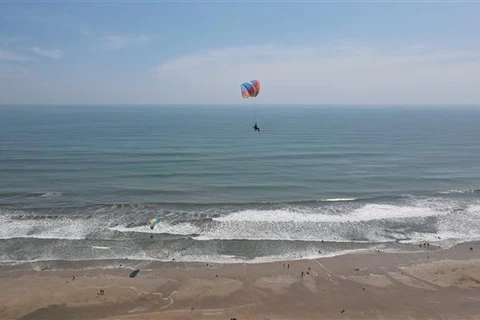
Ba Ria - Vung Tau: Xuyen Moc boasts tourism appeal ảnh 2A sea-view bridge in Phuoc Thuan commune, Xuyen Moc district, Ba Ria-Vung Tau province (Photo: VNA)

Le Thi Trang Dai, Chairwoman of the Xuyen Moc People's Committee, stated that tourism has been identified as the spearhead economic sector of the district. Numerous tourism projects in the area are integrated resorts, boasting a full range of services. To attract more tourism projects and visitors to Xuyen Moc, the local authorities are committed to creating an investor-friendly environment, ensuring safe tourism and well-connected transport. Maximum support is in place to help investors with administrative procedures.

Furthermore, local authorities are actively resolving difficulties and obstacles for investors, assisting them in recruiting and training labour, while planning green landscapes and investing in public beaches to offer people more options in discovering the district.

Currently, Ba Ria - Vung Tau province is investing in upgrading and expanding its major routes. Recently, the province kicked off the upgrade of the DT 994 and 991 roads linking Phu My town to Xuyen Moc district. Meanwhile, Xuyen Moc is working on the construction of inter-commune and inter-hamlet roads in rural areas to facilitate transport. Notably, those from the district’s centre to the coastal areas of Ho Tram and Binh Chau are attracting many investors to implement high-class tourism projects./.
VNA

See more

The Ba Trieu Temple in Thanh Hoa province (Photo: VNA)

Thanh Hoa taps digital transformation to boost heritage tourism

With 28 nationally-recognised intangible cultural heritage elements, Thanh Hoa province has prioritised integrating conservation with tourism development. Digital transformation, in particular, is seen as a crucial bridge connecting tradition with innovation, helping heritage sites become more accessible and engaging.

Pristine white-sand beach on Cu Lao Cham Island, Da Nang city, is a magnet for visitors. (Photo: VNA)

Vietnam – a safe destination amid global uncertainties

Despite global tourism headwinds linked to geopolitical conflicts, transport disruptions and surging travel expenses, Vietnam’s tourism sector has sustained strong growth, underscoring the destination’s resilience and rising international profile.

A border guard at the Mong Cai International Border Gate processes exit procedures for passengers at the Bac Luan 1 border gate in Quang Ninh province. (Photo: VNA)

Vietnam, China promote AI application in cross-border tourism cooperation

During the programme, participants will attend intensive courses delivered by AI technology experts, China–ASEAN policy researchers, and tourism specialists. The curriculum focuses on the application of big data in tourism policy planning, the development of cross-border tourism products, and the building of joint tourism brands.

The sea area off the southern coast of Phu Quoc Island. (Photo: VNA)

UK newspaper praises Phu Quoc’s unspoilt charm amid tourism boom

Phu Quoc is positioned as a compelling alternative – even a potential rival to Phuket – for travellers seeking authenticity in Southeast Asia. Its appeal lies not only in scenic beauty and fresh seafood, but also in the harmonious coexistence of modern tourism and enduring local culture.

At an elevation of 1,700 metres above sea level, the summit of Pu Luong is increasingly emerging as an ideal destination for trekking - a form of adventure tourism that combines hiking with nature exploration and physical as well as mental endurance. (Photo: VNA)

Vietnam eyes becoming region’s leading tourism destination

Vietnam has in recent years undergone a notable transformation in its tourism development strategy, placing a strong emphasis on nature-based and eco-tourism. This shift is not merely aligned with global trends, but represents a necessary step towards safeguarding valuable natural resources, while appealing to a growing segment of environmentally conscious travellers.

Foreign tourists in a photo with local residents. (Photo: VNA)

Vietnam serves 6.76 million foreign arrivals in Q1

China and the Republic of Korea (RoK) continued to lead as Vietnam’s largest source markets in the quarter, with 1.4 million and 1.3 million visitors respectively, accounting for around 40% of total arrivals.

Cua Viet beach is a magnet for both locals and visitors during holidays. (Photo: VNA)

Quang Tri seeks to unlock potential of marine tourism’s “golden triangle”

Cua Tung, Cua Viet and Con Co special zone are identified as three key destinations of marine tourism, and to transform this “tourism triangle” into premium and peaceful resorts, a new strategy is needed to enhance attractiveness to high-end travellers seeking private spaces as the strength of these places lies in their pristine and tranquil beauty.

A corner of the Phu Quy special zone in Lam Dong province (Photo: VNA)

Phu Quy moves to unlock potential as premier marine tourism hotspot

Under a resolution of the provincial Party Congress for the 2025–2030 term, the locality prioritises spatial planning of the marine economy, focusing on emerging sea-based industries linked with environmental protection and national defence. Located 56 nautical miles offshore, Phu Quy is a central pillar of this vision.

Khanh Hoa province pioneers green, sustainable tourism

Khanh Hoa province pioneers green, sustainable tourism

With its comprehensive transport infrastructure, world-class bays, and a diverse tourism ecosystem, Khanh Hoa is regarded as one of Vietnam’s leading coastal tourism hubs. To rise into the ranks of top destinations in the region and globally, the central province is working to complete strategic infrastructure while attracting investment to develop in-depth and high-end tourism products.