Bank credit floods back into housing market

According to the State Bank of Vietnam, in the first eight months of the year banking credit grew at 10.23 percent compared to 4.33 percent a year earlier.
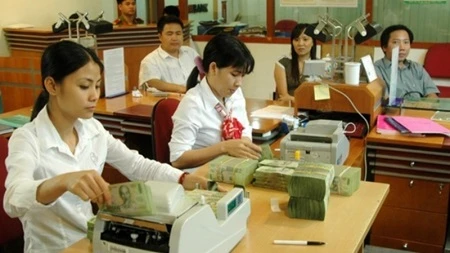
 Bank credit floods back into housing market ảnh 1Banking credit grew at 10.23 percent in Jan.-Aug. period (Source: motthegioi)

According to the State Bank of Vietnam, in the first eight months of the year banking credit grew at 10.23 percent compared to 4.33 percent a year earlier. It is expected to grow at 15-17 percent this year.

It might well be considered good news indicating the economy is on the mend.

But there are some worries, especially since a considerable amount of money has been lent to buy or develop property, one of the four categories of borrowers with the highest bad debts as of April 30, according to the National Financial Supervision Committee.

It had its genesis in the bursting of the property bubble in early 2008. By then a huge number of individuals and companies had borrowed money from the banks at interest rates as high as 25-27 percent to speculate in property.

When the inevitable bust came, no one was able to sell their properties and repay the banks. It also took down many property developers, who were caught in exactly the same trap – an irrational demand causing a scramble to build even if it meant borrowing at ridiculous rates.

As of April this year they together accounted for bad debts of 11.4 percent of total loans.

Analysts attribute the strong credit growth to the sector to its indubitable recovery and banks' efforts to support housing.

The Government has also come up with several policies to support the industry, one of which is to reduce the risk weight assigned to loans to the property sector from 250 per cent to 150 percent.

The central bank allows banks to use 60 percent of their short-term funds for medium- and long-term financing against only 30 percent before.

Enthused, most banks have been offering preferential credit for property projects and to home buyers.

There is also a lot of pent-up demand for buying houses, and with lending rates falling to around 7 percent, many are availing the opportunity.

But there are legitimate concerns that if the real estate market develops too strongly and into the realm of speculation, it could again cause a bubble.

Others dismiss these concerns saying a reprise of 2008 is not possible in the current context.

They point to the 2014 Law on Real Estate Business which requires housing developments to be guaranteed by banks to protect buyers. This means if a developer fails to hand over a unit as agreed in the sale or lease contract, the buyer or lessee could demand a full refund.

Incorporated in the law for the first time, the provision is intended to ensure that developers are financially viable and buyers get full security.

This also means the property market will be healthier and more transparent since lenders need to carefully scrutinise projects before providing guarantees.-VNA
VNA

See more

Downtown area in Ho Chi Minh City. (Photo: VNA)

Vietnam's golden gateway: FDI poised for gains in 2026

More than just volume, the quality of FDI entering Vietnam has improved. The nation is evolving from a base for basic assembly and processing into a genuine contributor to hi-tech manufacturing and R&D across global value chains.

Deputy Minister of Finance Do Thanh Trung speaks at the ceremony (Photo: VNA)

Project to advance growth, innovation, leadership for enterprises kicks off

AGILE is not only a testament to the long-standing and trusted strategic partnership between Vietnam and Canada, but also an important contribution to the Vietnamese Government’s efforts to promote innovation and sustainable growth within the private sector, thereby effectively mobilising private investment to realise inclusive and sustainable development goal.

At Regza Vietnam Electronics Co., Ltd. in Dong Nai province. (Photo: VNA)

FDI disbursement in January hits five-year high

Economists said that the continued growth in realised FDI reflects foreign investors’ sustained implementation and expansion of production and business activities in Vietnam. This is seen as an encouraging signal, underscoring investors’ confidence in Vietnam’s business environment and economic prospects.

In Q1 2026, Vietnam records 16 export commodities with turnover exceeding 1 billion USD. (Photo: VNA)

Exports face stiff test in bid to hit 550 billion USD

To achieve export growth of over 15% as directed by the Government, the MoIT said it will prioritise a set of core measures in 2026, including expanding production capacity, developing new export products, increasing domestic content and value added, accelerating the shift from processing to manufacturing, and proactively addressing trade barriers and defence measures.

Illustrative photo (Photo: VNA)

January CPI rises on stronger Tet holiday demand

CPI in January 2026 rose 0.05% month-on-month, with urban areas up 0.02% and rural areas up 0.09%. Of the 11 major commodity and service groups, nine recorded price hikes while two saw declines.

Vietnam is currently Cambodia’s third-largest trading partner worldwide, after China and the US, and its largest trading partner within ASEAN. (Photo: Ministry of Industry and Trade)

Party chief’s Cambodia visit to open up new phase of deeper, closer cooperation

To further unlock the potential of bilateral economic and trade cooperation, Vietnam and Cambodia should continue reviewing and effectively implementing signed agreements, facilitating trade and border connectivity, strengthening trade promotion in complementary sectors, reforming administrative procedures, upgrading border and logistics infrastructure, and enhancing coordination in combating smuggling and trade fraud.

Investors monitor stock market movements at the HoSE trading floor. (Photo: VNA)

VNX, FTSE Russell discuss Vietnam market upgrade

During the working session, the two sides shared updates on the performance of Vietnam’s stock market in 2025, focusing on market capitalisation, index trends, developments in the equities, bond and derivatives segments, and the continued expansion of the investor base.

Vietnamese products continue to gain traction at traditional markets and supermarkets across Ho Chi Minh City (Photo: VNA)

Vietnamese goods dominate Tet market in Ho Chi Minh City

Despite still-muted purchasing power, Vietnamese products continue to gain traction at traditional markets and supermarkets across Ho Chi Minh City, as consumers increasingly prioritise locally made goods, from fresh food and fast-moving consumer items to processed products, for their stable quality, reasonable prices and transparent origins.