Banks advised not to be involved in economic recovery packages to avoid bad debts

Though enterprises and individuals need the Government’s large economic recovery packages to rebound from the pandemic, the Government should consider limiting the participation of commercial banks in the packages to help them avoid bad debt risks, experts suggest.
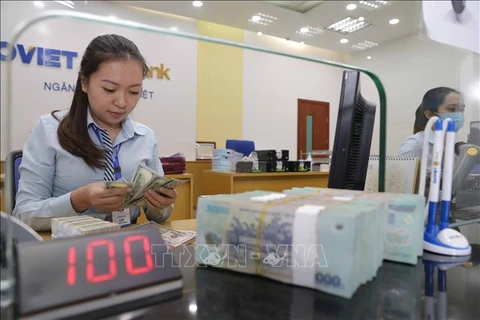
Banks advised not to be involved in economic recovery packages to avoid bad debts ảnh 1Illustrative image (Photo: baodautu.vn)
Hanoi (VNS/VNA) - Though enterprises and individuals need the Government’s largeeconomic recovery packages to rebound from the pandemic, the Government shouldconsider limiting the participation of commercial banks in the packages to helpthem avoid bad debt risks, experts suggest.

According to Le Xuan Nghia, former vice chairman of the National FinancialSupervisory Commission, the Government should not force banks to be involved inthe Government’s economic recovery packages such as interest rate cuts or debtrepayment postponement.

Bank loans should follow existing legal regulations to avoid risks for lenders,he said, adding it was also necessary to be cautious about preferentialinterest rate programmes as it could distort market interest rates.

According to Nghia, after crises, commercial banks are often the areas thatsuffer the most as they have to deal with a large number of bad debts.Therefore, many countries around the world often don’t let banks be involved inthe crisis. Instead of using capital from banks, governments directly use moneyfrom the State budget to aid businesses.

Regarding the Government’s socio-economic recovery and developmentprogrammes, Hoang Van Cuong, member of the National Assembly’s Finance andBudget Committee said it is necessary to combine fiscal and monetary policiesto partly increase public debts and use the capital source to lower interestrates to enable firms to have access to preferential loans without needing toforce banks to cut rates.

Previously, deputy governor of the State Bank of Vietnam (SBV) Dao Minh Tu wasalso concerned if there is no timely and effective support from fiscalpolicy, an excessive expansion of credit size and preferential interest rateprogrammes can cause difficulties not only for the SBV’s monetary policymanagement but also the country’s strategy on improving the financial strengthof banks.

Current policies on restructuring and delaying the debt payment time are atemporary and necessary solution in the short term, but extending the restructuringtime will be risky for the banking system in the medium term, Tu explained,adding the implementation of many credit packages with different preferentialinterest rates will also distort the interest rate and credit markets.

According to Tu, the banking industry this year will also suffer a strongerimpact on rising risks of debt recovery. If including debts, which hadrepayment terms restructured or interest rates reduced according to the SBV’sCircular 01/2020/TT-NHNN, the bad debt ratio of the banking system was about7.31 percent by the end of last year.

To avoid a rise of bad debts, Nghia suggested the Government require banks toset aside more provisions for risky loans.

Some banks have already increased provisions for their risky loans. Forexample, ACB last year spent more than 3.33 trillion VND in provisioning forcredit risks, 3.5 times higher than in 2020./.
VNA

See more

Work starts on Hanoi’s Red River Landscape Boulevard Axis project on December 19, 2025. (Photo: VNA)

Hanoi approves nearly 28-bln-USD Red River landscape boulevard project

Covering more than 11,400 hectares and requiring an estimated 736.96 trillion VND (nearly 28 billion USD), the project is expected to reshape urban development along both banks of the Red River over the coming decades while improving transport connectivity and public spaces in the capital.

Deputy Prime Minister Nguyen Van Thang and delegates perform the ground-breaking ceremony for the Northwest Dien Bien Phu New Urban Area, Resort and Sports Complex project. (Photo: VNA)

Vingroup launches largest-ever urban development project in Dien Bien

Under the master plan, the project will span more than 228.5ha and accommodate around 12,000 residents. It is designed under a “city within a city” model integrating residential areas, commercial and service facilities, resorts, schools, healthcare services, public spaces and sports infrastructure.

Deputy Prime Minister Nguyen Van Thang and delegates press the button to launch construction of the Dien Bien Phu cultural-historical tourism and cable car complex project in Dien Bien province on May 10, 2026. (Photo: VNA)

Dien Bien Phu cultural-historical tourism, cable car complex project launched

The project aims to effectively tap the area’s natural landscapes, geographical advantages and distinctive historical value, while creating a high-quality tourism product with strong competitiveness. It is also intended to preserve, honour and promote the value of the Dien Bien Phu Victory special national historical relic site.

Politburo member Nguyen Duy Ngoc (third, right), who is Standing Deputy Head of the Central Steering Committee for Science-Technology Development, Innovation and Digital Transformation, holds a working session with the Colombo Port City Management Board. (Photo: VNA)

Vietnam studies Colombo smart port city model

Ngoc praised Sri Lanka’s orientations in developing seaport infrastructure, digital infrastructure, digital economy and international service centres, describing them as valuable references for Vietnam in developing strategic infrastructure, innovation centres, smart urban areas and digital economy ecosystems.

Tan Cang – Cat Lai Port in Ho Chi Minh City (Photo: VNA)

MoIT issues decision recognising Vietnam Logistics Day

The move is aimed at raising awareness across government agencies, businesses and the wider public of the vital role logistics services play in socio-economic development, international integration and strengthening national competitiveness.