Deputy Governor Nguyen Kim Anh speaks at the tele conference (Photo: Collaborator)
Hanoi (VNA) - The crimes of embezzlement, gambling, illegal drug trafficking, banking, real estate, securities are much related to money laundering.
The information was the content of a summary report on national risk assessment on money laundering and terrorism sponsoring during 2012-2017 and an action plan on risk settlement. It was the first time Vietnam has conducted a national risk assessment on money laundering.
Pham Gia Bao – Deputy Director of the Anti-Money Laundering Department under the State Bank said that the report was a combination of research results of more than 120 officials from all ministries in 2 years. In comparison with other sectors of the economy, the risk of criminals choosing the banking system to legalize illicit revenues to turn these “dirty money” into “clean money” is higher.
Banking, real estate sectors much sought after
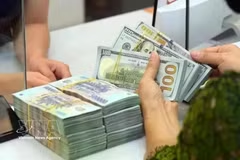
According to a report of the State Bank of Vietnam, the risk of money laundering in the banking sector accounted for nearly 90 percent of the total number of suspicious transaction reports (STR) sent to the Anti-Money Laundering Department, higher than other sectors.
Although it must be stated that not all illicit proceeds are put into the money laundering cycle by criminals, this also proves that, compared to other sectors of the economy, the possibility of criminals selecting banking system to legalize illicit revenues to turn these "dirty money" into "clean money" is higher.
Based on recent criminal cases which have been investigated for money laundering and suspicious transaction figures of the Anti-Money Laundering Department, it is possible to see the risk of money laundering in the banking sector are mainly related to money laundering stemming from embezzlement (crimes primarily related to people with positions and powers), gambling and tax evasion.
Accordingly, in order to hide the illegal money, criminals often use a bank account in the name of others to receive and transfer money of illegal origins.
Based on analysis of the above relevant contents, it can be seen that the risk of money laundering in the banking sector is high.
Foreign currency transfer agents also have a high risk of money laundering. The procedure for international money transfer through remittance companies is usually simpler than banks, the documents proving the purpose of money transfer is simpler with lower fees. This easily creates the risk of money laundering.
In addition, in the fields of securities insurance, casino, accounting, auditing, lawyers, notaries, criminal property originating from abroad are also at risk of money laundering.
Pham Giao Bao, Deputy Director of the Anti-Money Laundering Department said real estate has high risk of money laundering as the sector attracts a large amount of investment with high value. Property trading and transfer transactions can be implemented by cash or bank transfers and not via trading floors. Thus, it is difficult for relevant agencies to check the origin of the money.
He said to limit these risks, banks would have to identify customers. For example, the real estate sector has high risks, transactions in the real estate sector, bank staff will have to improve customer awareness, control cash flow well.
 Real estate has high risk for money laundering (Photo:VNA)
Embezzlement, illegal drug trafficking related to money laundering
To date, Vietnam has investigated and prosecuted a number of criminal cases on money laundering originated from embezzlement.
Though the country has not yet investigated any money laundering originated from drug trafficking, the risk of money laundering is still high.
In order to limit money laundering and terrorist financing in Vietnam, Deputy Governor of the State Bank Nguyen Kim Anh asked relevant ministries and agencies to urgently develop plans and organize the implementation of the Action Plan after assessing national risks on money laundering and terrorist financing for the contents of the responsibility of their ministries and sectors.
At the same time, there are forms and measures to propagate the results of national risk assessment on money laundering and terrorist financing to relevant authorities./.