Banks’ risk management a cause for concern

Poor management of risks and weak supervision of banks were the roots of the largest problems that Vietnam’s banking system is facing, experts said during a workshop.
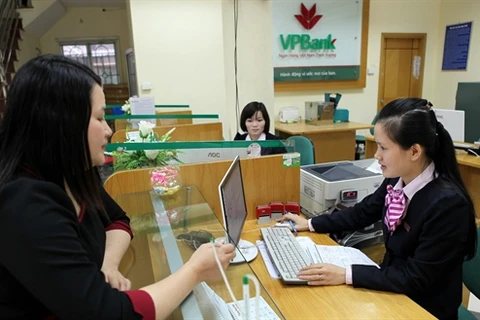
Banks’ risk management a cause for concern ảnh 1

Customers are served at Shinhan Bank in Hoan Kiem District, Hanoi (Source: VNA)

Hanoi (VNA) – Poor management of risks and weak supervision of banks were the roots of the largest problems that Vietnam’s banking system is facing, experts said during a workshop.

The conference was held late last week, and sponsored by the National Economics University’s School of Banking and Finance.

Speaking at the workshop, entitled "Improving institutions for the sustainable development of Vietnam’s banking system in the period 2016-2020", Do Thi Kim Hao, Deputy Director of the Banking Academy, said that recent incidents related to banks were mostly due to poorly-performing supervisory and auditing systems.

This reality indicated that bank restructuring in the 2011-2015 period did not achieve the expected results, she said.

Banking activities were potentially risky because of the lack of reliable information between banks and customers or between bankers and other shareholders, Hao said.

Hao noted the shortcomings of the existing three banking supervisory layers.

The first layer is the internal surveillance within banks.

Currently, banks set high targets of growth, therefore employees are forced to find ways to meet these goals.

The second layer of monitoring is the management and supervision of State agencies. However, the State Bank of Vietnam (SBV) has not put in place a risk management framework sufficient to quantify all risks.

"Therefore, the SBV should instruct banks to not conduct business beyond their capabilities," she said.

The third layer is surveillance from customers. Currently, customers can only oversee banks’ profits and operations through information being made public from banks.

However, most banks’ risk reports are incomplete. In principle, this report will be some 100-pages in length, clearly indicating what the risks are, why a solution is chosen to reduce risks, and how to deal with the consequences if problems arise.

Through her analysis, Hao found that the supervisory system of Vietnam’s banks had failed to properly monitor banks.

"This is also the reason leading to disclosing information unprofessionally, incompletely, and with a lack of compliance monitoring," she added.

Agreeing with Hao, Dr Luong Thai Bao from the School of Banking and Finance said the Vietnamese banking system was currently displaying many weaknesses and causing significant concerns.

According to Bao, weaknesses in banks include governance and bank information.

"Actually, in the banking market, investors are missing information. There is incomplete information that exists in the bank. So we need a monitoring mechanism specific to this industry," Bao said.

However, watchdog agencies were described as less effective and lack the resources to monitor the activities of the nation’s banks, he said.

Based upon the fierce competition, banks pay more attention to growth and expansion, rather than governance, so in a short time bad debt has become one of the largest problems for Vietnamese banks.

Therefore, the banking system must be restructured in a healthy manner to provide greater transparency of information and improve the capacity of governance and risk management, Bao said.

Bao added, “Mergers and acquisitions (M&A) of banks is a correct step to reduce the number of ailing banks, as well as promote order and discipline within the system.”-VNA

VNA

See more

The yarn factory of Unitex Textile and Dyeing Company Limited applies new technology to optimise operations using an automated model. (Photo: VNA)

Resolution 68: International lessons for private sector development

A common feature in many successful economies is a fundamental shift in the perception of private enterprises. In countries such as Singapore, Germany, Republic of Korea (RoK) and China, private firms are viewed not mainly as entities requiring strict control but as development partners and key forces generating growth, jobs and innovation.

The production line of Regza Electronics Vietnam Co., Ltd. located in Dong Nai province. (Photo: VNA)

Vietnam’s overseas investment rises 2.3-fold in first two months

During the period, 36 new overseas projects were granted investment certificates with total registered capital from Vietnamese investors reaching 532.4 million USD, up 2.3 times compared to the same period last year. In addition, three projects adjusted their capital with an additional 7.8 million USD, 1.5 times higher than a year earlier.

Workers of PTSC Thanh Hoa check the system for crude oil imports. Vietnam saw strong increase in fuel imports in the first two months of this year. (Photo" VNA)

Vietnam records strong increase in fuel imports in two months

Statistics of Vietnam Customs showed that Vietnam spent more than 1.44 billion USD importing 2.18 million tonnes of petroleum products in the first two months of this year, representing a sharp increase of 31.4% and 43%, respectively, over the same period last year.

Prime Minister Pham Minh Chinh visits a macadamia cultivation model in Huoi Tao B village, Pu Nhi commune, Dien Bien province on March 8. (Photo: VNA)

PM requests boosting agricultural development in Northwestern region

PM Chinh encouraged local residents to explore additional crops and livestock suitable for intercropping in order to maximise land use efficiency. Farmers were also urged to strengthen cooperation with one another and with businesses by joining cooperatives, consolidating land resources and working together to expand production and improve incomes.

Farmers in the Mekong Delta province of An Giang harvest rice grown under the project 'Sustainable Development of One Million Hectares of High-Quality, Low-Emission Rice Associated with Green Growth in the Mekong Delta by 2030.' (Photo: VNA)

Promoting high-quality rice exports amid mounting challenges

According to the Ministry of Agriculture and Environment (MAE), an estimated 600,000 tonnes of rice worth 370 million USD was exported in January, up 12.4% in volume and 16.9% in value year-on-year. The average export price reached 616.6 USD per tonne, up 4%.

Fuel supply in Hanoi remains stable. (Photo: VNA)

Fuel prices rise sharply from 3 pm on March 7

Since the beginning of this year, domestic fuel prices have undergone 11 adjustments. During this period, both RON95 and E5 RON92 experienced four decreases and seven increases, while diesel oil two falls and nine hikes.

Customers buy and sell fuel at a Petrolimex petrol station. (Photo: VNA)

Capital’s fuel market remains stable after March 5 price adjustment

Operations at several petrol stations across Hanoi have run normally. Along major routes, petrol stations remained open and continued to serve customers as usual. The number of vehicles refueling showed no major changes compared to the days before the price adjustment. Sales activities continued without interruption, and there were no long queues or supply disruptions.

Thang Long II Industrial Park in Hung Yen province. (Photo: VNA)

Green industrial parks draw FDI to northern Vietnam

From 2026, the industrial real estate market in the northern region is forecast to enter a new growth phase as strategic infrastructure projects near completion, supply expands, and green industrial parks become a decisive factor for foreign direct investment (FDI).

Border guards from Thanh Hai Border Guard Station patrol fishing vessels entering Phu Hai port in Phu Thuy ward, Lam Dong province. (Photo: VNA)

Lam Dong orders swift action to address IUU fishing gaps

Vice Chairman of the provincial People’s Committee Le Trong Yen has directed heads of relevant departments, sectors and localities to strictly implement directives and newly issued regulations on IUU prevention, while strengthening public awareness efforts so fishermen and businesses better understand and comply with the rules.