Binh Phuoc works to improve foreign investment attraction

The southern province of Binh Phuoc has been implementing several groups of tasks and measures for fostering foreign investment cooperation so as to attract major foreign enterprises.
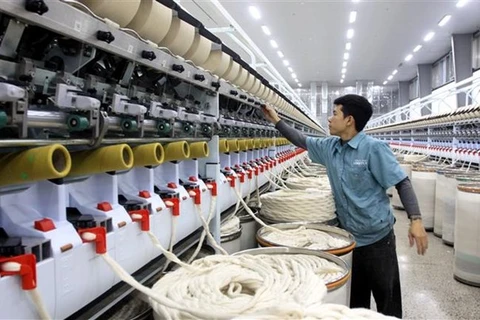
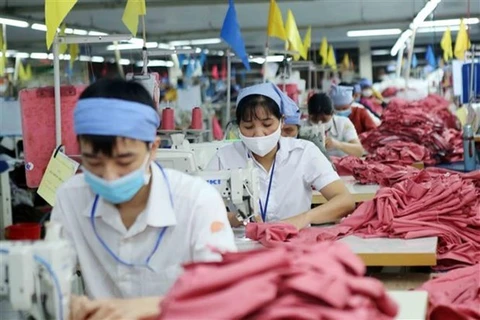
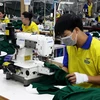
Binh Phuoc works to improve foreign investment attraction ảnh 1A factory of the New Apparel company in the Bac Dong Phu Industrial Park of Binh Phuoc province (Photo: VNA)

Binh Phuoc (VNA) – The southern province of Binh Phuoc has been implementing several groups of tasks and measures for fostering foreign investment cooperation so as to attract major foreign enterprises.

For the 2023 - 2030 period, Binh Phuoc, part of the southern key economic region, looks to attract foreign direct investment (FDI) projects that apply advanced and new technologies, have positive influence on domestic firms, and connect with global production and supply chains. It also aims to increase the FDI sector’s contributions to local socio-economic development on par with the preferential treatment those businesses receive.

In particular, the province hopes to raise the rate of registered investment capital from certain countries and territories to over 70% by 2030, namely Japan, the Republic of Korea, Singapore, Thailand, China, Taiwan (China), Hong Kong (China), the UK, France, Germany, the US, Australia, and New Zealand.

It is set to attract one to two multinationals among the Fortune Global 500, a list of the 500 biggest companies in the world compiled by the US-based Fortune magazine, and become one of the top 35 provinces and cities in the Provincial Competitiveness Index (PCI) rankings.

To that end, the provincial People’s Committee has requested sectors and localities carry out some tasks and measures, including improving the investment and business climate along with the quality, effectiveness and competitiveness of the local economy; developing an ecosystem of science-technology and innovation; and promoting competitiveness in foreign investment attraction.

Other measures include facilitating supporting industries and enhancing businesses’ connectivity; tapping into internal strength and competitive edges; enhancing the effectiveness of international economic integration; modernising and diversifying investment promotion; and strengthening the effectiveness and efficiency of the state management over foreign investment.

Regarding infrastructure development, Binh Phuoc will build plans with a strategic mindset and long-term vision to develop comprehensive and modern infrastructure that helps connect it with other localities in the region. Besides, it will create optimal conditions for all economic sectors, including foreign invested firms, to invest in infrastructure development.

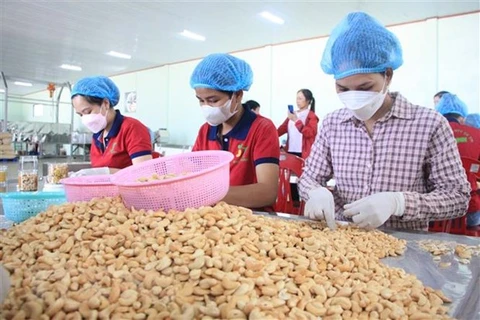
Binh Phuoc is currently home to 12 operating industrial parks among the 13 planned ones. These parks is accommodating 380 projects, including 284 FDI projects with combined capital of nearly 3.5 billion USD and 96 domestic ones worth some 17.2 trillion VND (725 million USD). Businesses there have provided jobs for over 72,000 workers.

Located in the southeastern region and in the transition zone between the southern key economic region and the Central Highlands, the province boasts much potential and advantages for industry and trade. Experts held that Binh Phuoc is gradually transforming itself from a “development reserve” zone into a development impulse of the southeastern region./.
VNA

See more

The interface of Vietnam's foreign supplier portal for tax registration, declaration and payment by overseas suppliers. (Photo: dientuungdung.vn)

Foreign digital service providers pay nearly 480 million USD in taxes

According to the Department of Taxation, 259 overseas suppliers have registered, declared and paid taxes through the portal. Tax revenue from the group reached 78.1% of the full-year target, surging 119% from a year earlier and making foreign suppliers the fastest-growing source of tax revenue in Vietnam's digital economy.

Ca Mau companies and households use rooftop solar to cut expenses. (Photo: VNA)

Vietnam raises rooftop solar sales cap to 50%, widens direct power deals

Rooftop solar power is entering a new phase of development with a more solid foundation. When integrated with energy storage systems and direct power purchase mechanisms, it not only contributes to supplementing distributed energy sources and reducing pressure on the national power system, but also serves as a driving force for green growth, enhances the competitiveness of the economy, and ensures energy security.

Production of electrical wiring harnesses at Bandai Vietnam Co., Ltd. in the Left Bank Industrial Park, Phu Tho province. (Photo: VNA)

Record FDI Inflows signal strong investor confidence, but absorptive capacity remains key

Vietnam's competitive advantages are evolving. Rather than relying primarily on low labour costs and tax incentives, the country's future competitiveness will increasingly depend on structural and long-term factors, including transparent institutions, policy predictability and an investment environment capable of supporting long-term strategic investors.

Vietnamese Ambassador to the RoK Vu Ho (first, left) and other participants in the conference in Seoul on July 14 (Photo: VNA)

Vietnam, RoK strengthen investment links at Seoul conference

Vietnamese Ambassador to the RoK Vu Ho said bilateral relations are currently enjoying the best conditions, underpinned by what he described as the three key factors of “favourable timing, geographical advantages, and strong public support”.

Electricity generation is monitored at the plant of the Hai Phong Thermal Power Joint Stock Company. (Photo: VNA)

Energy security “shield” must be built in layers: Expert

In an interview recently granted to the Vietnam News Agency, Dr Nguyen Van Tu, General Director of the Vietnam Petroleum Institute (VPI), said petroleum reserves are a critical line of defence, but a genuine energy security “shield” must be built in layers.

Reducing emissions is not only essential for tackling climate change but also brings tangible benefits to farmers and businesses. (Photo: VNA)

Vietnam steps up low-emission farming to support green growth

Vietnam is among the world's leading producers and exporters of agricultural products, including rice, coffee and a wide range of fruits. However, key export markets such as the US, the European Union (EU) and Japan are tightening sustainability requirements for agricultural products, making the transition to low-emission farming increasingly important.

Fresh fruit products of Vietnam are introduced to German customers. (Photo: VNA)

"Live data" paves way for Vietnamese farm exports

Achieving Vietnam's target of more than 74 billion USD in agricultural, forestry and fishery exports in 2026 will require stronger traceability systems, initially focusing on key export commodities, high-value products and major markets such as the EU, the US and China.

An enterprise in the southern province of Dong Thap invests in modern technologies and machinery for production. (Photo: VNA)

Broadening financing channels key to unlocking SME growth

As the private sector takes on a more central role under the Politburo's Resolution No. 68-NQ/TW, experts and business representatives say Vietnam needs a more comprehensive approach to supporting SMEs. This includes improving institutions, making financial support tools more effective and reshaping the financial system to better suit the characteristics of SMEs.

Phase 1 and Phase 2 of the Tan Thuan Wind Power Plant in Tan Thuan commune, Ca Mau province, have a combined installed capacity of 75 MW, comprising 18 wind turbines. (Photo: VNA)

Energy storage unlocks renewable power potential, cuts emissions

Energy transition is not simply about replacing fossil fuels with wind and solar power. It also requires building a sustainable energy ecosystem in which clean power generation, energy storage, smart grids and material recycling chains develop in parallel. Such an integrated approach will improve energy efficiency, further reduce greenhouse gas emissions and help Vietnam achieve green growth and net-zero emissions targets by 2050.

Vietnamese food is increasingly diverse in varieties and packaging, meeting domestic demand. (Photo: VNA)

Government urges vigilance as inflation pressures mount in H2

The Government's inflation target remains within reach despite mounting headwinds. Several forecasts suggest inflation can stay below 4.5% this year if international oil prices continue to retreat. Extending domestic fuel tax incentives through year-end, along with stable electricity prices, healthcare fees and exchange rates, would offer additional relief.

Construction is underway at the Tu Lien Bridge project in Hanoi. (Photo: nhandan.vn)

Public investment drives Hanoi’s growth momentum

In the first half of 2026, Hanoi disbursed 64 trillion VND (2.4 billion USD) in public investment, equivalent to more than 53% of the annual plan assigned by the Prime Minister – the highest mid-year disbursement rate recorded in many years.