VNA
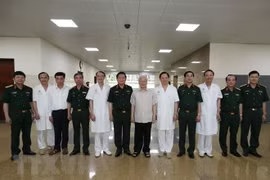
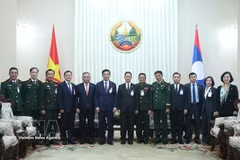
Deputy Prime Minister and Minister of National Defence Gen. Phan Van Giang expressed his belief that bilateral defence ties will continue to develop with greater “strategic cohesion”.
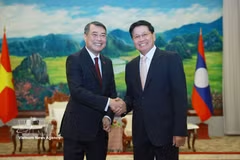
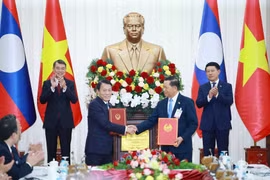
The two leaders affirmed that both countries consistently attach the highest priority to preserving and promoting the great friendship, special solidarity, comprehensive cooperation and strategic cohesion between Vietnam and Laos, describing the relationship as a special bond between the two Parties, States and people and a foundation for jointly creating and sharing development opportunities.
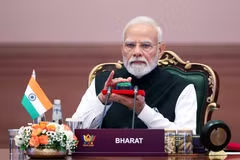
Narendra Modi became the Chief Minister of Gujarat on October 7, 2001 and then became Prime Minister of India in 2014.
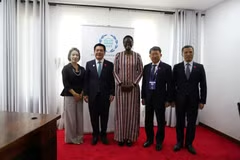
Dien thanked her and the Parliament of Tanzania for hosting IPU-153 and acknowledging her contributions during her tenure as IPU President. He asked Ackson, as former President of the Tanzanian Parliament, to help promote economic, trade and investment ties between Vietnam and Tanzania, matching the two countries’ strong political relations.
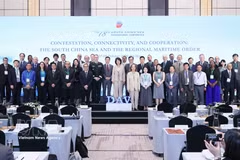
Participants called on ASEAN and China to work towards a substantive, effective, efficient Code of Conduct in the East Sea (COC) that matches international law and UNCLOS, while stressing that no single mechanism should bear the entire burden of managing tensions.
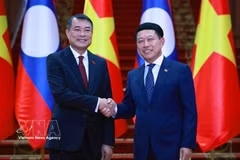
The two leaders affirmed that defence and security cooperation remains a pillar of the bilateral ties, agreeing to strengthen coordination in maintaining security, political stability and social order, combating transnational crime, drug-related crime, human trafficking, smuggling and high-tech crime, and managing and protecting the shared border.
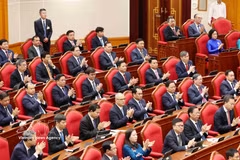
The Party Central Committee called on the entire Party, people and armed forces to continue upholding patriotism, strengthening solidarity and unity, and working together with a strong sense of responsibility, self-reliance, self-strengthening and innovation to overcome all difficulties and challenges, successfully fulfil the goals and tasks set for 2026, and strive to successfully implement the Resolution of the 14th National Party Congress.
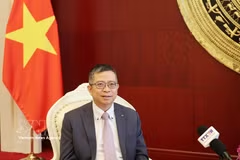
The trip also reaffirms Vietnam’s consistent policy of considering relations with China a strategic choice and a top priority in its foreign policy.
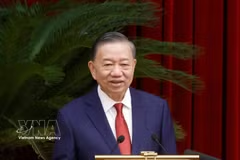
The decisions issued at this meeting aim to strengthen leadership and implementation capacity and rally the strength of the entire nation, with the value of the plenum ultimately reflected in the issues addressed and improvements in people’s lives.

The following is a brief review of the day’s events as reported by the Vietnam News Agency.
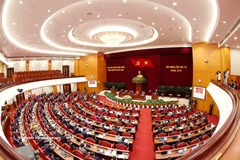
If resources are not fully utilised, Vietnam risks falling into the middle-income trap, with slower growth and large investment volumes producing relatively little output. Labour productivity and the TFP contribution could fall short of expectations, making double-digit growth harder to reach.
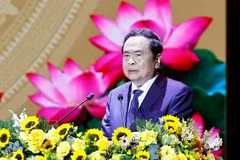
President of the National Assembly Tran Thanh Man will pay an official visit to China and co-chair the second session of the Cooperation Committee between the Vietnamese National Assembly and the National People’s Congress of China from October 11 to 15.
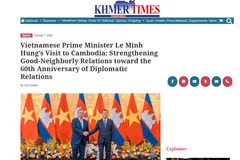
The visit comes as the two countries are actively preparing to commemorate the 60th anniversary of the establishment of diplomatic relations in 2027. It therefore provides an important opportunity for both sides to review the achievements of six decades of cooperation, assess existing challenges, and reaffirm their determination to bring bilateral relations to a new level, Uch Leang, Acting Director of Asian, African, and Middle East Studies of the International Relations Institute of Cambodia (IRIC) and the President of the Cambodia Alumni from Vietnam Association (CAVA).
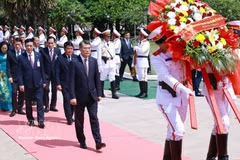
The visit provides an opportunity for the two Parties and Governments to reaffirm the special solidarity and faithful bond between Vietnam and Laos, a close relationship forged, tested and continuously nurtured throughout history. It also demonstrates the political resolve of the senior leaders of the two Parties and Governments to further develop the Vietnam–Laos special relationship in an increasingly substantive and effective manner.
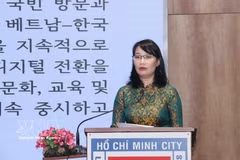
Around 350,000 Vietnamese are currently living, studying and working in the RoK, while some 200,000 Koreans are residing and working in Vietnam. Together with Vietnamese-Korean multicultural families, these communities have become natural bridges connecting the two peoples.
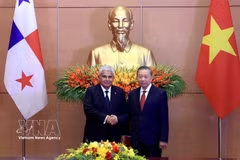
The two sides expressed their delight at the positive developments in bilateral relations in recent years, noting that there remains significant room for greater cooperation and complementarity, particularly in trade, investment and economic ties. They also held extensive discussions on strategic directions to further deepen and strengthen bilateral relations in a more substantive and practical manner.
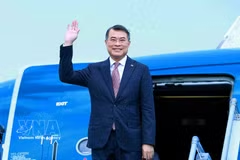
This is PM Hung’s first official trip to Laos and Cambodia, reaffirming the high importance and priority that the Party, State and Government of Vietnam attach to relations with the two neighbouring countries. It also helps further deepen the “great friendship, special solidarity, comprehensive cooperation and strategic cohesion” between Vietnam and Laos and the “good neighbourliness, traditional friendship, comprehensive cooperation and long-term sustainability” between Vietnam and Cambodia.
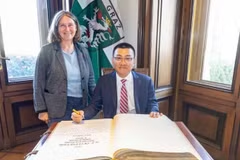
Elke Kahr, former Deputy Chairwoman of the Communist Party of Austria Central Committee and Mayor of Graz, congratulated Vietnam on the success of the 14th National Party Congress and expressed her admiration for the major achievements attained by the Vietnamese people under the leadership of the CPV in national construction and defence.
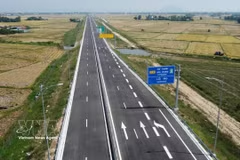
Key projects in the industry and trade and construction sectors play a particularly important role in driving growth, boosting production, strengthening infrastructure capacity, ensuring energy security, enhancing the competitiveness of the economy and creating new momentum for development in the coming period.
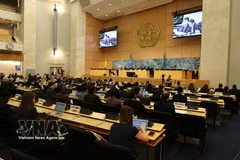
Throughout the session, the Vietnamese delegation engaged in consultations and negotiations on nearly 40 draft resolutions and discussions, co-sponsored eight resolutions and seven joint statements, and co-hosted and participated in a number of initiatives and side events.