ASEAN economic ministers agreed on a variety of measures to boost trade and investment within the bloc and with outside partners, as they expressed confidence on regional economic prospects and headed to the establishment of an ASEAN Economic Community (AEC) by 2015.
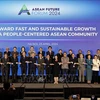
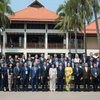
They reached agreements at the 42nd ASEAN Economic Ministers' Meeting and the fourth ASEAN Economic Community Council Meeting, that both started in Da Nang on August 25.
Prime Minister Nguyen Tan Dung opened the meeting, re-affirming the importance of a comprehensive, balanced and systematic approach in policy co-ordination at national and regional levels.
"This year is a pivotal year for the association in establishing the ASEAN Community, resting on the three pillars of political-security, economic and socio-cultural communities on which the economic community is making remarkable progress," Dung said.
He noted that member countries should pursue balanced and sustainable development policies and strike a balance between economic development targets, macro-economic stability and social development.
At the meeting, ministers forecast ASEAN's real GDP growth to reach over 5 percent this year, compared with only 1.5 percent last year. The region was significantly helping drive global economic recovery, besides key economies such as China and India , they said.
Ministers noted that ASEAN's total merchandise trade value remained resilient at about 1.54 trillion USD last year, while trade surplus with the rest of the world reached 61.2 billion USD in 2009, doubling that of 2008.
They also affirmed that trade with its dialogue partners remained strong despite the global financial and economic crisis, especially with China , the European Union and Japan .
ASEAN's share of total global foreign direct investment (FDI) inflow increased from 2.8 percent in 2008 to 3.6 percent in 2009, and ministers anticipated higher FDI into ASEAN from this year.
The EU tops the FDI into the region with a share of 18.3 percent, followed by Japan with 13.4 percent, and the US with 8.5 percent. Intra-ASEAN investments are also significant, accounting for 11.2 percent.
Ministers reaffirmed their resolve to ensure the timely and substantive implementation of measures in the AEC Blueprint to ensure the credibility and integrity of ASEAN economic integration, with the realisation of a single market and production base in 2015.
Ministers acknowledged important progress in such processes as tariff reduction and elimination, trade facilitation, the implementation of the ASEAN Trade in Goods Agreement and the ASEAN Single Window.
They committed to eliminate all forms of non-tariff barriers to maximise benefits from tariff reduction and further promote trade facilitation measures for a free flow of goods in the region.
They also agreed to boost investments through joint investment promotions and the engagement of the private sector in further consultations on improving ASEAN investment climate.
The Strategic Plan of Action for ASEAN SME Development over the next five years was endorsed at the meeting, as ministers underscored the importance of bringing small- and medium-size enterprises (SMEs) into the mainstream of the bloc's economic integration.
Ministers agreed to continue to hold regular talks with industry associations and private sector representatives from ASEAN and dialogue partners; appreciated the implementation of trade and investment agreements with China , the Republic of Korea , India , Australia and New Zealand ; and expected progress in economic co-operation with the East Asia region.
An important issue was that, they said, development gaps among ASEAN member nations should be narrowed.
"Development gaps remain a fundamental issue that we need to correct," ASEAN Secretary General Surin Pitsuwan told reporters on the sidelines of the meeting. "A house divided by such gaps is not stable."
"That's a concern for all of us (ASEAN nations) and it has come up quite often at the highest levels how to bridge these gaps," he said, adding that ASEAN's dialogue partners would play significant roles in helping to solve the problem./.
They reached agreements at the 42nd ASEAN Economic Ministers' Meeting and the fourth ASEAN Economic Community Council Meeting, that both started in Da Nang on August 25.
Prime Minister Nguyen Tan Dung opened the meeting, re-affirming the importance of a comprehensive, balanced and systematic approach in policy co-ordination at national and regional levels.
"This year is a pivotal year for the association in establishing the ASEAN Community, resting on the three pillars of political-security, economic and socio-cultural communities on which the economic community is making remarkable progress," Dung said.
He noted that member countries should pursue balanced and sustainable development policies and strike a balance between economic development targets, macro-economic stability and social development.
At the meeting, ministers forecast ASEAN's real GDP growth to reach over 5 percent this year, compared with only 1.5 percent last year. The region was significantly helping drive global economic recovery, besides key economies such as China and India , they said.
Ministers noted that ASEAN's total merchandise trade value remained resilient at about 1.54 trillion USD last year, while trade surplus with the rest of the world reached 61.2 billion USD in 2009, doubling that of 2008.
They also affirmed that trade with its dialogue partners remained strong despite the global financial and economic crisis, especially with China , the European Union and Japan .
ASEAN's share of total global foreign direct investment (FDI) inflow increased from 2.8 percent in 2008 to 3.6 percent in 2009, and ministers anticipated higher FDI into ASEAN from this year.
The EU tops the FDI into the region with a share of 18.3 percent, followed by Japan with 13.4 percent, and the US with 8.5 percent. Intra-ASEAN investments are also significant, accounting for 11.2 percent.
Ministers reaffirmed their resolve to ensure the timely and substantive implementation of measures in the AEC Blueprint to ensure the credibility and integrity of ASEAN economic integration, with the realisation of a single market and production base in 2015.
Ministers acknowledged important progress in such processes as tariff reduction and elimination, trade facilitation, the implementation of the ASEAN Trade in Goods Agreement and the ASEAN Single Window.
They committed to eliminate all forms of non-tariff barriers to maximise benefits from tariff reduction and further promote trade facilitation measures for a free flow of goods in the region.
They also agreed to boost investments through joint investment promotions and the engagement of the private sector in further consultations on improving ASEAN investment climate.
The Strategic Plan of Action for ASEAN SME Development over the next five years was endorsed at the meeting, as ministers underscored the importance of bringing small- and medium-size enterprises (SMEs) into the mainstream of the bloc's economic integration.
Ministers agreed to continue to hold regular talks with industry associations and private sector representatives from ASEAN and dialogue partners; appreciated the implementation of trade and investment agreements with China , the Republic of Korea , India , Australia and New Zealand ; and expected progress in economic co-operation with the East Asia region.
An important issue was that, they said, development gaps among ASEAN member nations should be narrowed.
"Development gaps remain a fundamental issue that we need to correct," ASEAN Secretary General Surin Pitsuwan told reporters on the sidelines of the meeting. "A house divided by such gaps is not stable."
"That's a concern for all of us (ASEAN nations) and it has come up quite often at the highest levels how to bridge these gaps," he said, adding that ASEAN's dialogue partners would play significant roles in helping to solve the problem./.