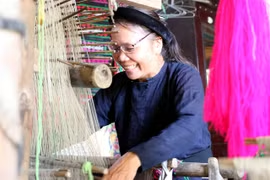
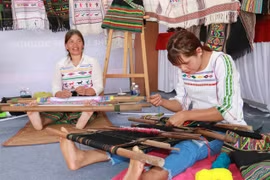
Sung Thi Lan (L) introduces products of Muong Hoa cooperative at a trade fair (Photo courtesy of Sung Thi Lan)
Hanoi (VNA) - From her love for brocade colours in her homeland, Sung Thi Lan founded Muong Hoa cooperative, where she entrusts her dream of popularising the nation's cultural value and helping local people escape from poverty.
The colorful brocade stall in Ta Van Giay village, Ta Van commune, Sa Pa district, northern mountainous Lao Cai province, is the “common home” of female director Sung Thi Lan and Mong women in the village. Day by day, they are “colouring” the beauty of their homeland.
Brocade weaving craft and dream of escaping from poverty
Born in a purely agricultural family, where villagers still face many difficulties and hardships, Lan recognised that she has to rise out of poverty.
Lan said she realized that her homeland boasts huge potential for developing tourism and traditional brocade weaving, so she cherished a business plan towards preserving and developing the locality’s traditional culture.
In 2018, with the support from a project to support women's startups, Lan established Muong Hoa cooperative with the aim of restoring the traditional dyeing and weaving craft to improve incomes of local women.
Ta Van has an unique craft and it is also a key tourist destination of Sa Pa, so it is attractive to holiday-makers, she said.
“If I can maintain the traditional craft and promote local products widely to tourists, I will contribute to both preserving the national culture and improving income of villagers", Lan said.
 A colorful brocade stall of the Muong Hoa cooperative (Photo courtesy of Sung Thi Lan)
Without taking any classes, Lan researched and learned how to dye fabrics with natural colors from indigo, brown roots, turmeric, and forest leaves. Lan learned herself how to dye fabrics with natural colours from indigo, turmeric, and forest leaves, with the desire to revive the traditional craft of the Mong ethnic group.
She damaged a lot of linen and cotton fabrics after failures. After eight years of challenges, Lan finally found colour mixing rations and ways to process materials in order to create beautiful natural colours and strange and attractive patterns.
With the traditional production method, brocade products of the Muong Hoa cooperative bear unique imprints. Patterns reflecting the culture of the Mong and Giay people appear more and more on brocade products dyed with natural colours.
Lan said through the needle and thread of Mong women, each pattern carries the traditional culture and the soul of the nation.
Efforts to promote brocade weaving craft
Once she mastered the technique of dyeing and weaving, Lan had an idea of "recycling brocade" with the desire to reduce a burden on the environment and prices of products.
After buying old brocade products from local people, members of the Muong Hoa cooperative re-colour and sew them into pillowcases, tablecloths, decorative items. They also make use of excess materials from the colouring process to produce clean incense.
Following that unique idea, a tour to experience brocade weaving was developed.
Tourists vising the Muong Hoa cooperative can colour items by themselves. This activity not only makes tourists interested in the culture of the Mong and Giay people in Ta Van, but also creates an attractive business model for locals.
 Without taking any classes, Lan researched and learned how to dye fabrics with natural colors from indigo, brown roots, turmeric, and forest leaves. (Photo courtesy of Sung Thi Lan)
To promote her products, Lan also does not mind introducing brocade and herbal products of the cooperative at trade fairs, exhibitions and seminars across the country, contributing to promoting the beauty and culture of her locality to more and more people.
Through these activities, Lan had also opportunities to learn new production models for the cooperative, and seek markets for its products.
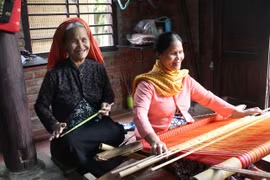
The Muong Hoa cooperative is home to nine women with difficult circumstances in Ta Van. They are all guided by Lan to sew brocade items and make herbal incense in accordance with the traditional production method.
With their efforts, members of the cooperative have produced and provided many unique and high-value products to the market.
According to the local authority, members of the Muong Hoa cooperative have all escaped from poverty.
 Producing herbal incense from excess herbs in the fabric colouring stage. (Photo courtesy of Sung Thi Lan)
The Muong Hoa cooperative has become a supplier of traditional handicrafts of the Mong and Giay ethnic minority groups for many souvenir shops in Sa Pa. Its products are also sold at tourist destinations nationwide./.