Calls for cashless payments to take-off in Vietnam

The prolonged COVID-19 pandemic has unexpectedly created "golden" conditions for the financial industry to accelerate digital transformation and shift to cashless payments.
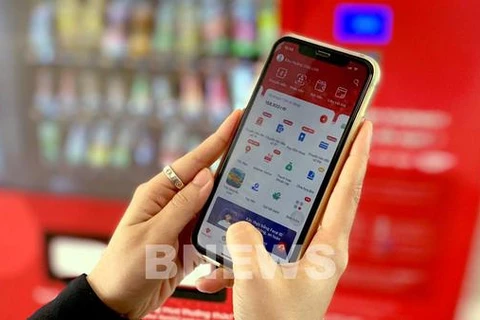
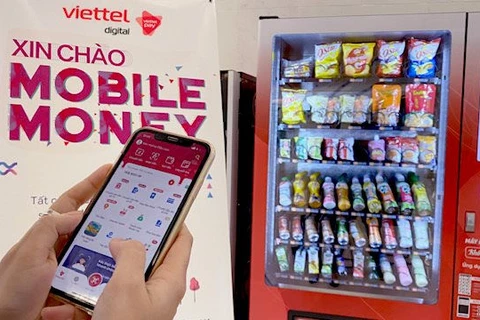
Calls for cashless payments to take-off in Vietnam ảnh 1More than 40,000 Viettel employees participated in its Mobile Money pilot. (Photo courtesy of Viettel)
Hanoi (VNS/VNA) - The prolonged COVID-19 pandemic has unexpectedly created"golden" conditions for the financial industry to accelerate digitaltransformation and shift to cashless payments.

However,mobile payments need to be implemented soon to reduce the disparitybetween urban and rural areas. They can also be an effective paymentchannel in supporting people in remote and isolated areas.

NguyenThu Hien in Hanoi’s Hoang Mai district has become familiar with onlineshopping, payment and home delivery since the start of the pandemic.

Shereceives her goods after being disinfected at a reception desk in herbuilding, while having no face-to-face contact with delivery men.

Hientold Vietnam News that onlineshopping helped her save time and reduced the risk of infectioncompared to cash payment. In addition, onlinepayments are convenient when paying large amounts.

“Inthe context of COVID-19, I get a lot of promotion codes from sellers incooperation with payment units such as charge-free payments, cashback andprice reduction. This helps me save a considerable amount when shoppingonline,” she said.

Inaddition to online shopping, people can also pay for their electricity, water,telecoms and even hospital fees through banking accounts or e-wallets.

CanVan Luc, a banking and finance expert, said since the outbreak of COVID-19 inearly 2020, the number and value of transactions through non-cash paymentmethods have increased sharply compared to the previous period.

Inthe first half of 2021, non-cash payments increased by 30-40 percent intransactions and by 70-80 percent in value.

Despitethe sharp increase, it was undeniable that cash payments were still popular in Vietnambecause consumption habits as well as payment coverage had not reached ruraland remote areas, Luc said.

Citingdata from FIS Global Payment, he said that in Vietnam, cash payment methods ine-commerce still accounted for the highest rate at 28 percent, followed bymoney transfers at 26 percent, e-wallets 21 percent and credit cards 14 percent.

Meanwhile,worldwide, payments via e-wallet accounted for the largest proportion at 44.5 percent,followed by credit cards with 22.8 percent.

Theuse of cash as a popular payment method in Vietnam was considered both achallenge and an opportunity for involved parties, he said.

Accordingto Nguyen Minh Tam, deputy general director of Sacombank, there is stillplenty of room for cashless payment. The number of payment accounts in Vietnamis currently over 100 million.

However,people often open a bank account just to withdraw cash via the ATM. Smallbusiness households and traders as well as customers still mainly pay in cash.

TheGovernment in March approved pilot application for Mobile Money, whichallows the use of mobile-phone credit to pay for small-value goods and services.

Thepilot application for mobile money services aims to contribute to thedevelopment of non-cash payments, improving the access and use of financialservices, especially in rural, remote, border and island areas.

Viettel,VNPT and MobiFone are the three telecom operators that submitted applicationsfor a pilot licence to deploy Mobile Money. However, more than five monthssince issuing the decision, Mobile Money has not been implemented, largely dueto the prolonged impact of COVID-19.

Ata forum on developing non-cash payments recently held by the International DataGroup, Pham Minh Tu, deputy director of MobiFone Digital Service Centre, saidthat MobiFone was still in the process of completing procedures and applyingfor a licence to launch the product.

MobileMoney targets unbanked customers. Based on the advantage of widespread networksin remote areas, telecom providers could fill the gaps that banks have not yetpenetrated.

Tusaid there was still much room for the development of cashless payment in Vietnam,but it would be rocky. Cashless transactions are currently concentrated mainlyin urban areas.

Meanwhilein rural areas, which account for about 60 percent of the population, non-cashpayment has not been popular, leaving room for development.

Accordingto Tu, if Mobile Money is exploited, it would make a change and upgradesociety, reducing the gap between urban and rural areas. People in rural areascould sell their products through payment tools and e-commerce.

However,experts have also said the development of Mobile Money or non-cash paymentmethods in Vietnam still faces many challenges. The most important thingnow is to change people's consumption habits through financial educationprogrammes as a pillar in implementing a comprehensive financial developmentstrategy.

Onthe other hand, the Government also needs to complete the legal corridor forthe digital economy and government, including digital finance.

Inaddition, it is necessary to continue to upgrade the information technologysystem and digital infrastructure in remote areas, raise awareness and increaseconsumer confidence.

TheGovernment also needs to develop an open banking system with stronger cooperationamong commercial banks, Fintech and payment intermediaries./.


VNA
See more

The meeting between General Secretary of the Communist Party of Vietnam Central Committee and State President To Lam and Chairman and Chief Executive Officer of Hayleys PLC Mohan Pandithage in Colombo on May 8 (Photo: VNA)

Vietnamese leader hopes for stronger ties with Sri Lanka's Hayleys PLC

General Secretary and President To Lam said that given the complementarity of the two economies and their substantial room for growth, Vietnam wishes to enhance cooperation with major Sri Lankan enterprises, especially those with regional market networks and connectivity capabilities such as Hayleys.

The export of 1.1 million doses of vaccine lumpy skin disease (LSD) to the Republic of Korea marks an important milestone for Vietnam’s veterinary vaccine industry. (Photo: nongnghiepmoitruong.vn)

Vietnamese-made LSD vaccine enters demanding RoK market

The successful research and commercialisation of the LSD vaccine, which has been widely used in the domestic market and is gradually expanding internationally, helps affirm the position of Vietnamese veterinary vaccines globally.

General Secretary of the Communist Party of Vietnam (CPV) Central Committee and State President To Lam addresses the Vietnam – Sri Lanka Trade-Investment-Tourism Cooperation Forum in Colombo on May 8. (Photo: VNA)

Top leader urges stronger Vietnam-Sri Lanka economic connectivity

Vietnam – Sri Lanka cooperation should be viewed within the broader context of the Indian Ocean, South Asia and emerging global supply chains, and the key issue now is not potential, but swift, decisive and effective action, said Vietnam's top leader To Lam.

The meeting between Vietnamese Minister of Industry and Trade Le Manh Hung and representatives from Essar Group (Photo: VNA)

Vietnam, India step up cooperation in energy, biofuels

Vietnam encourages capable investors to participate in oil and gas, energy and energy infrastructure projects in line with the national energy development strategy, while ensuring investment efficiency and compliance with Vietnamese law.

In the first four months of 2026, total FDI inflows into Vietnam reaches 18.24 billion USD, up 32% year-on-year. (Illustrative photo: VNA)

Vietnam draws stronger foreign investment inflows despite global headwinds

In the first four months of 2026, total FDI inflows into Vietnam reached 18.24 billion USD, up 32% year-on-year. Disbursed capital was estimated at more than 7.4 billion USD, an increase of 9.8% and the highest four-month disbursement level recorded in the past five years, reflecting effective implementation of many registered projects.

A Boeing 787 aircraft of Vietnam’s national flag carrier, Vietnam Airlines, lands on its first flight at Long Thanh International Airport. (Photo: VNA)

Deputy PM stresses strategic, synchronous planning for airport system

The national airport system planning was approved by the Prime Minister under Decision No. 648/QD-TTg dated June 7, 2023. Under the planning, 30 airports (14 international and 16 domestic) are to be developed during the 2021–2030 period, with a vision to 2050 expanding the network to 33 airports (14 international and 19 domestic).

Modern machinery improves labour productivity. (Photo: VNA)

Upskilling becomes key lever for Vietnamese workforce in digital era

As the economy is pivoting to a growth model fueled by knowledge, technology and innovation, the working class, or the backbone of production, demands better professional qualifications, vocational skills, industrial discipline and work habits. Timely adaptation is the only shield against being undercut by accelerating automation, artificial intelligence and increasingly fiercer global competition.

A circular organic farming model in Khanh Hoa is delivering initial economic efficiency. (Photo: VNA)

New growth potential unlocked for Vietnamese economy

Prime Minister Le Minh Hung once stressed that cutting administrative procedures and business conditions remains one of the fastest and most effective ways to stimulate growth and strengthen confidence among citizens and enterprises. He underscored that the reform process must remain continuous and responsive to practical requirements.

Politburo member Nguyen Duy Ngoc, who is also Secretary of the CPV Central Committee, Chairman of its Organisation Commission and standing deputy head of the Central Steering Committee for Science-Technology Development, Innovation and Digital Transformation, at a working sessions with leaders of the Indian Institute of Technology Madras (IIT Madras). (Photo: dangcongsan.vn)

Vietnam strengthens cooperation with India’s leading technology partners

Both sides exchanged views on digital identification management, electronic authentication, biometrics, personal data protection and experience in implementing large-scale national digital services. The two sides also agreed to strengthen exchanges of experts and cooperation in technical and policy experience-sharing in the coming period.