Cashless payment for restaurant, catering services on the rise

Cashless payment has become more popular in all sectors, including restaurant and catering services, according to Winnie Wong, Mastercard’s Country Manager for Vietnam, Cambodia and Laos.
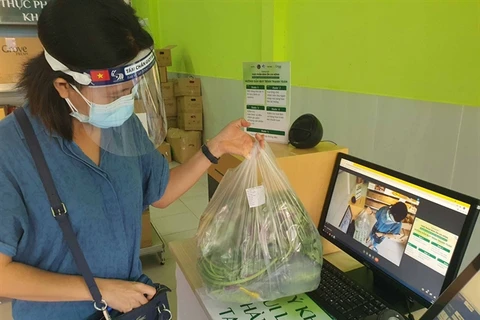
Cashless payment for restaurant, catering services on the rise ảnh 1Illustrative image (Source: VNA)

Hanoi (VNA) – Cashless payment has become more popular in all sectors, including restaurant and catering services, according to Winnie Wong, Mastercard’s Country Manager for Vietnam, Cambodia and Laos.

Speaking at the recent Food and Beverage Conference 2022 in Hanoi, Wong noted that in Southeast Asia, payment for restaurant and catering services in cash fell 60-70 percent due to safety and hygiene reasons.
She said that 2021 was a tough year for catering service sector due to COVID-19 impacts. However, the sector has found the way to adapt to the situation and overcome difficulties, she said, stressing that payment methods of customers have gradually changed.
In order to avoid direct contacts, customers tend to switch to online shopping and cashless payment. Meanwhile, sellers in all scales have also applied digital technologies to enable themselves to conduct online selling and receive cashless payment, meeting the demand of customers and safety requirements amid the complicated development of COVID-19, said Wong.
She commented that before COVID-19 broke out, Vietnam had developed cashless payment in transactions in all sectors, which paved the way for the expansion of the method in the country amid the pandemic.
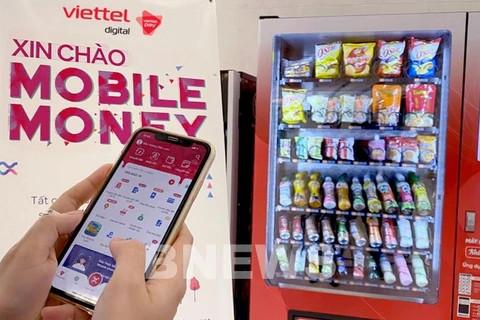
New technologies have made cashless payment faster and more convenient compared to cash payment. Particularly, payment using QR codes has become more popular, especially in the context of the pandemic, making it easier for both buyers and sellers in conducting transactions.
A recent survey revealed that 72 percent of customers become more loyal to retailers that accept many payment methods, while 85 percent of shoppers wish to pay in their own way and 61 percent said they often avoid sellers that do not accept any e-payment methods./.
VNA

See more

Enterprises must disclose to investors the issuance plan, legal and investment risks and the rights and obligations of issuers and bondholders. (Photo: VNA)

Vietnam tightens rules on corporate bond issuance

Under Decree No 200/2026/ND-CP, enterprises issuing bonds will continue to operate under the principle of self-borrowing, self-repayment and self-responsibility, meaning issuers are fully accountable for the efficiency of capital use, debt repayment capacity and any disputes arising from bond issuance, use of funds, and payment of principal and interest.

A performance on The Huc bridge of the temple as part of a nighttime tourism programme to discover the Ngoc Son temple on Hoan Kiem Lake, downtown Hanoi. (Photo: VNA)

Hanoi adopts framework to boost night-time economy development

The resolution encourages a wide range of cultural, artistic and tourism activities, including performances, exhibitions, film screenings, presentations of traditional and intangible cultural heritage, and other programmes held in public spaces, pedestrian streets, heritage sites, theatres, cinemas and cultural venues.

A cargo port in Thiruvananthapuram city, India (Photo: ANI/VNA)

Ample room remains for Vietnam–India logistics cooperation

The GTTCI expert noted that alongside logistics and integrated warehousing, e-commerce is expected to be a particularly high-growth sector in the coming years. He described it as a multi-billion-dollar market with significant untapped opportunities for cooperation between Vietnam and India.

The meeting between Minister of Finance Ngo Van Tuan and Ambassador Julien Guerrier, head of the EU Delegation to Vietnam, on June 15. (Photo: thoibaotaichinhvietnam.vn)

Vietnam, EU enhance cooperation in green finance

Minister of Finance Ngo Van Tuan called on the EU to help facilitate Vietnamese firms' access to green finance, expand technical and financial assistance for green transition, and enhance cooperation in strategic technologies, innovation, digital finance and high-tech human resources development.

An overview of the working session between Deputy Finance Minister Tran Quoc Phuong and Kim Dongil, Director of ADB representing the Republic of Korea, Papua New Guinea, Sri Lanka, Taipei (China), Uzbekistan, Vanuatu and Vietnam. (Photo: Ministry of Finance)

Vietnam, ADB to advance strategic projects with strong economic impact

ADB has identified a pipeline of 27 projects for Vietnam through 2029, with total planned financing of approximately 4.6 billion USD. The projects focus on sectors that are among Vietnam’s priorities, including infrastructure, energy, urban development, agriculture and public sector management.

Illustrative photo (Photo: VNA)

Exports gain momentum from high-tech growth drivers

According to the Ministry of Industry and Trade, Vietnam’s exports reached 215.66 billion USD in the first five months of 2026, up 19.5% year-on-year. Twenty-six export items generated more than 1 billion USD in revenue each, including seven with turnover exceeding 10 billion USD.

Participants in the conference (Photo: VNA)

Vietnam, Tunisia target coffee, olive oil as trade ties deepen

Though geographically distant, the two countries share strategic locations in their respective regions, skilled human resources, and a strong commitment to expanding international trade, which form the bedrock for a lasting and mutually beneficial partnership.

Da Nang People’s Committee Chairman Nguyen Manh Hung (second from left) presents investment policy approval decisions and investment registration certificates for three infrastructure projects in FTZ Zones 2, 3 and 4. (Photo: VNA)

Da Nang promotes investment links for pioneering Free Trade Zone

The conference also highlighted the role of digital technologies in building next-generation FTZs. Proposed solutions included the adoption of artificial intelligence (AI), the Internet of Things (IoT), big data, cloud computing and digital customs systems to improve operational efficiency, streamline logistics, accelerate customs procedures and enhance transparency for investors.