Currently, Vietnam has approximately 1,270 supermarkets, 270 shopping centres, nearly 250,000 convenience stores, and over 7,500 outlets operated by foreign-invested enterprises such as MM Mega Market, AEON, Lotte Mart, Go! Market, and Tops Market.
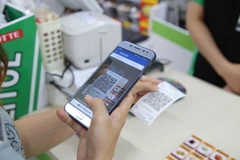
Accordingly, GO! supermarkets’ customers can simplify payments by scanning VIETQR Pay code using their banks’ mobile banking apps or e-wallets, providing a fast, convenient, and seamless payment experience.
According to the National Financial Inclusion Strategy by 2025, with a vision to 2030, the Government aims for a 20–25% annual growth rate in cashless payment transactions, reflecting the strong determination to accelerate Vietnam’s transition to a digital economy, in which digital payments serve as a key infrastructure connecting citizens, businesses, and the Government on a modern technological platform.
Relevant authorities are requested to swiftly implement measures to encourage non-cash transactions, enhance direction and guidance, and conduct widespread communication campaigns to promote cashless payments.
The initiative is expected to unlock new opportunities for traditional vendors, helping them improve business capabilities, align with the national digitalisation trend and contribute to the robust growth of e-commerce in Vietnam.
According to the State Bank of Vietnam, the banking sector’s digital transformation has recently achieved encouraging results, contributing to the overall development of the national economy. In particular, cashless payment activities have been widely implemented and witnessed remarkable growth.
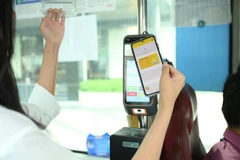
In a significant move to enhancing passenger convenience and safety, the Hanoi Public Transportation Centre (HPTC) joins hands with its partners to launch an e-ticket system for the capital city’s bus service.
Visa, a global leader in digital payments, has provided its insights into Vietnam’s payment landscape with its latest Consumer Payment Attitudes study that highlights the surge in cashless transactions among Vietnamese consumers.
The Government’s policy of promoting cashless payment has triggered the spread of online payments in Vietnam as well as the race of new technologies, contributing to boosting the digital economy.
Chairman of the National Assembly (NA) Vuong Dinh Hue on February 15 spoke highly of the significant contributions by the banking sector in general and the Co-operative Bank of Vietnam (Co-opBank) in particular to national achievements in 2023.
As the traditional Lunar New Year (Tet) festival is just around the corner, commercial banks are offering a wide range of promotional programmes and financial solutions to encourage cashless payment during the peak shopping season.
According to the State Bank of Vietnam (SBV), the banking sector has invested over 15 trillion VND (617.6 million USD) in digital transformation by the end of 2022.
The National Payment Corporation of Vietnam (NAPAS) in coordination with the Vietnam Bank for Social Policies (VBSP) launched NAPAS 247 Quick Transfer and NAPAS 247 Quick Transfer via VietQR Code on the bank’s mobile banking app (VBSP Smartbanking) on July 31.
Swiss fintech startups should tap into opportunities in Vietnam – the country with rising demand for digital financial solutions, supportive policies, and government initiatives to nurture fintech innovation, according to a new Vietnam Fintech report by Switzerland Global Enterprise (S-GE).
Cashless payments are developing rapidly in Vietnam, especially after the COVID-19 pandemic, with transactions via banks averaging 40 billion USD per day, said the State Bank of Vietnam.
The northern province of Bac Giang will continue paying attention to promoting digital society, said the director of the provincial Department of Information and Communications, Tran Minh Chieu.
The State Bank of Vietnam has requested banks, branches of foreign banks, and providers of intermediary payment services to take steps to continue promoting cashless payment and the implementation of the national digital transformation programme.
The State Bank of Vietnam (SBV) has requested banks, branches of foreign banks, and providers of intermediary payment services to take steps to continue promoting cashless payment and the implementation of the national digital transformation programme.