Central, Central Highland regions aim for int’l tourism brands

It is necessary for the central and Central Highland regions to enhance connectivity, increase competitiveness, and build international-standard brands to obtain sustainable tourism development.
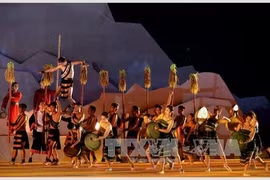
Central, Central Highland regions aim for int’l tourism brands ảnh 1Gong culture in Central Highlands (Photo: VNA)
Quang Nam (VNA) – It is necessary forthe central and Central Highland regions to enhance connectivity, increasecompetitiveness, and build international-standard brands to obtain sustainabletourism development.

Deputy Minister of Culture, Sports and TourismVuong Duy Bien made the remark at a forum in Tam Ky city, the central provinceof Quang Nam, on June 10 as part of the sixth Quang Nam Heritage Festival.

The central and Central Highlands are importantareas in the national tourism development strategy through 2020, with a visiontowards 2030, he said, referring to Thua Thien-Hue, Quang Binh, Quang Nam, DaNang, Khanh Hoa, and Lam Dong as successful examples in developing tourism intoa key industry for local economy.
However, the regions are yetto own any international-standard tourism brands, which hinders their furthergrowth, the official said.

Deputy Prime Minister Vu Duc Dam recommendedthat localities should make use of their natural and cultural advantages tocreate unique products and bolster regional connection to attract more visitors. 

To develop tourism, local authorities should lookfor financial resources from private businesses, he said, adding that humanresources training is also one of the important factors.

The central region, which boasts numerous worldheritage sites, beautiful beaches and classy resorts, has been touting itselfas “the central heritage road”, with Da Nang City dubbed the “gateway” linkingthe world heritage sites of My Son Sanctuary and the ancient town of Hoi An inQuang Nam province with the ancient imperial city of Hue.

Meanwhile, the Central Highlands, comprising fiveprovinces of Dak Lak, Dak Nong, Lam Dong, Gia Lai and Kon Tum, is a land ofimposing mountains and forests. 

The region is home to many ethnic minoritieswith varied customs and lifestyles. Its gong culture was recognised as aMasterpiece of Oral and an Intangible Cultural Heritage of Humanity by UNESCOin 2005.-VNA
VNA
See more

Tourists experience the buckwheat flower season on the Dong Van Karst Plateau. (Photo: VNA)

Buckwheat blossoms help extend tourism season in stone plateau

Phan Duc Nam, Chairman of the Dong Van commune People's Committee, said the locality is focusing not only on flower cultivation but also on improving landscapes, environmental sanitation and tourism services. The goal is to give visitors more reasons to stay longer and return at other times of the year.

For leisure travellers, a dining venue worth experiencing can be a decisive factor in choosing a destination. (Photo: New World Phu Quoc)

From APEC to Michelin: New opportunities for Phu Quoc to extend stays, boost spending

Gwendal Poullennec, International Director of the Michelin Guide, has observed that Phu Quoc’s culinary identity is shaped by the interplay between fishing-village food culture and restaurants with an international character. This provides a foundation for the island to develop itineraries offering a variety of experiences and price points.

Pu Luong community-based ecotourism site in Thanh Hoa province attracts visitors during National Day holiday. (Photo published by VNA)

Travel firms drive tourist flows, boost tourism value

Travel companies should play a key role in directing tourist flows and linking the tourism value chain, thus enhancing the competitiveness of the tourism sector. They should go beyond selling tours to understand market demand, design products, connect services, organise tourist flows, manage risks and contribute to shaping destination images.

The picturesque scenery outside Phong Nha Cave (Phong Nha-Ke Bang National Park) (Photo published by VNA)

Vietnam steps up tourism promotion on global markets

Experts say that to turn advantages into high-value tourist arrivals, tourism promotion needs to move beyond fragmented activities towards large-scale, long-term campaigns tailored to target markets and closely linked to actual visitor experiences.

Visitors tour Hoi An Ancient Town in Da Nang city. (Photo: VNA)

Vietnam’s tourism targets 12% of GDP by 2030

Resolution 26-NQ/TW targets a direct GDP contribution of 10–12% by 2030, 45–50 million foreign arrivals, 160 million domestic visitors, and total revenue of 80–90 billion USD.

Located on Apollo Square in the heart of Sunset Town, Phu Quoc, Apollo Cafe is a distinctive venue designed by renowned architect Bill Bensley.

Coffee beneath an “upside-down” town: A surreal stop in Phu Quoc

With an entire town recreated on its ceiling, sweeping sunset views and a vantage point for watching fireworks after dark, Apollo Cafe in Phu Quoc offers more than a photogenic backdrop. Designed by Bill Bensley, the venue shows how a café can become an experience travellers deliberately build into their itinerary.

Vietnam is named Asia's Leading Destination for the eighth time and Asia's Leading Heritage Destination for the fourth time at the 2026 World Travel Awards. (Photo: VNA)

Vietnam strengthens tourism profile with WTA 2026 honours

The awards demonstrate that Vietnam's tourism appeal is being recognised across a broad range of areas, from national, urban and heritage destinations to nature-based attractions and tourism products and services, further strengthening the country's presence on the regional and international tourism map

Terraced fields shimmering with water create a picturesque scene in Lang Sang Village, Ta Xua Commune. (Photo: VNA)

Ta Xua named Asia’s leading emerging tourism destination 2026

In recent years, Ta Xua, dubbed "the paradise of clouds", has emerged as one of the mountainous destinations attracting strong interest from young travellers, particularly for its spectacular sea of clouds stretching across the mountains in the northwestern region.

AirAsia highlights Kem Beach as a family-friendly destination, where children can play on the sand while parents enjoy a little more time relaxing by the sea. (Photo: VNA)

AirAsia recommends Phu Quoc as ideal destination for family travel

A familiar low-cost airline among Southeast Asian travellers, AirAsia describes Phu Quoc in its blog guide to travelling with young children as a destination that feels almost tailor-made for families, with beaches for relaxation, leisure attractions and a wide range of activities to engage children of different ages.

Ho Chi Minh City Central Post Office remains a popular attraction for domestic and international tourists. (Photo: VNA)

Ho Chi Minh City wins three top Asian tourism awards in 2026

The 2026 honours add to the city’s impressive streak at international tourism awards. In the 2025 WTA, the southern metropolis took home four titles, including business travel and festival and event destination awards, which it had won for four years from 2022 to 2025.

Phu Quoc is building its capacity to host MICE tourism, with international resorts, event venues, world-class shows and an expanding flight network. (Photo: Sunset Town)

Why does Travel + Leisure call Phu Quoc Asia’s next MICE hotspot?

According to the magazine, Phu Quoc was once known primarily for its beaches and relaxed holiday atmosphere. Over the past two years, alongside that appeal, the island has gradually developed its capacity to serve the MICE market, with international resorts, event venues, world-class shows and an expanding flight network.