Signs prohibiting taxis and commercial cars installed in Giang Vo street (Photo: vov.vn)
 Hanoi (VNA) – The Hanoi Department of Transport has asked the municipal People’s Committee to officially ban Uber and Grab cars on 11 inner-city streets after a trial month.
The streets on which the cars for commercial purposes like taxis, Uber, Grab will be banned during rush hours (from 6am to 9am and from 4.30pm to 7.30pm) are Giang Vo, Lang Ha, Le Van Luong, Truong Chinh, Kham Thien, Le Duan, Hang Bai, Tran Hung Dao, Ly Thuong Kiet and Chuong Duong Bridge on the lane from Long Bien district to the city centre.
Commercial cars will be banned completely on Phu Doan, Xuan Thuy and Cau Giay streets.
The ban is aimed at reducing traffic congestion.
The ban aims to reduce the number of vehicles going to the centre during rush hours and help alleviate the ever-worsening traffic, said a representative of the transport department.
Last month, when the ban was implemented on a trial basis, the department had installed signs prohibiting taxis and commercial cars with nine seats or less, including those of popular ride-hailing services Uber and Grab, on nine out of 13 streets.
After a month of implementation, traffic congestion on crowded streets during rush hours reduced considerably, said the representative.
The ban did not affect public life or the transport business, the representative said.
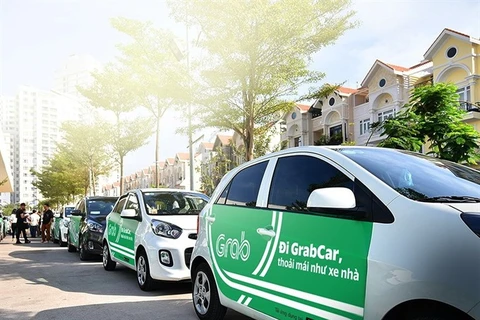
The Ministry of Transport will soon issue regulations forcing Uber and Grab cars to put logos on the car body or on the doors. This will help the traffic police to identify commercial vehicles that violate the ban.
This can, however, be a challenge if the commercial cars refuse to put up logos for identification.–VNA
The streets on which the cars for commercial purposes like taxis, Uber, Grab will be banned during rush hours (from 6am to 9am and from 4.30pm to 7.30pm) are Giang Vo, Lang Ha, Le Van Luong, Truong Chinh, Kham Thien, Le Duan, Hang Bai, Tran Hung Dao, Ly Thuong Kiet and Chuong Duong Bridge on the lane from Long Bien district to the city centre.
Commercial cars will be banned completely on Phu Doan, Xuan Thuy and Cau Giay streets.
The ban is aimed at reducing traffic congestion.
The ban aims to reduce the number of vehicles going to the centre during rush hours and help alleviate the ever-worsening traffic, said a representative of the transport department.
Last month, when the ban was implemented on a trial basis, the department had installed signs prohibiting taxis and commercial cars with nine seats or less, including those of popular ride-hailing services Uber and Grab, on nine out of 13 streets.
After a month of implementation, traffic congestion on crowded streets during rush hours reduced considerably, said the representative.
The ban did not affect public life or the transport business, the representative said.
The Ministry of Transport will soon issue regulations forcing Uber and Grab cars to put logos on the car body or on the doors. This will help the traffic police to identify commercial vehicles that violate the ban.
This can, however, be a challenge if the commercial cars refuse to put up logos for identification.–VNA
VNA