Commercialising 5G opens opportunity for businesses: Insiders

Telecom giants in Vietnam are taking applications and commercialising the 5G network, expected to generate more opportunities for businesses to accelerate digital transformation, toward developing a predominantly digital economy in the country, according to insiders.

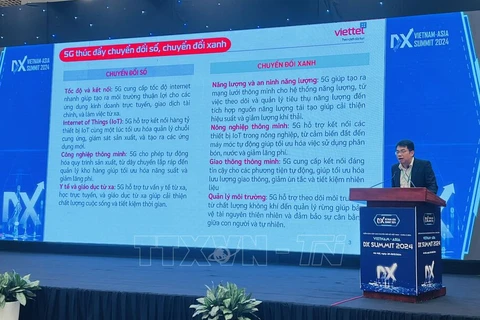
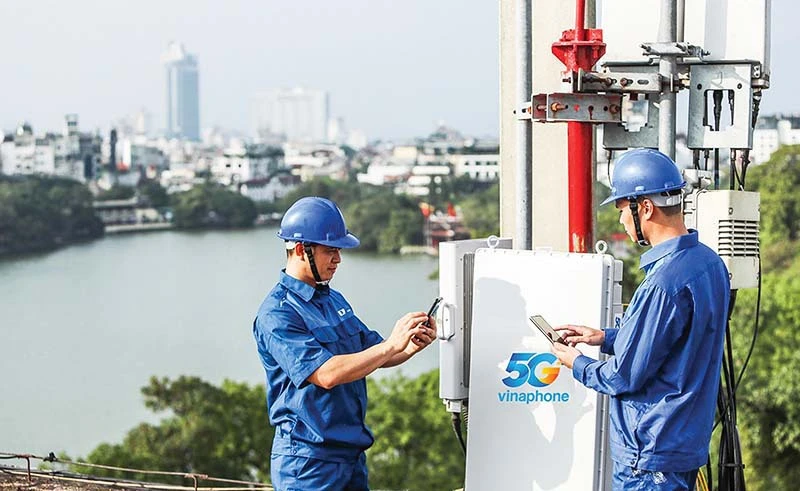
Telecom giants in Vietnam are taking applications and commercialising the 5G network, expected to generate more opportunities for businesses to accelerate digital transformation (Photo: https://baodautu.vn/)

Hanoi (VNA) - Telecom giants in Vietnam are taking applications and commercialising the 5G network, expected to generate more opportunities for businesses to accelerate digital transformation, toward developing a predominantly digital economy in the country, according to insiders.

The Ministry of Information and Communications has, as of 2024, granted licenses for frequencies to launch 5G networks to major operators like Viettel and VNPT, with a goal of achieving nationwide coverage by 2030. Viettel, the first network to successfully test commercial 5G technology in 2019, has now expanded testing to 61 provinces and cities nationwide.

The application of 5G technology will bring opportunities to many businesses. Sectors with the potential to accelerate the digitalisation process, supported by Vietnam’s current legal framework, include banking, Fintech companies, e-commerce businesses, and companies that bring goods and services to online platforms.

The Law on Credit Institutions, effective from July, introduces new provisions to accommodate emerging activities aligned with the digital transformation trend, including authorising a testing mechanism for Fintech innovations in banking, online lending, and electronic transactions.

To facilitate the implementation of this testing mechanism, the State Bank of Vietnam is developing a draft on a controlled testing framework in the banking sector, focusing on Fintech companies and solutions applied to banking activities.

To prioritise online transactions, the Government has also issued a decree No.52/2024/ND-CP which outlines regulations for non-cash payments, including additional provisions regarding cryptocurrencies, e-wallets, and prepaid cards applicable to credit institutions.

The commercialisation of 5G plays a crucial role in supporting the digital transformation goals of credit institutions, enabling digital banks to provide online services more swiftly and efficiently, particularly in real-time transactions such as electronic payments and transfers.

Furthermore, 5G also enhances connectivity and integration with advanced technology platforms like AI, big data, and blockchain, making it easier for digital banks to offer intelligent financial services and strengthen transaction security.

In the context of 5G commercialisation, businesses are facing both opportunities and challenges when applying 5G technology in their business activities. Many legal mechanisms need to be improved to further facilitate companies.

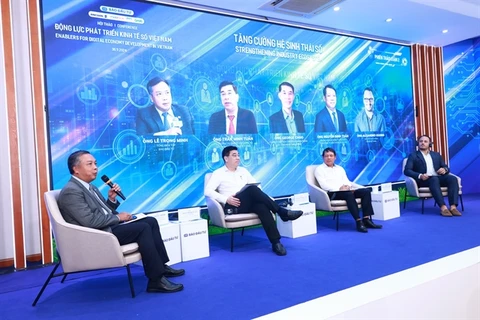
Speaking at a recent workshop in Hanoi, President of Ericsson Vietnam Rita Mokbel said for Vietnam, 5G will play a critical role in advancing Industrial Revolution 4.0, attracting foreign investment and driving economic growth. Private 5G networks, in particular, will allow businesses to innovate and reduce costs while providing telecom operators with new revenue opportunities. Overall, 5G will be instrumental in Vietnam’s goal to achieve a digital economy that is expected to contribute 20% of its GDP by 2025.

In the short term, prioritising investment in technological infrastructure, bolstering security measures, and optimising electronic transaction processes are essential, said insiders.

They stressed that as legal mechanisms have become fully established and enforced, businesses should engage closely with regulating bodies to ensure the efficient and secure implementation of 5G in their operation./.

VNA

See more

Individuals and organisations should strengthen data protection measures in the digital economy. ( Photo: nhandan.vn)

Experts recommend risk-based data governance to strengthen legal protection

In the first quarter of 2026, more than 6.9 million accounts were exposed, double the figure recorded in the same period last years. Stolen personal data has frequently been exploited in sophisticated online scams, particularly impersonation schemes targeting victims through fake relatives or acquaintances.

The exhibition combines digital technology, simulation models and hands-on activities to help the public gain knowledge of information security in an engaging and easy-to-understand manner. (Photo: VNA)

Interactive "Cyber Security Wall" exhibition spreads digital safety awareness in Hanoi

Through a series of display areas, visitors can explore notable scientific and technological achievements of the People's Public Security Force in safeguarding national security in cyberspace. The exhibition also provides information on common forms of online fraud and cyber scams, along with practical guidance on how to identify and prevent them.

A SMT (Surface Mount Technology) production line for electronic devices at Trung Nam EMS Factory, Da Nang High-Tech Park. (Photo: VNA)

New decree offers major incentives for high-tech R&D

The decree, which took effect on July 1, gives priority to investment in high-tech R&D, including research into innovative and core technologies; efforts to decode, master and improve high technologies; and the application, testing and refinement of advanced technologies.

The smart medical kiosk system at Hop Luc General Hospital in Thanh Hoa province makes it easier for patients to access medical examination and treatment services. (Photo: VNA)

Vietnam’s digital overhaul starts to deliver: French newswire

Inforadar noted that Vietnam has progressively streamlined its regulatory framework to clear institutional bottlenecks while putting in place mechanisms designed to spur innovation and technology adoption. The process has also pivoted from a resource-heavy approach to one focused on practical results, with stricter monitoring of projects’ progress.

Visitors experience an e-book app (Photo: VNA)

Verified subscriber data builds stronger digital shield

As Vietnam accelerates its national digital transformation, every correctly verified mobile subscription builds a more comprehensive and reliable telecom database, laying the groundwork for secure, sustainable digital services and public confidence in the country’s digital ecosystem.

A banana plantation cultivated to standardised production practices by Hung Son High-Tech Agriculture JSC in An Phu ward, Gia Lai province. (Photo: VNA)

Crop breeding innovation key to boosting agricultural productivity

According to the Plant Production and Protection Department under the Ministry of Agriculture and Environment, improved crop varieties have increased yields by 8–15%, depending on the crop, while enhancing farmers' incomes and supporting the restructuring of the agricultural sector.

Quantum technology is emerging as a strategic frontier in global science, technology and security competition. - Illustrative image (Photo: VNA)

Quantum tech seen as strategic pillar for Vietnam’s technological self-reliance

In Vietnam, the Politburo’s Resolution No. 57-NQ/TW identifies science, technology, innovation and digital transformation as breakthrough drivers of national development. In this context, the Prime Minister’s Decision No. 21/2026/QD-TTg has added cybersecurity and quantum technologies to the country’s list of 10 strategic technology groups.

A 3D mapping light show projected onto Turtle Tower, combined with a water screen system. (Photo: VNA)

Smart tourism takes hold nationwide

Under the country’s 2026–2030 digital economy and digital society development programme, the sector has been identified as one of the priority ones for accelerating digital transformation to improve governance efficiency, service quality, and visitor experiences.