Compliance with quality standards – a must to bolster fruit exports: insiders

Farmers and businesses must improve product quality, and strictly follow the rules of origin and ensure food safety to boost fruit exports, experts said.
Compliance with quality standards – a must to bolster fruit exports: insiders ảnh 1Workers sort lychees for export at the Global Food Joint Stock Company in Luc Ngan district, Bac Giang province. (Photo: VNA)
HCM City (VNA) – Farmers and businesses must improve product quality, and strictly follow the rules of origin and ensure food safety to boost fruit exports, experts said.

They made the affirmation at a recent conference jointly held by the United Nations Industrial Development Organisation (UNIDO), and the Vietnam Institute of Agricultural Engineering and Post-harvest Technology and the National Authority for Agro-Forestry-Fishery Quality, Processing and Market Development under the Ministry of Agriculture and Rural Development (MARD) in Ho Chi Minh City.

Describing fruit as a key agricultural export product, Deputy Director of the MARD’s Plant Protection Department Le Van Thiet said that fruit shipments in recent five years grow 10-15% annually, most of which are destined for China, the US, Japan, the Republic of Korea and the EU.

Negotiations to diversify export markets have made Vietnam one of the largest fruit exporters in Southeast Asia, while encouraging farmers and exporters to make more investment in their processing, packaging and transport facilities to ensure that Vietnamese fruit products meet foreign market standards, he said.

Pointing out several challenges that hamper fruit exports, including technical barriers, strict sanitary and phytosanitary measures and fierce competition, Thiet said farmers and businesses must comply with quality standards of importers, while promoting sustainable value chains for their products.

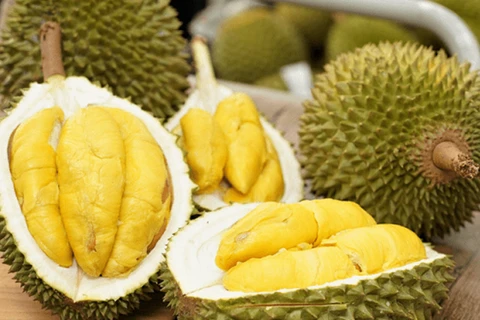
Compliance with quality standards – a must to bolster fruit exports: insiders ảnh 2Vietnamese durians for export (Photo: nongnghiepvietnam.vn)
Additionally, as digital transformation still lags behind the industry’s development, he suggested competent sides complete and upgrade their database, e-training platforms and websites, making them more friendly with users.

Besides, the completion of guidelines to set up and manage packaging facilities and planting areas of key fruit, as well as sound plant quarantine measures in accordance with importer requirements will help boost fruit exports, Thiet added.

Manager of UNIDO’s project on quality and standard Bahramalian Nima said that total fruit export batches rejected to enter Australia, China, the EU, Japan and the US increased 42% in ten years, from 24 in 2010 to 34 in 2020.

The rejections were due to disease infection, poor hygienic control, and veterinary drug and pesticide residues, he said, stressing that Vietnam should improve its technical assessment capacity, improve food safety surveillance system, and work to better farmer and company capacity to control quality.

Regarding origin tracing, experts said Vietnam should focus on improving transparency through food supply chains to detect unsafe food, and find ways to identify whether farmers are planting their trees under good practice standards or not.

Most recently, the Plant Protection Department sent a document to several localities, asking them to temporarily halt planting areas and packaging facilities with codes that fail to meet requirements from the Chinese market.

The suspension was also applied for the batches related to violating growing areas and packaging facilities.

According to Deputy Director of the Plant Protection Department Nguyen Thi Thu Huong, the move aims to reduce risks for Vietnamese exporters as it could take them a long time to recover from the consequences when the codes are revoked by the Chinese authorities./.
VNA

See more

Vice Chairman of the Hanoi People’s Committee hands over investment policy approval for Moscow House project in Hanoi to the Moscow authorities. (Photo published by VNA)

Hanoi, Russian localities step up cooperation in urban railways, technology

Secretary of the Hanoi Party Committee Tran Duc Thang and the delegation held talks with Moscow authorities to review implementation of the 2025-2027 cooperation programme and discuss key priorities for the new period, including urban transport, science and technology, digital transformation, trade and investment, and cultural exchanges.

Vietnamese Ambassador to Mexico Nguyen Van Hai (fourth from right) and others attend the seventh Veracruz International Energy Congress. (Photo: VNA)

Vietnam, Mexico strengthen energy, port cooperation

A number of Mexican state Veracruz businesses expressed their wish to organise a delegation to Vietnam to gain first-hand insights into the market, seek partners and explore investment and business opportunities, initially focusing on trade, energy, agriculture and tourism.

At the working session (Photo: VNA)

Can Tho, Guangxi seek collaboration in logistics, supply chains

Chinese investors now back 35 projects in Can Tho with registered capital of nearly 1.2 billion USD. In the first seven months of 2026, Can Tho’s exports to China hit 77.5 million USD, while imports stood at 64.7 million USD. Key exports included rice, seafood, farm produce, processed agricultural products and apparel while main imports comprised agricultural chemicals, veterinary medicines, fertilisers, chemicals, fabrics and other materials and inputs.

Vietnamese Minister of Finance Ngo Van Tuan grants an interview to the Vietnam News Agency (VNA). (Photo: VNA)

Vietnam, Russia move to boost financial cooperation

On bilateral economic, trade and investment ties, Tuan said two-way trade hit 3.24 billion USD in the first seven months of 2026, up 12% from a year earlier. Vietnam’s exports to Russia totaled 1.33 billion USD, while imports amounted to 1.91 billion USD.

Cai Mep - Thi Vai Port complex in Ho Chi Minh City (Photo: VNA)

Ho Chi Minh City seeks to make seaports new growth driver

To maximise its seaport advantages, Ho Chi Minh City is developing smart and green ports while promoting clean energy, lower emissions and sustainable supply chains. It aims to establish an integrated ecosystem linking seaports with industrial parks, logistics centres, free trade zones, multimodal transport networks and an international financial centre.

Farmers visit the off-season durian orchard of Cao Chi Dai in Vinh Hanh commune, An Giang province (Photo: VNA)

Vietnam promotes finance for green agriculture

Over the past five years, Vietnam has developed and gradually implemented a green finance system to support low-emission and environmentally friendly production, including agriculture. Based on the State Bank of Vietnam's Directive No. 03/CT-NHNN dated March 24, 2015, banks including BIDV, VCB, HDBank and Agribank have introduced green credit packages for waste treatment, high-tech agriculture, digital transformation, regional linkages and emission reduction across production chains.

An overview of the meeting between representatives from Polish businesses and the Agency for Domestic Market Surveillance and Development. (Photo: Agency for Domestic Market Surveillance and Development)

Polish businesses seek suppliers, partners in Vietnam

MAJAMI, a confectionery manufacturer and trader under Sweet House, is seeking distributors for Polish confectionery products in the Vietnamese market. Meanwhile, GABONA, a distributor and wholesaler of professional cosmetics, hair care and make-up products and beauty accessories, is looking for Vietnamese manufacturers of vegan and natural cosmetics.