COVID-19 shows pressing need for quicker digital transformation

Minister of Information and Communications Nguyen Manh Hung has urged digital companies to innovate and develop platforms for online services as the novel coronavirus (COVID-19) pandemic has sparked a pressing need for Vietnam to hasten digital transformation.
COVID-19 shows pressing need for quicker digital transformation ảnh 1A payment via QR code. The coronavirus pandemic is highlighting the need for speeding up digital transformation. (Photo thuongtruong.com.vn)

Hanoi (VNS/VNA) - Minister of Information andCommunications Nguyen Manh Hung has urged digital companies to innovate anddevelop platforms for online services as the novel coronavirus (COVID-19)pandemic has sparked a pressing need for Vietnam to hasten digitaltransformation.

Hung said the pandemic was posing considerable challenges butthere were also opportunities.

“COVID-19 helps us change our thinking. It is a breakingpoint in the development process and many habits will change,” he said. “Thisprovides the biggest opportunity to accelerate digital transformation and bringsocio-economic activities online.”

“The world is now hard to predict, turbulence has becomenormal. We will have to face this coronavirus pandemic crisis, then we willlearn how to increase resistance, toughness, creativity, adaptiveness andrecovery ability,” he said.

“Digital technology will help solve the problems quickly,” hestressed. “It is time for the Government, enterprises and society to investmore intensively in digital technology.”

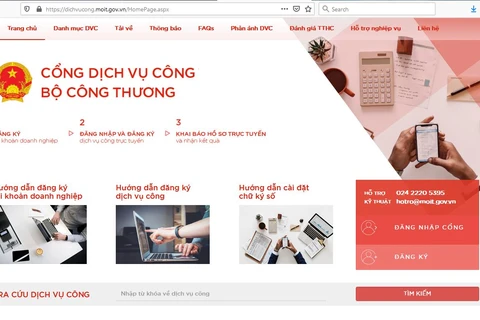
In the context of the pandemic, Hung said the Governmentwould decide some digital transformation policies currently under considerationmore quickly, such as cashless payment, mobile money, certification for onlinelearning, banning outdated technology imports, promoting the production oflow-priced smartphones and e-Government.

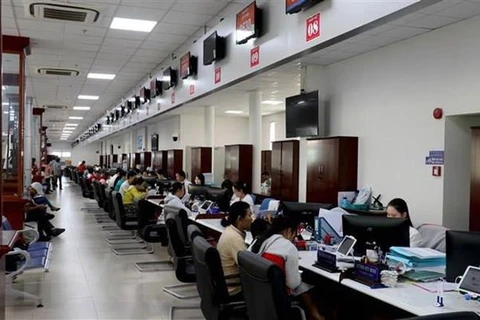
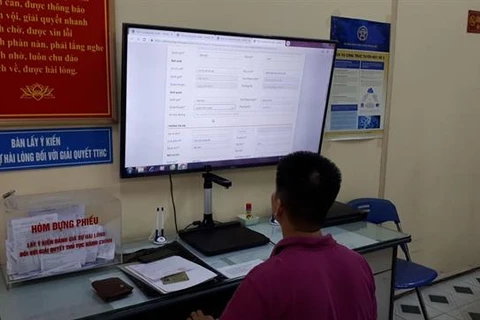
For example, the number of files for public servicessubmitted online doubled in the past month, equal to the total figure of theprevious 20 years.

Cashless payment and e-Government were highlighted asimportant solutions to fight the spread of COVID-19. Recently, banks slashedonline transactions fees to promote cashless payment.

As technology shapes a stay-at-home economy in the COVID-19outbreak, Hung urged Vietnamese firms to increase innovations to provide moreonline platforms for education, health, shopping and recreation.

The need for digital transformation was pressing as thepandemic would not only create a health crisis but also an economic crisis,which would result in increasing unemployment, he said.

“Success often comes from a crisis. It’s a preciousopportunity for digital companies,” Hung said.

Dau Anh Tuan, head of the Vietnam Chamber of Commerce andIndustry’s Legal Department, said encouraging the participation of enterprisesin digital transformation and opening digital economy platforms would bringsignificant efficiency.

However, Tuan said the current legal system needed timelyamendments to manage new business models efficiently and ensure the developmentof the digital economy is on track.

A clear example was tech-based cars like Grab and Be. It tooksix years for lawmakers to complete a decree regulating the operation ofvehicles providing passenger transportation services via ride-hailing appswhich will come into effect from the beginning of April.

Economic expert Vo Tri Thanh said the digital economy was anindispensable global trend and Vietnam could not stand outside, adding thatsuccessful digital transformation brought significant benefits to businesseslike 30 percent higher labour productivity.

However, digital transformation was not simple, he said,adding that only half of enterprises embarking in the process succeeded./.
VNA
See more

The Au Lac AI Alliance officially announces the inaugural Au Lac Grand Prize on January 12. (Photo: VNA)

Au Lac Grand Prize launched to honour Vietnamese-made AI

The competition is open to all Vietnamese citizens, regardless of age, place of residence or professional background, provided the submitted product or solution is legally protected intellectual property developed and owned by Vietnamese individuals or entities and used in compliance with the law.

An expert speaks at the International Conference on Semiconductors (ICOS) 2026 (Photo: VNA)

ICOS 2026 highlights pathways for Vietnam’s semiconductor development

This was the first international, specialised semiconductor conference held in central Vietnam and the first time the country hosted a large-scale academic forum dedicated exclusively to this sector. Organised in line with international standards, it featured plenary sessions, technical presentations and industry forums, reflecting major research trends shaping the semiconductor sector.

Resolution No.57: People should be put at centre of AI governance

Resolution No.57: People should be put at centre of AI governance

Assessing the role of AI, Minister of Science and Technology Nguyen Manh Hung emphasised that it is an “intellectual infrastructure.” More than an applied technology, AI is increasingly becoming a form of national infrastructure, comparable to electricity, telecommunications or the Internet.

In Vietnam, 5G technology infrastructure has begun to be widely deployed by domestic network operators (Photo: VNA)

5G technology expansion expected to boost Vietnam’s digital economy

The Ministry of Science and Technology reported that by 2025, 5G had been commercialised nationwide, covering more than 90% of the population. Viettel alone has deployed 30,000 5G base stations, achieving 90% outdoor coverage and 70% indoor coverage, exceeding its commitments to the Government.

At a display of UAVs (Photo: VNA)

HCM City pilots UAVs for delivery services

HCM City aims to promote UAV use in urban delivery - a promising field contributing to smart logistics and postal services for e-commerce, smart cities and high-tech public services, while fostering UAVs as a strategic technology sector underpinning the innovation ecosystem.

Viettel's virtual assistant for searching administrative units helps shorten time and simplify searches for people. (Photo: Viettel)

Viettel’s virtual assistant among Top 10 technology products

The accolade recognises the mastery of core technologies by the Viettel Artificial Intelligence and Data Services Centre (Viettel AI), while reaffirming the group’s capacity to successfully deploy “Make in Vietnam” artificial intelligence solutions in international markets.

Workers are operating a robotic wafer conveyor assembly line in the semiconductor industry. (Illustrative image. Photo VNA)

Innovation – Driver for new development phase

The draft action programme of the Party Central Committee to implement the Resolution of the 14th National Party Congress identifies the shift to a new growth model, economic restructuring, and accelerated industrialisation and modernisation, with science, technology, innovation and digital transformation as the core engines, as key tasks.

Participants at the 5th ASEAN Digital Ministers Meeting (ADGMIN) in Thailand. (Photo: VNA)

Hanoi to host 6th ASEAN Digital Ministers’ Meeting in January

Held annually on a rotating basis among ASEAN member states, the meeting plays a key role in shaping strategic orientations, formulating policies and promoting digital cooperation within ASEAN, while strengthening collaboration with partners and international organisations amid rapid digital and digital-economy transformation globally.

(Illustrative photo: Viettel)

Viettel records breakthrough in first 5G Advanced trial

The achievement, marked as Vietnam’s first 5G Advanced trial, was made possible by carrier aggregation (CA) technology, enabling mobile devices to operate across multiple frequency bands simultaneously instead of a single band.

A biotechnology laboratory of the International University at Vietnam National University-Ho Chi Minh City. (Photo: VNA)

Resolution 57: Role of intellectuals in advancing science and technology research

Prof. Dr. Tran Dai Lam, Director of the Institute of Materials Science at the Vietnam Academy of Science and Technology (VAST), emphasised that intellectuals should nurture national responsibility and ambition, be ready to take on challenges, evaluate research outcomes by international standards, and engage in collaboration across different sectors.