The Vietnam International Financial Centre in Ho Chi Minh City (VIFC-HCMC) has been structured around four pillar product groups, which are seen as the foundation for gradually building Ho Chi Minh City into a competitive financial hub in the region and the world.
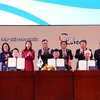
The total value of the documents signed and exchanged between Vietnamese and US businesses reached 37.2 billion USD, reflecting strong and determined commitments from partners as bilateral relations enter a new stage of development.
The model helps farmers proactively respond to weather risks while opening up new directions for increasing the value of agricultural products through ecological and organic production processes.
While Singapore’s exports to Vietnam rose 13.6% to 3 billion SGD, imports from Vietnam surged 100.5% to 1.6 billion SGD in January.
The Vietnamese representatives include Vingroup, FPT, BIDV, Vinhomes, FPT Retail, Masan Group, VietinBank, Vietnam Airlines and Hoang Anh Gia Lai Group.
Entering 2026 – the first year of implementing the Vietnam – EU Comprehensive Strategic Partnership, the Vietnam Trade Office in Belgium and the EU views this as a pivotal time to inject new momentum into trade ties, said Trade Counsellor Tran Ngoc Quan.
While many people continue spring outings, family visits and pagoda trips, demand for fresh food and essentials for early-year meals has risen markedly.
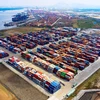
Saigon Marina IFC, an emerging landmark, reflects Ho Chi Minh City’s pioneering spirit. Designed to become an International Financial Centre, this new architectural icon along the Saigon River is envisioned not only as a premium commercial complex, but as a central platform supporting financial institutions, international investors and cross-border capital flows in the years ahead.
Policies on capital support, electricity pricing for cold storage, and investment incentives need to be designed to promote balanced development across regions.
As regional property markets enter 2026 on a more stable footing, Vietnam continues to stand out as a market with solid long-term growth prospects.
The annual survey, conducted at the end of 2025 among retail and food and beverage (F&B) sellers nationwide, found that businesses are shifting their focus from rapid growth to operational efficiency, cost control and legal compliance amid increasingly stringent regulatory standards.
To win over the Vietnamese market, US products need to continue improving quality and adjusting prices to remain competitive with goods from other suppliers.
If trade promotion and investment are pursued in tandem, bilateral trade could realistically reach 20–30 billion USD, or even 50 billion USD in the future.
Vietnamese products such as garments, footwear, coffee, tropical agricultural produce, aquatic products, processed foods and electronic components have gained a foothold in the Czech market.
For Vietnam, the UAE serves not only as a consumer market but also as a gateway to the Middle East and North Africa. Vietnamese agricultural products such as cashew nuts, pepper, cinnamon and rice have steadily gained market share, while aquatic products, including tra fish and tuna, are increasingly present in the UAE’s hospitality sector.
As Vietnamese steel companies pivot towards the domestic market due to weakening export demand, they are grappling with intense competition that has compressed profit margins across the sector.
Vietnam is currently a major supplier of agricultural products, seafood, and garments to the Russian market. Vietnamese cuisine is also gaining increasing popularity in Russia, with around 1,000 Vietnamese restaurants and eateries in Moscow.
A growing number of Egyptian companies are developing advanced technology products such as smart home automation systems, electric vehicle chargers and specialised IoT sensors used in industry, agriculture and health care, creating promising opportunities for cooperation with Vietnam.
Recently, foreign media have shared positive sentiment on Vietnam’s economic prospects, praising the country’s impressive growth as it moves toward becoming a top economy in Southeast Asia.
Yuanta Vietnam Securities estimates that to achieve GDP growth above 10%, credit growth would need to exceed 16%. This suggests bank credit is no longer expected to be the main growth driver, with greater reliance on fiscal policy, public investment and capital markets.