Credit guarantees should be sped up to help SMEs

This year and in the future, the private sector, especially small and medium-sized enterprises (SMEs) are expected to be a driving force for economic growth.

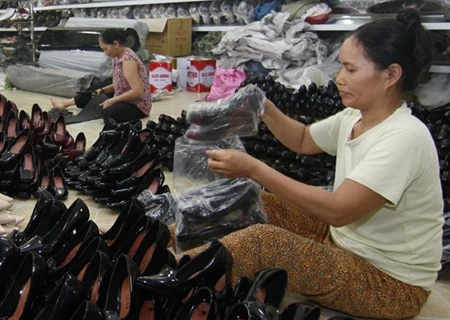
Hanoi (VNA) – This year and in the future, the private sector, especially small and medium-sized enterprises (SMEs) are expected to be a driving force for economic growth. While a law supporting SMEs is set to be issued soon, the government is making efforts to ease business conditions for these firms, especially in accessing loans.

During a talk with Vietnam News Agency, Chairman of the Vietnam Association of Small and Medium-sized Enterprises Cao Sy Kiem said that credit guarantee activities should be sped up in the future so that SMEs can better access credit.

* Credit guarantee policies are considered “a lifebuoy” for many SMEs. Why?

SMEs are weak in management capacity and lack mortgages, so many of them can’t meet the lending requirements of banks. The government has been aware of the situation and established credit guarantee funds in some localities nationwide. It assigned the Vietnam Development Bank as a guarantor for SMEs to borrow capital from commercial banks. With such assistance, enterprises have been able to manage funds for their projects and many have been given strength to overcome obstacles.

In developed countries in the region and the world, credit underwriting is very popular as a good supporting channel for business operations, especially operations of small companies with limited production facilities and capabilities.

* Why are credit guarantee funds still generally assessed as inefficient?

This is true. Many factors make it hard for credit guarantee funds to operate efficiently in direct and indirect ways. The legal framework for operations of the funds is insufficient, with regulations remaining inconsistent and even conflicting. This causes difficulties for borrowers, lenders as well as guarantors.

Credit guarantee funds are formed from three sources: local state budgets, contributions from enterprises, and finances from domestic and foreign organisations. The overseas source is almost insignificant, so the size of current funds are very small, amounting to only some tens of billions of VND. There are also high risks for operations of the funds, which manage incomes and expenses themselves without any refinancing sources. Poor capacity of fund-operating staff in assessing enterprises’ performance and the feasibility of their projects resulted in many bad debts.

* Representing SMEs, what does your association hear from firms accessing bank loans with credit guarantees?

The majority of the enterprises hesitate to use credit underwriting to borrow bank loans, blaming complicated procedures in accessing the guarantee service. The assessment process repeats and fees double when the companies deal with both guarantee funds and commercial banks. This shows that guarantors and banks lack close co-ordination and mutual confidence, and their enterprises will be put at a disadvantage. In many cases, funds and banks are also worried about irrecoverable debts and unwilling to lend. Thus, relation of the involved parties is even more slackened, meaning chances are less and less for SMEs to receive support.

* What measures are needed to solve this problem?

There must be a complete legal framework that resolves the inconsistency in policies, and capital sources for credit guarantee funds need to be diversified. Don’t count on financial contribution of enterprises because they are struggling themselves, let alone assisting others. Fund managing staff must improve their abilities to ensure credit security and uninterrupted fund operations, and the government should help guarantors increase capital by introducing efficient models of fund to attract foreign investments.-VNA
VNA

See more

Cargo handling operations at Berths 3 and 4 of the Hai Phong International Gateway Port. (Photo: VNA)

AI reshapes logistics, raising bar for workforce skills

According to the Vietnam Logistics Business Association (VLA), the logistics sector will require around 2.2 million workers by 2030, including 1.6 million employees for logistics service providers and nearly 600,000 personnel supporting logistics operations in manufacturing and trading enterprises.

The site planned for the Ninh Thuan 1 nuclear power plant in Phuoc Dinh commune of Khanh Hoa province (Photo: VNA)

Nuclear power projects to transform Khanh Hoa coastal communities

Khanh Hoa province aims to hand over fully cleared sites to investors by June 30, 2026. For Ninh Thuan 1, both the plant site and the resettlement zone are scheduled for completion by June 30. For Ninh Thuan 2, the plant site is due on June 15, with the resettlement area following by June 30.

Professor Tao Yitao, Director of the China Centre for Special Economic Zone Research (Photo: VNA)

Stable beginnings, powerful breakthroughs for Vietnam’s private economic sector

Vietnam is now at a critical juncture in pursuing what its leadership has described as a new era of national rise. In the long term, the development of the private economic sector will depend not only on supportive policies but also on a stable, transparent institutional environment that guarantees fair competition, said Professor Tao Yitao, Director of the China Centre for Special Economic Zone Research.

The trade policy review of Uruguay at the WTO headquarters. (Photo: VNA)

Vietnam participates in WTO review of Uruguay's trade policy

Vietnam also welcomed Uruguay's active engagement in the multilateral trading system as a founding member of the WTO. Uruguay has ratified the Agreement on Fisheries Subsidies, joined the Multi-Party Interim Appeal Arbitration Arrangement (MPIA), and contributed to Joint Statement Initiatives (JSIs) on e-commerce and micro, small and medium-sized enterprises (MSMEs).

Experts discuss cooperation opportunities in Vietnam-Germany manufacturing value chains at the forum. (Photo: VNA)

Vietnam-Germany cooperation creates new opportunities for sustainable manufacturing

Germany is an important partner of Vietnam and a global leader in green technology, smart manufacturing, automation and circular economy solutions. The combination of German technological expertise and Vietnam's manufacturing capabilities and strong commitment to transformation would create significant opportunities in green production, supporting industries, digital transformation, supply chain management and eco-industrial park development.

Businesses introduce Halal market products at the workshop. (Photo: VNA)

Da Nang businesses eye growth in booming global Halal market

Huynh Xuan Son, Deputy Director of the Da Nang Department of Industry and Trade, said the Halal market has emerged as a strategic destination for Vietnamese exporters amid persistent global economic uncertainties. Serving more than two billion consumers across over 110 countries and territories, the market offers significant opportunities for business expansion.

Vietnamese bananas are sold at an AEON supermarket in Japan. (Photo: VNA)

Vietnamese products promoted at AEON stores across Japan

Speaking at the opening ceremony, Deputy Minister of Industry and Trade Phan Thi Thang highlighted the significance of 2026, which marks a decade of cooperation between the ministry and AEON in organising Vietnam Week in Japan.

Growing demand for financing for infrastructure and green transition projects is driving Vietnam’s search for new sources of capital. In the photo: A section of Noi Bai – Lao Cai Expressway. (Photo: VNA)

Vietnam seeks to unlock capital for infrastructure, green transition

As Vietnam advances its sustainable growth agenda and commitment to achieving net-zero emissions by 2050, the need for long-term capital is rising rapidly. Experts say meeting these financing requirements will depend not only on expanding available resources but also on broadening funding sources and improving project financing models.