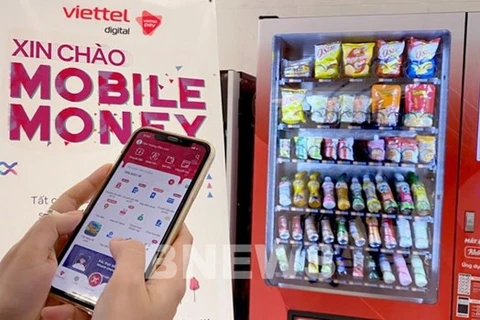
A consumer is making a payment via QR Code. (Photo: enternew.vn)
 Statistics of the State Bank of Vietnam showed that there were more than 104 million valid individual payment accounts at banks as of the end of March, with a total outstanding sum of more than 741.3 trillion VND (31.9 billion USD), representing a rise of 11.2 percent against the end of 2020.
Individual checkable deposits rose by three times during the past five years with a considerable increase since 2020.
Specifically, individual checkable deposits rose by 55 percent against the end of March 2020. In comparison, individual deposits, including both demand and time deposits, increased by more than 5.5 percent from the end of March 2020 to the end of February 2021.
The central bank said that the increase in demand deposits at banks was attributed to the results of the financial banking system’s digital transformation process together with the development of e-banking, digital banking services, e-wallets as well as the promotion of a comprehensive digital finance ecosystem to create favourable conditions for citizens in conducting cashless payment.
The COVID-19 pandemic also pushed up demand for cashless payment and significantly contributed to changing the habit of using cash to cashless payment methods, the central bank said.
Statistics also showed that banking transactions conducted online increased by 5.9 percent in number and 28.4 percent in value in the first three months of this year over the same period last year.
Mobile banking transactions rose by 78 percent in number and 103 percent in value while via QR code by 83 percent and 146 percent, respectively.
Overall, cashless payment transactions jumped by 344.3 percent in number and 96.1 percent in value in 2020 against the previous year.
A recent survey by Visa also revealed strong increases in the use of e-wallets, contactless payment via cards and smartphones and QR Code. The year-on-year growth rate of the total e-commerce transaction value in the first quarter of 2021 rose by 5.5 times compared to the fourth quarter of 2020.
Notably, contactless card payments were used the most for food and catering services. Payments via QR Code strongly increased in the pandemic, especially in bill payment, retail shopping and at supermarkets.
According to Dang Tuyet Nhung, Visa’s country manager for Vietnam and Laos, there was a significant change in the shopping and payment habits of Vietnamese consumers since the outbreak of the COVID-19 pandemic. Consumers were seeking safer and more convenient shopping experiences, she said.
It is security and convenience that are promoting the switching from cash to digital payment methods, she said.
Still, COVID-19 was an unexpected catalyst to make payment habits and behavior change faster. In the long term, Vietnam has set a goal of digitising the banking industry.
Under the banking digital transformation plan to 2025 with a vision to 2030, the central bank targeted that at least 50 percent of adults would use electronic payment services and at least 70 percent of transactions would be conducted via digital channels. By 2030, the percentages were expected to be at least 80 percent.
Deputy Governor of the State Bank of Vietnam Nguyen Kim Anh said that about 95 percent of credit institutions in Vietnam were implementing digital transformation strategies./.
VNA