Deputy PM visits first COVID-19 vaccine trial volunteers

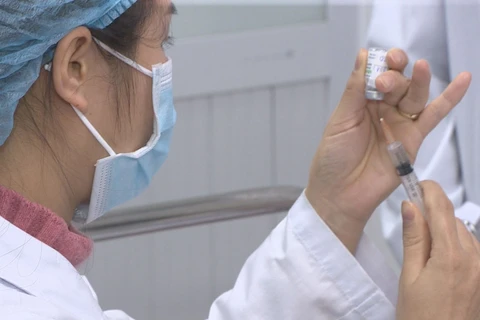
The first three volunteers receiving Nano Covax - the Vietnamese-made anti-COVID-19 vaccine - are in good health conditions 72 hours after injection, with all indications proving that the vaccine is safe for human, according to the Ministry of Health and Military Medical Academy.
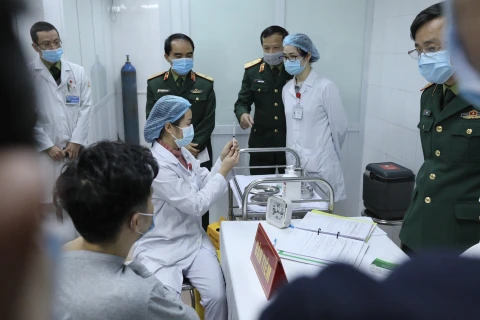
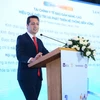
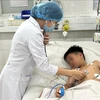
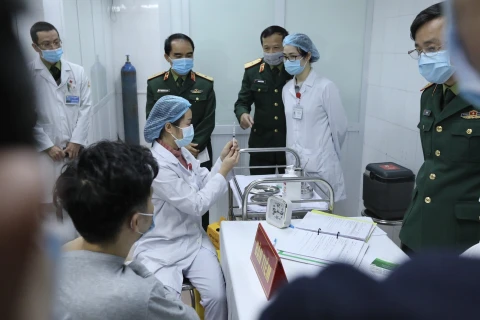
Deputy PM visits first COVID-19 vaccine trial volunteers ảnh 1Deputy Prime Minister Vu Duc Dam visits the volunteers on December 20. (Photo: VNA)

Hanoi (VNA) - The first three volunteersreceiving Nano Covax - the Vietnamese-made anti-COVID-19 vaccine - are in goodhealth conditions 72 hours after injection, with all indications provingthat the vaccine is safe for human, according to the Ministry of Health andMilitary Medical Academy.


The initial results of the vaccine on human were reported toDeputy Prime Minister Vu Duc Dam who visited the volunteers on December 20.

As no abnormal reaction has been found on the volunteers, oneman and two women aged 20-25, on December 21, the Military Medical Academy isscheduled to administer the vaccine on the remaining volunteers who registered for the first phase of thetrial.

According to leaders of the academy, after reviewing recordsof the vaccine’s effects on mouse and monkey, experts hope that following thesecond and third phases, the immunogenesis of the vaccine will be fully assessed and meet the requirements.

The trial will have three phases. In the first, thevaccine will be injected into 60 persons who are divided into three groups toreceive different doses of 25 mcg, 50mcg, and 75mcg.

The objective of the first phase is to evaluate the safetyof the vaccine. Following the success of the first phase, the second willinvolve 400-600 people to define the optimal dose, and the third will seethe engagement of at least 1,500-3,000 people. The figure may be expanded to10,000-30,000.

After the third phase, the vaccine’s safety, immunogenesis  and effectiveness are expected to be assessed.

The Ministry of Health has created all favourable conditionsto shorten the time for the trial phases compared to the normal conditions, butstill ensuring all steps, safety and scientific requirements.

Deputy Prime Minister Dam spoke highly of the effortsof the Ministry of Health, the Ministry of Science and Technology, and the MilitaryMedical Academy as well as the research and production units of the vaccine.

He said that the implementation of the vaccine’s trialphases must be continued with the full observation of regulations of the Ministryof Health in a safe and prompt manner.

“If the trial is successful, it would be not only a pride of the healthscience and healthcare sector but also an effective tool to fight the pandemic,”stated the Deputy PM.

Citing experience from the production of medical bio-products for SARS-CoV-2 testing,the Deputy PM asked the research and production units as well as Statemanagement agencies to work closely with one another to “race against the time”, whilecontinue preparing necessary conditions for the next steps following thesuccess of the vaccine trials, with calculation for both good and bad circumstances.

In the context of high prices and limited supply of the vaccines against the pandemic inthe world, the acceleration of the research and productionof the vaccine inside the country is necessary, said a leader of the Ministryof Health.

However, Deputy PM Dam underlined that vaccination is still afuture matter, highlighting the need to focus on preventive measures againstthe pandemic.

He asked the Ministry of Science and Technology, theMilitary Medical Academy, and the Bio-Technology Institute to build and developa centre for the research and development of vaccines against newly-emergingpandemics, including the construction of a bio-safety lab at at least Level Three, thus helping the country become ready for new pandemics and disastersrelated to human’s health in the future.

He also agreed with the proposal of the Military MedicalAcademy on the increase of training for response against emergency cases anddisasters in schools and medical training facilities./.
VNA

See more

Students play football during a break atthe Hai Xuan Secondary School in Ninh Binh province . (Photo: VNA)

Vietnam targets annual health screening for all students by 2030

By 2030, all educational institutions are expected to have separate medical rooms equipped with essential medicines and healthcare equipment, adequate access to safe drinking water and sanitation facilities, and school meal services that comply with food safety regulations.

Staff from the Ho Chi Minh City First Aid Centre demonstrate first aid skills. (Photo: VNA)

Vietnam, France cooperate to build community first-aid network

The agreement focuses on establishing hundreds of first-aid stations across Long Chau’s pharmacy and vaccination network, standardising first-aid training for medical and pharmaceutical students, and expanding community health education activities nationwide.

In Hanoi, the temperature recorded in Lang Ha at 1 pm on May 26 reached 40 degrees Celsius. (Photo: VNA)

Proactive response needed to cope with extreme weather: Experts

Health experts warned that prolonged heat exposure could cause heatstroke, heat exhaustion and other serious health conditions. High-risk groups include the elderly, children, pregnant women, people working or exercising outdoors for long periods, and those suffering from chronic illnesses such as hypertension, chronic obstructive pulmonary disease, asthma and diabetes.

Ho Chi Minh City plans over 95 million USD for universal health screenings in 2026. (Illustrative photo: VNA)

Ho Chi Minh City earmarks over 95 million USD for universal health screenings in 2026

Ho Chi Minh City's free health examination programme, set to begin on May 25, is carried out at qualified healthcare facilities, mobile clinics at schools, factories and businesses, community-based screening sites arranged by local authorities, as well as through home visits to elderly residents, people living alone and those with limited mobility.

Healthcare workers are employed in an isolation and treatment area for patients infected with the Ebola virus in Entebbe, Uganda. (Photo: Xinhua/VNA)

Health Ministry calls for stronger preparedness against Ebola

Medical facilities were instructed to strengthen surveillance, especially for individuals who have travelled to or returned from outbreak-hit countries or areas within the previous 21 days. They were also asked to strictly enforce infection control measures, including protective procedures, screening, triage and isolation protocols for suspected or confirmed Ebola cases.

Party General Secretary and State President To Lam speaks at a working session Party Committee of the Ministry of Health on Vietnamese traditional medicine in Hanoi on May 20 (Photo: VNA)

Top leader calls for historic transformation of traditional medicine

Highlighting strategic orientations for the sector, Party General Secretary and State President To Lam requested that traditional medicine be incorporated into the country’s overall development strategy in the new era. He called for the building of a national traditional medicine ecosystem linked to the development of the health economy and national soft power.

Deputy Prime Minister Pham Thi Thanh Tra speaks at the programme “Organ and Tissue Donation Day May 20 – Giving is Forever”. (Photo: VNA)

Deputy PM calls for stronger organ donation movement to save more lives

Vietnam has gradually mastered some of the world’s most complex transplant techniques since the country’s first successful kidney transplant in 1992. As of 2025, Vietnam had conducted 10,878 organ transplants, with 34 licensed hospitals now capable of performing transplant procedures.

The meeting between the delegation from Military Hospital 175 and Mayor of Leipzig Burkhard Jung at Leipzig City Hall (Photo: VNA)

Healthcare cooperation shines in Vietnam – Germany ties

The partnership between Military Hospital 175 and medical institutions in Leipzig has been recognised as a highlight of Vietnam – Germany healthcare cooperation, as well as of the sister-city relationship between Ho Chi Minh City and Leipzig.

Dr Truong Thanh Tinh, head of the Department of Neurosurgery under the University Medical Centre Ho Chi Minh City, gives a post-surgery check-up on the 12-year-old patient. (Photo: VNA)

Vietnam performs first awake brain surgery on child patient

The hospital announced on May 19 that the patient, a 12-year-old boy, recovered well after surgery, remained fully conscious and showed no new focal neurological deficits. Post-operative imaging indicated that the tumour had been almost completely removed. Doctors are continuing close monitoring and preparing further treatment plans to support the child’s full recovery.

Ho Chi Minh City steps up surveillance to prevent Ebola risk

Ho Chi Minh City steps up surveillance to prevent Ebola risk

Under the directive, the Ho Chi Minh City Centre for Disease Control has been instructed to tighten surveillance at border gates by monitoring incoming travellers for unusual health symptoms, carefully reviewing epidemiological factors, travel histories and accommodation records, and coordinating closely with aviation, maritime and international health quarantine authorities to promptly detect suspected cases.

A long-term strategy for a healthier Vietnam

A long-term strategy for a healthier Vietnam

Resolution No. 72-NQ/TW of the Politburo underscores the pivotal role of physical exercise and sports as a breakthrough solution, shifting the mindset from “treatment” to “proactive health protection and improvement.”

Healthcare workers administer Ebola vaccines to residents in Kampala, Uganda. (Photo: Xinhua/VNA)

Ministry of Health steps up surveillance amid Ebola risk

The Ministry of Health said it is closely monitoring developments, regularly updating information from WHO and national focal points implementing the International Health Regulations, while strengthening surveillance at medical facilities and health quarantine measures at border gates.