Digital banks help promote cashless payment

Currently, the OCB OMNI system deals with about 50,000 transactions a day, including money transfer, receipt payment, and mobile service payment, three times higher than the figure recorded at late 2019.
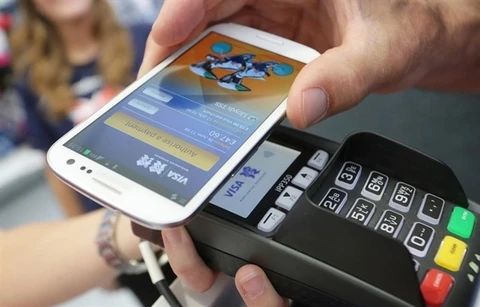
Digital banks help promote cashless payment ảnh 1There have been 75 suppliers of payment services through the Internet (Photo: VietnamPlus)

Hanoi (VNA) – The cashless payment market in the recent two years has witnessed fierce competitions among banks, which have boosted investment in digital banks, as well as between digital banks and e-wallet. However, the market still has big room for further exploitation.

The digital transformation in finance-banking sector has become more vibrant with the engagement of the majority of banks, thus helping increase cashless payment.

Latest statistics from the State Bank of Vietnam showed that there are 75 suppliers of payment services through the Internet and 45 others providing the service of payment via mobile phones.

In the last six months, the number of transactions through Internet were 200 million with total value of about 12.9 quadrillion VND (556 billion USD), up 36 percent over the same period in 2019. Meanwhile, over 472 million transactions were made through mobile phones with the value of about 4.9 quadrillion VND, showing respective year-on-year rises of 178 percent and 177 percent.

Besides, card payment has continued to be developed by banks. As of the end of June, the number of active bank cards was 106 million, a rise of about 14.5 percent over the same period in 2019. The number of domestic transactions through bank cards in the first half of this year was 171 million with total value of about 399 trillion VND, increases of 20.9 percent and 9.1 percent over the same period of 2019, respectively.

Along with bank card, credit organisations have paid great attention to the development of payment through QR Code, which is considered a flexible and fast option at reasonable cost to promote cashless payment among customers who are small retailers.

So far, about 30 banks have applied QR Code payment services at more than 70,000 shopping facilities.

As one of the pioneers in digitalization, the Orient Commercial Joint Stock Bank (OCB) has seen rapid rise in cashless payment, especially through its OCB OMNI app. A representative from the bank said that in the first eight months of this year, nearly 1 million customers have registered to use the app.

As of the end of August, the bank processed 11 million online transactions, doubling the figures in the same period last year in both number of transactions and value. In August alone, 1.5 million online transactions were made, 2.5 times higher than the same time of 2019.

On the average, currently, the OCB OMNI system is dealing with about 50,000 transactions each day, three times higher than that in the end of 2019. Notably, transactions in savings, financial investment, insurance payment through the app have surged with the figure recorded in August being five times higher than that in the beginning of the year.

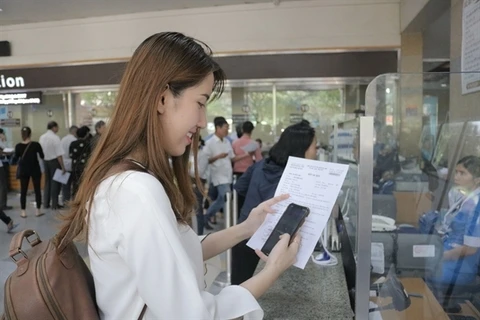
Digital banks help promote cashless payment ảnh 2 OCB OMNI app provides a diversity of services (Photo: VietnamPlus)

According to Nguyen Thien Tam, OCB Director for Digital Bank Strategy attributed the rise to the convenience of the services, which allows customers to use easily through Internet-connected devices. Particularly in the COVID-19 pandemic, customers tended to prioritise online transactions for safety.

He said that OCB OMNI has offered various promotions to customers along with more values, thus attracting increasing number of customers.

In October, the app will be personalized for each user, aiming to give the best experience to the customers, he said, adding that the Application Programming Interface (API) connection with any Fintech partner will help the app broaden its ecosystem and better meet customers’ demand.

Tam held that despite the fierce competition among banks and between digital banks and e-wallet in cashless payment market in the recent two years, there is still room for businesses to exploit the market.

He said OCB hopes the legal corridors for new banking services will be early completed, which he believes that will help boost the development of digital products./.
VNA

See more

Visitors explore Vietnamese products at WorldFood Moscow 2026. (Photo: VNA)

Vietnamese goods step up market expansion in Russia

The Vietnamese participants are showcasing a wide range of products, including beverages, fresh and dried fruit, processed foods, instant foods and dipping sauces, while seeking distribution partners, expanding their market presence and increasing brand recognition in the country.

A Vietnamese manufacturer showcases a modern production line at VietnamPrintPack 2026. (Photo: VNA)

VietnamPrintPack 2026 kicks off in Ho Chi Minh City

VietnamPrintPack 2026 serves as a hub connecting the supply chain, showcasing breakthrough solutions in automation, digital printing, radio-frequency identification (RFID)-integrated smart packaging, and eco-friendly materials across Vietnam's industrial landscape.

Gemalink International Port in Ho Chi Minh City is one of the strategic seaports for industry, trade and global integration. (Photo: VNA)

Vietnam deepens global supply-chain integration

Deputy Minister of Industry and Trade Phan Thi Thang said Vietnam remains a top priority for international corporations and buyers seeking new sources of supply, thanks to its 17 FTAs, stable investment environment, improving production capacity and strategic location in Southeast Asia.

Illustrative image (Photo: VNA)

Vietravel Airlines resumes Hanoi – Da Lat route

Resuming the route is part of the carrier's year-end operating plan. It's a concrete step toward optimising the airline's domestic network, and a sign of its commitment to helping Lam Dong province revitalise tourism following the airport upgrades, its representative said.

Prof. Tan Jian Ping, Director of the Centre of Excellence for Sustainable Technologies for Agricultural Advancement and a Zero-Waste Economy (STARGAZE) at Xiamen University Malaysia (Photo published by VNA)

Vietnam, Malaysia see potential for smart agriculture cooperation

Prof. Tan Jian Ping, Director of the Centre of Excellence for Sustainable Technologies for Agricultural Advancement and a Zero-Waste Economy (STARGAZE) at Xiamen University Malaysia (XMUM), said NAP 2.0 focuses on applying Industry 4.0 technologies, including the Internet of Things (IoT), unmanned aerial vehicles, artificial intelligence (AI), automation and biotechnology.

The 30th Export Day draws representatives from various organisations and businesses in Argentina. (Photo: VNA)

Vietnam, Argentina eye broader Mercosur access amid free trade push

During the 30th Export Day, organised on September 15 in Buenos Aires by the Chamber of Exporters of the Argentine Republic (CERA) under the theme "New Export Frontier: The Transformation Underway," Vietnamese Ambassador to Argentina Ngo Minh Nguyet highlighted that Vietnam considers Argentina and Mercosur important partners in South America and sees broad potential to deepen trade and investment ties.

Drone is used in seeding, fertilising and pesticide spraying (Photo: VNA)

Greening agriculture through low-emission crop production

The scheme to sustainably develop 1 million ha of high-quality, low-emission rice in the Mekong Delta by 2030 is advancing, said Nguyen Quoc Manh, Deputy Director of the Department of Plant Production and Protection at the Ministry of Agriculture and Environment.

DACE launches organic spice processing, preservation and export plant in Cao Bang (Photo: VNA)

Cao Bang develops organic farming zones linked to European markets

Around 2,353ha of farmland in the province meets organic standards, including more than 2,332ha of spice-growing areas cultivating cinnamon, star anise and ginger that have obtained internationally recognised certifications such as USDA (US), EU and JAS (Japan).

Electronic components are produced at a factory in Hanoi. (Photo: VNA)

Hanoi's imports surge 41% in first eight months of 2026

Hanoi aims to achieve average annual export growth of at least 12% during 2026-30, with the city seeking to diversify export markets, boost high-tech and value-added products and reduce reliance on traditional markets.